01poster 01 / 10
opening poster
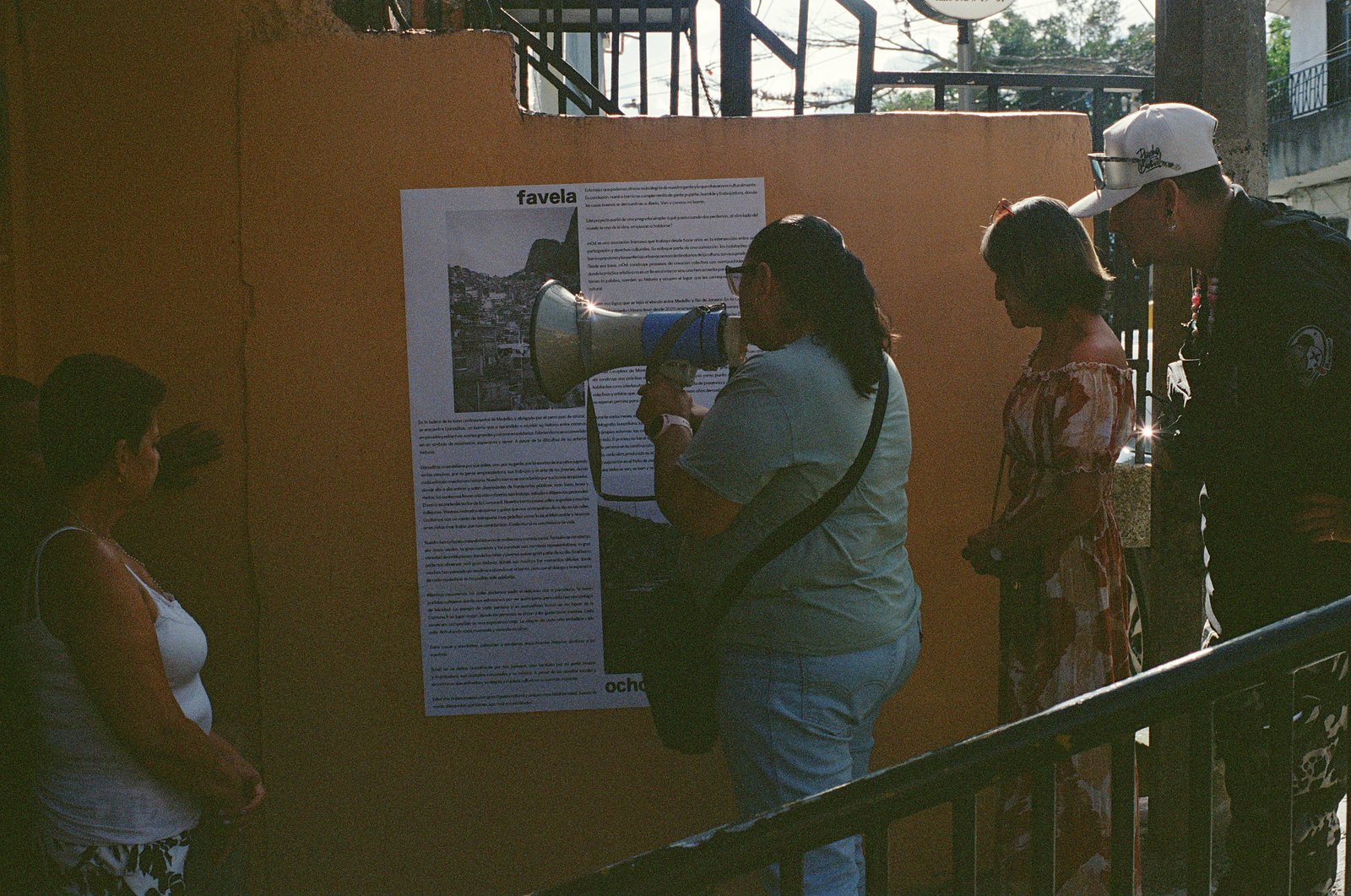
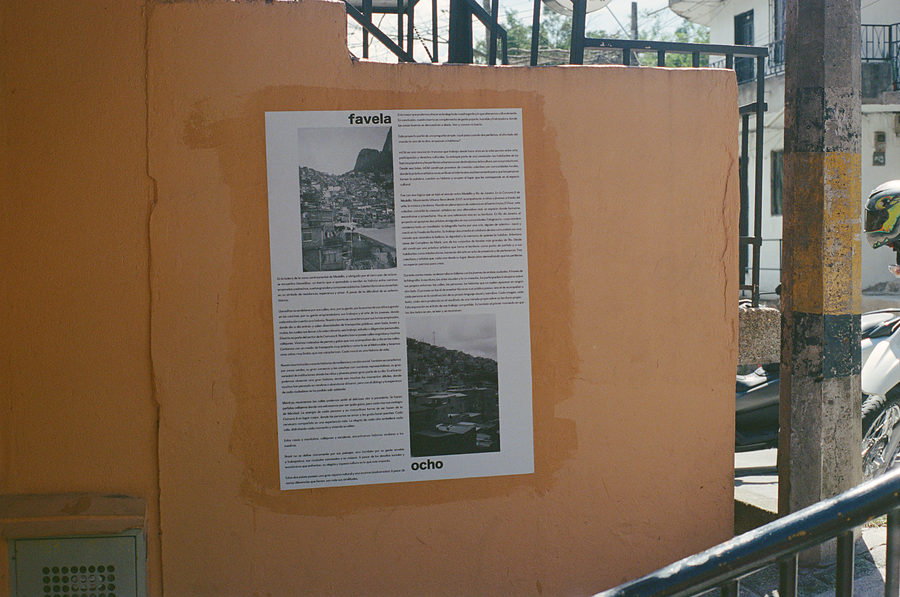
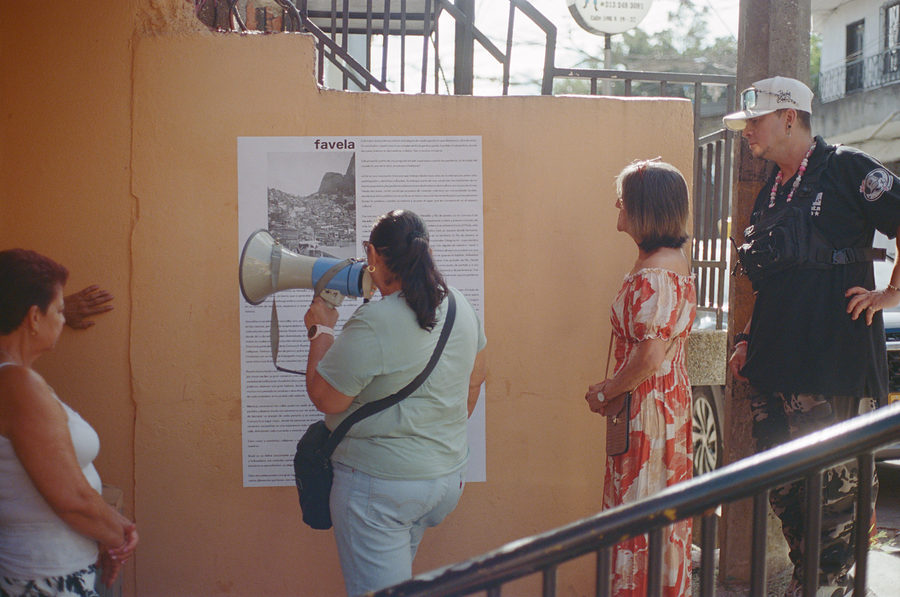
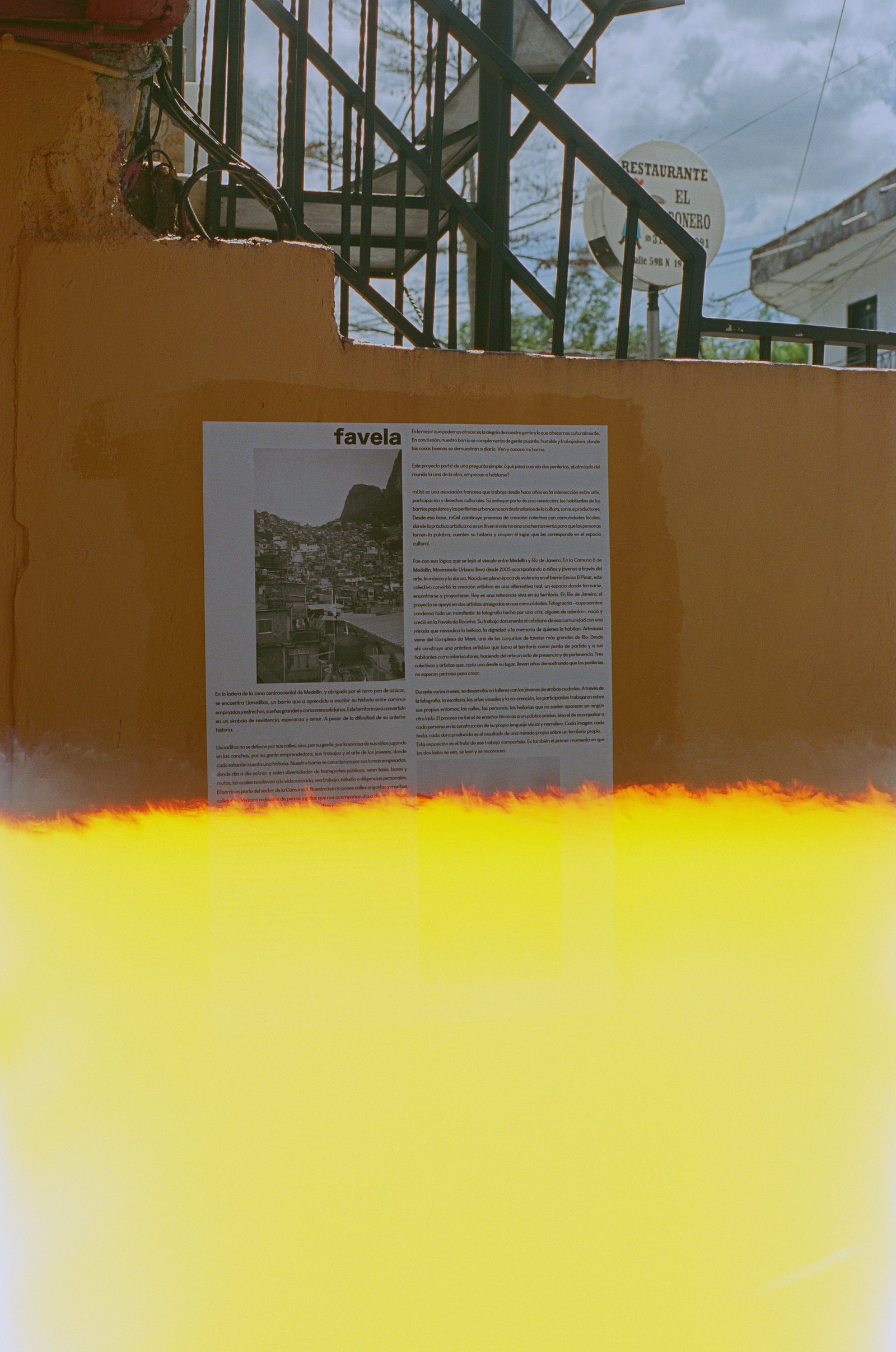
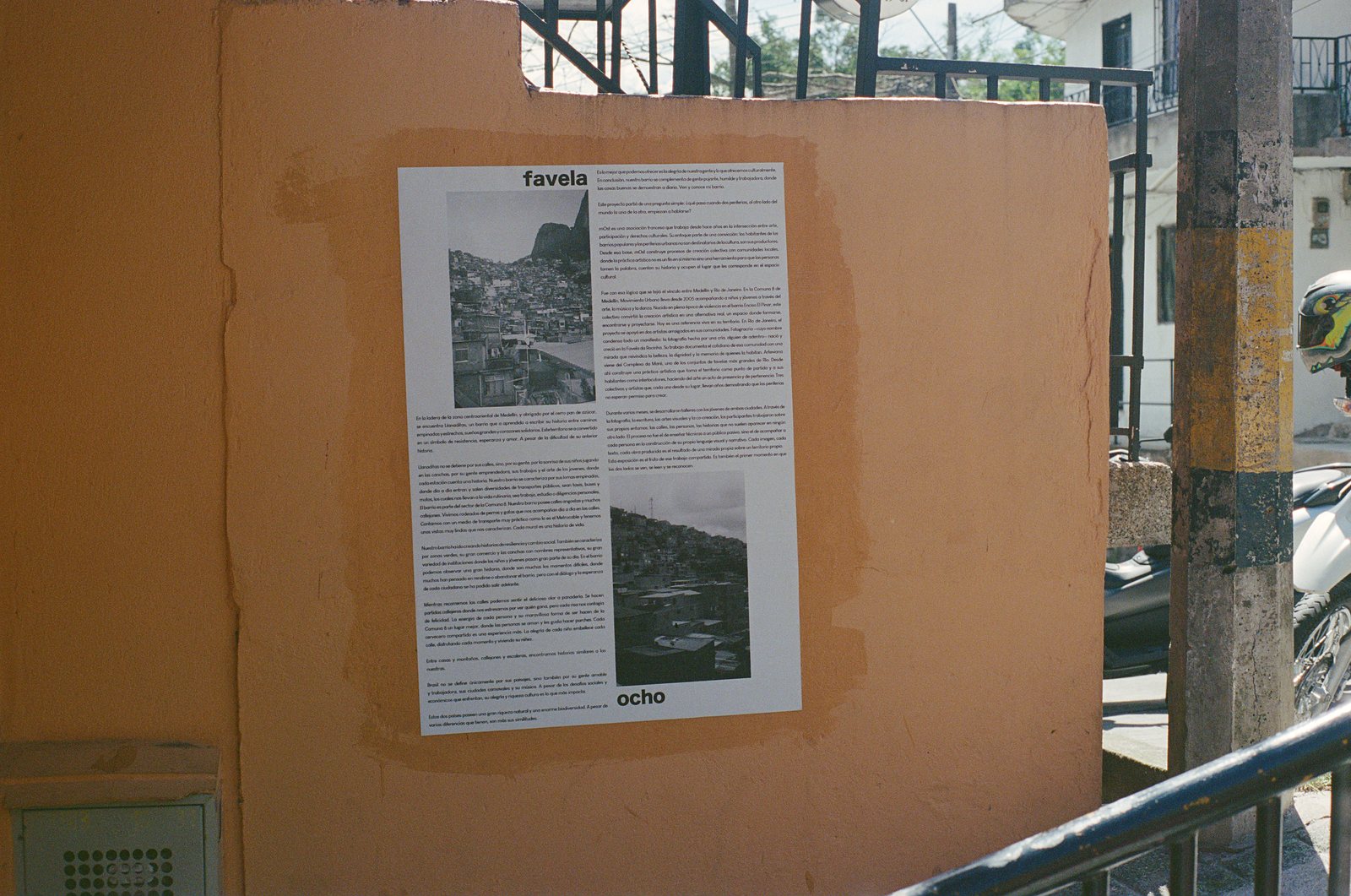
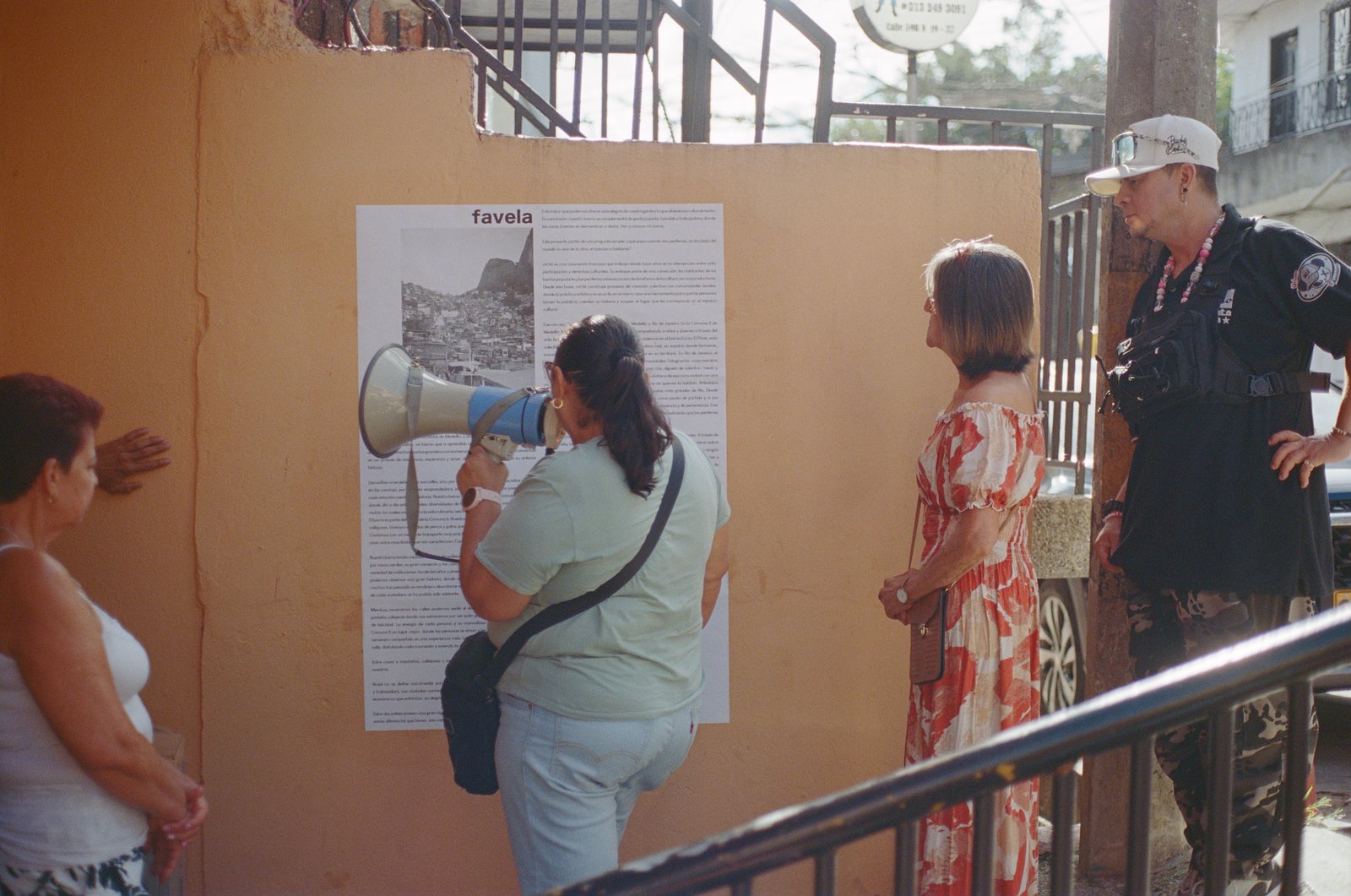
on an orange wall at the top of some steps, read out through a megaphone during the walk
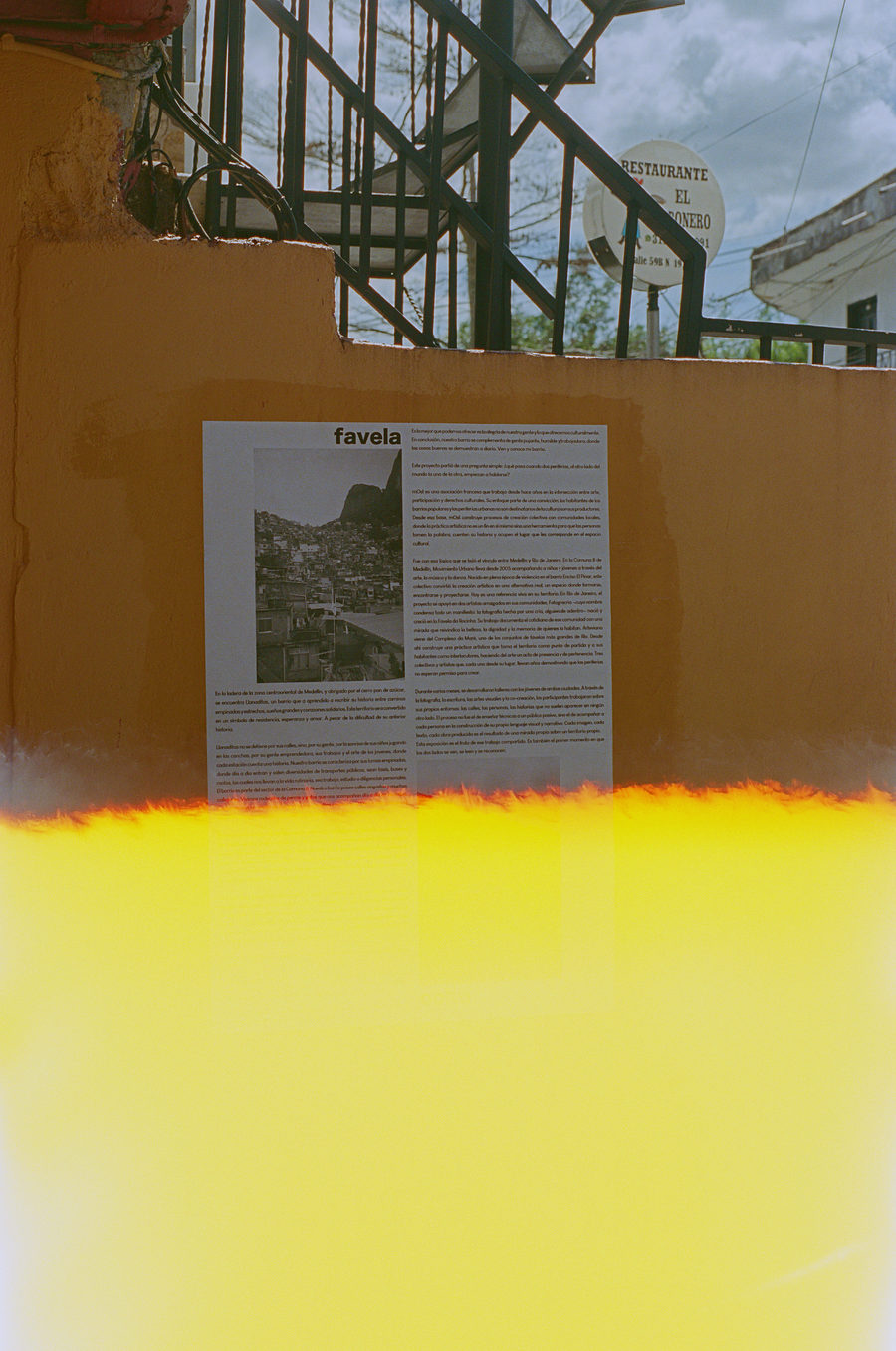
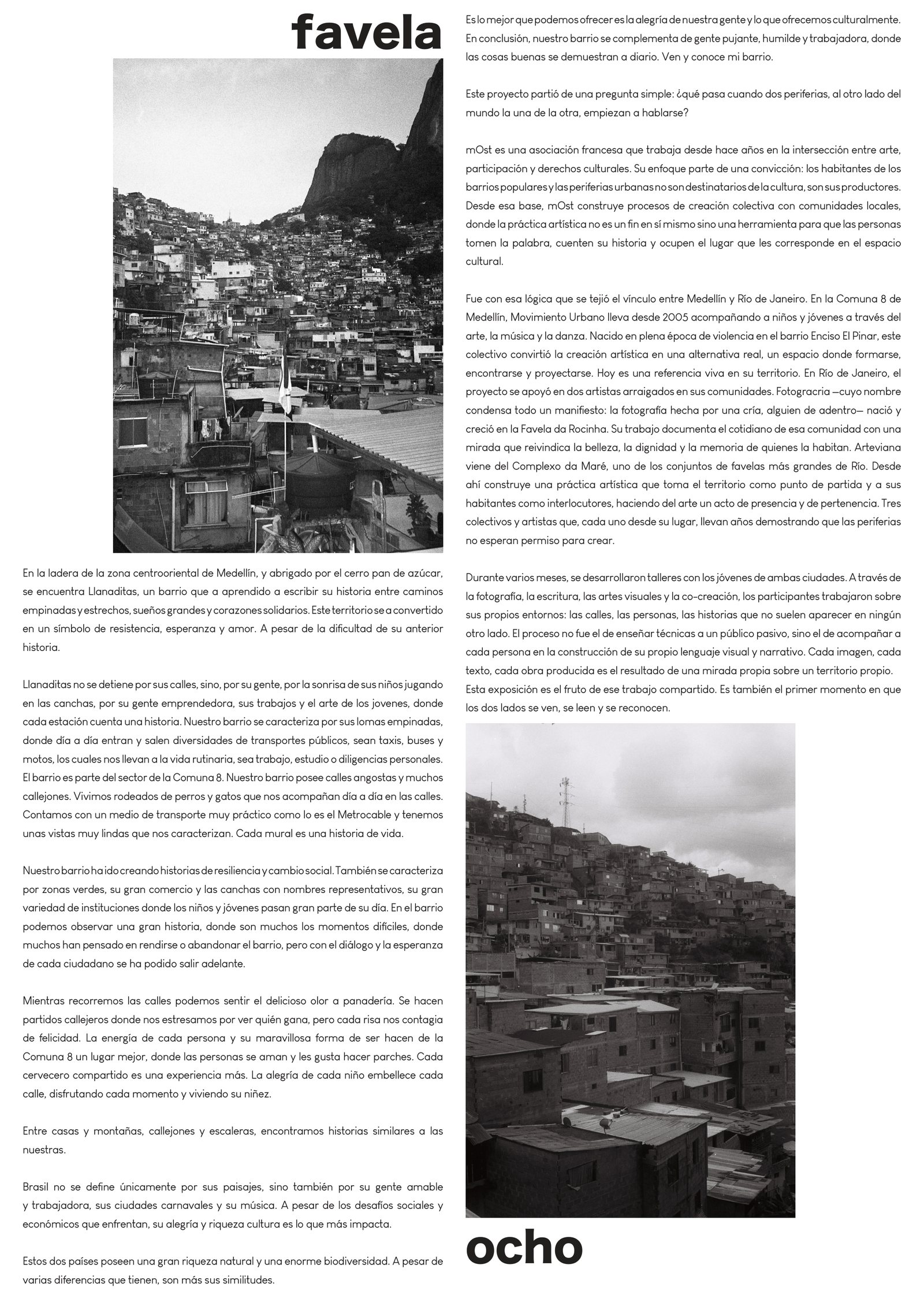
Favela, in Rio; comuna 8, in Medellín. This project starts from a simple question: what happens when two peripheries, on either side of the continent, begin to talk to each other?
collective text by the young people of Llanaditas
On the hillside of the central-eastern zone of Medellín, sheltered by Cerro Pan de Azúcar, lies Llanaditas, a neighbourhood that has learnt to write its history among steep, narrow paths, big dreams and hearts full of solidarity. This place has become a symbol of resistance, hope and love, despite its difficult history. What keeps Llanaditas going is not its streets but its people: the smiles of its children playing on the pitches, its enterprising people, their work and the art of its young people, where every station tells a story. Our neighbourhood is known for its steep slopes, where every day all kinds of public transport come and go, whether taxis, buses or motorbikes, taking us to our daily routine: work, school or personal errands. Our neighbourhood has narrow streets and lots of alleyways. We live surrounded by dogs and cats that keep us company in the streets every day. We have a very handy way of getting around, the metrocable, and some really beautiful views that we’re known for. Every mural is a life story.
En la ladera de la zona centrooriental de Medellín, y abrigado por el cerro Pan de Azúcar, se encuentra Llanaditas, un barrio que ha aprendido a escribir su historia entre caminos empinados y estrechos, sueños grandes y corazones solidarios. Este territorio se ha convertido en un símbolo de resistencia, esperanza y amor, a pesar de la dificultad de su historia. Llanaditas no se detiene por sus calles, sino por su gente, por la sonrisa de sus niños jugando en las canchas, por su gente emprendedora, sus trabajos y el arte de los jóvenes, donde cada estación cuenta una historia. Nuestro barrio se caracteriza por sus lomas empinadas, donde día a día entran y salen diversos transportes públicos, sean taxis, buses o motos, que nos llevan a la vida rutinaria: trabajo, estudio o diligencias personales. Nuestro barrio posee calles angostas y muchos callejones. Vivimos rodeados de perros y gatos que nos acompañan día a día en las calles. Contamos con un medio de transporte muy práctico como lo es el metrocable y tenemos unas vistas muy lindas que nos caracterizan. Cada mural es una historia de vida.
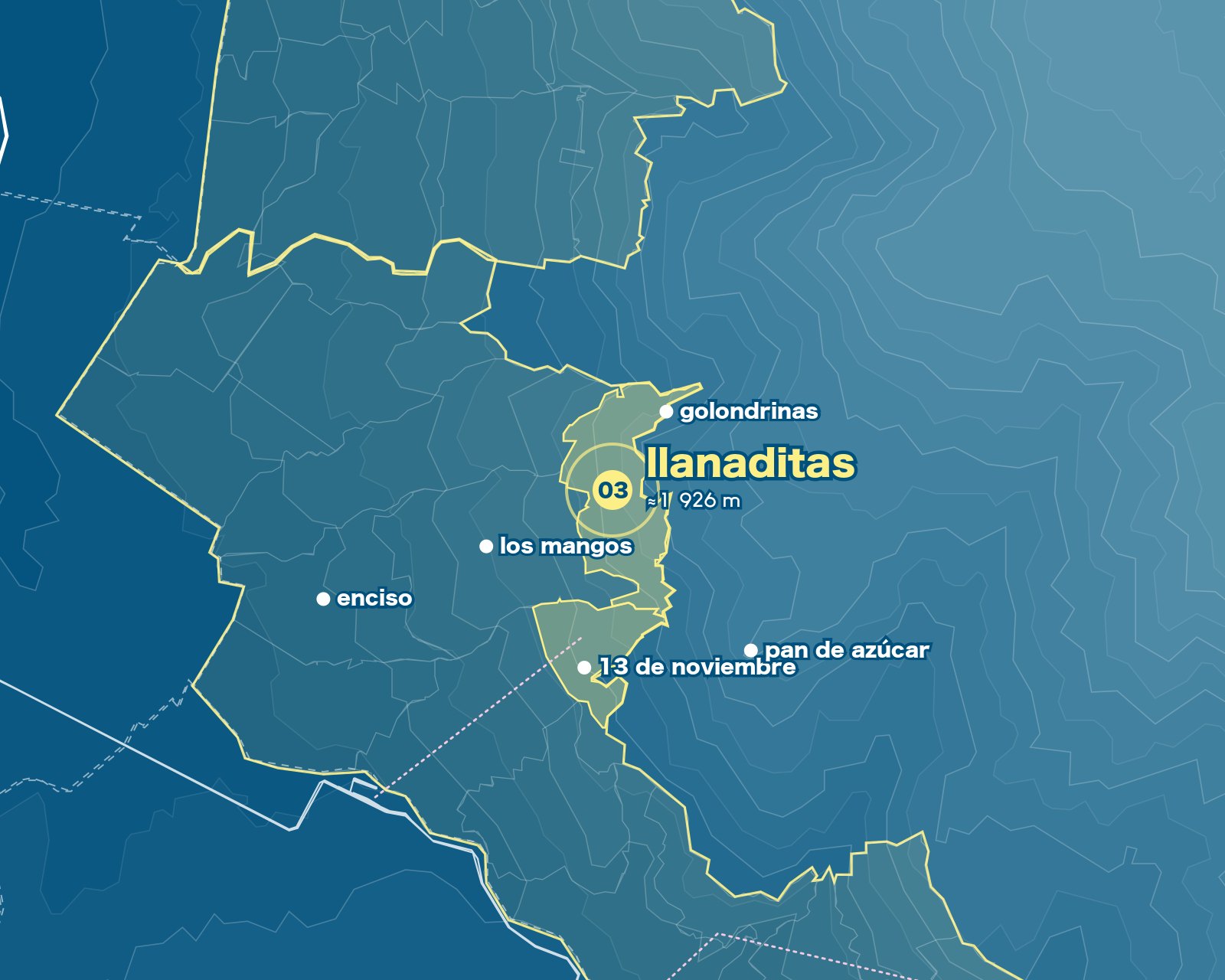
Llanaditas clings to the eastern slope of the valley, below Cerro Pan de Azúcar, among narrow alleys, steps and football pitches. The metrocable passes over the rooftops. Golondrinas sits at its very top.
As we walk through the streets, we can catch the delicious smell of the bakery. There are street football matches where we get stressed about who’s going to win, but every laugh spreads happiness among us. Everyone’s energy and their wonderful way of being make comuna 8 a better place, where people love each other and love getting together. The best thing we can offer is the joy of our people and what we offer culturally. Come and get to know my neighbourhood.
Among houses and mountains, alleyways and steps, we find stories similar to ours. Brazil is not defined only by its landscapes, but also by its kind, hard-working people, its carnivals and its music. Despite the social and economic challenges they face, their joy and cultural richness are what strike us most. These two countries have great natural wealth and huge biodiversity. For all their differences, they have more in common.
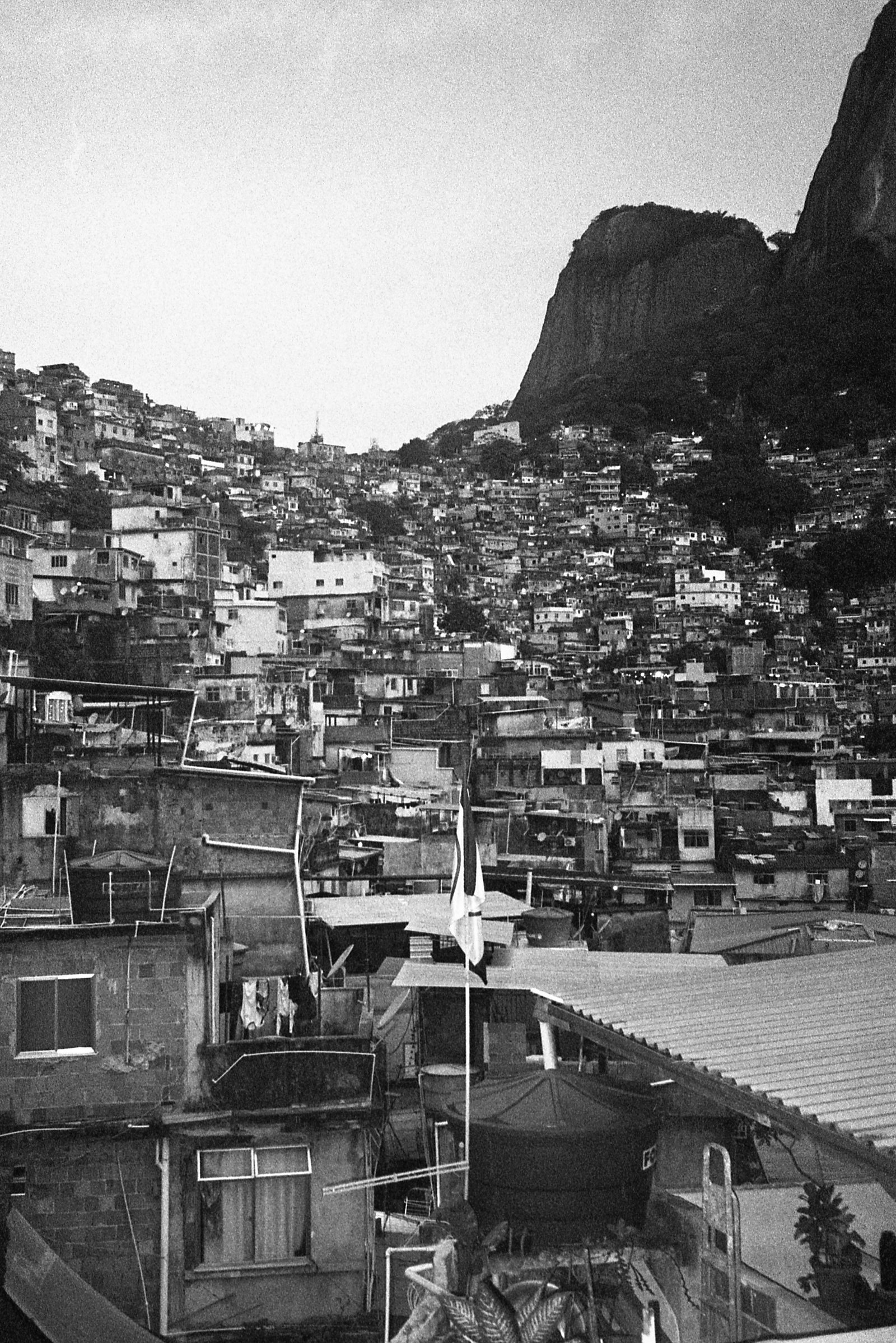
Over several months, the young people of Llanaditas received photographs from Rocinha, by Fotogracria, and from the Maré, by Arteviana, together with texts written by the photographers. They looked at them for a long time, wrote comments on them, then went out into their neighbourhood to answer them with their own images. The point was not to learn a technique, but to develop a way of seeing.
Each poster sets two images face to face: a photograph from Rio and a reply from Llanaditas, or the other way round. Beneath some of them is a comment written by a young person from Llanaditas. Eighteen dialogues, in three rooms.
exhibition plan
On both sides of the continent, the same games: the paddling pool, video games, the street as a pitch.
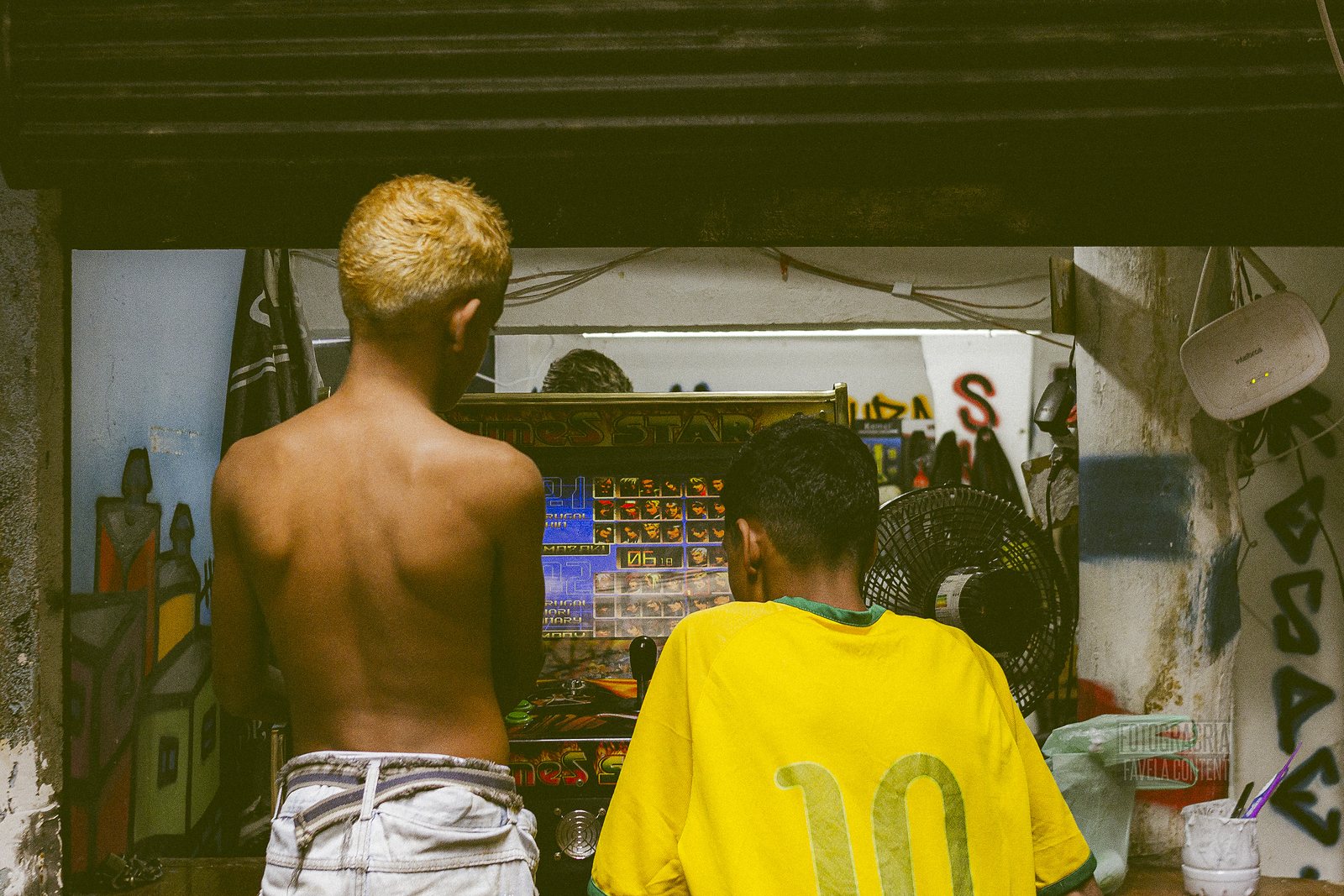
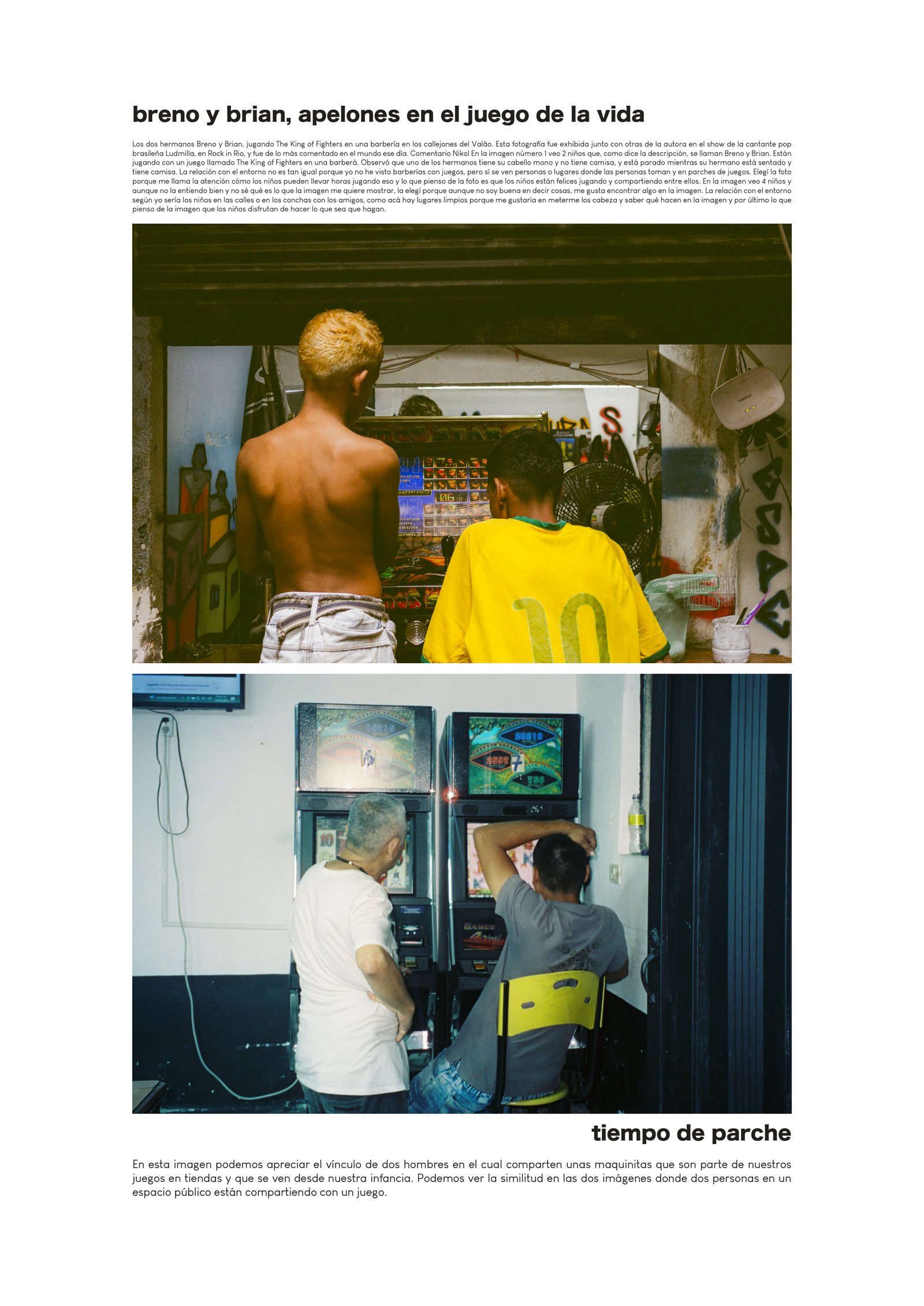
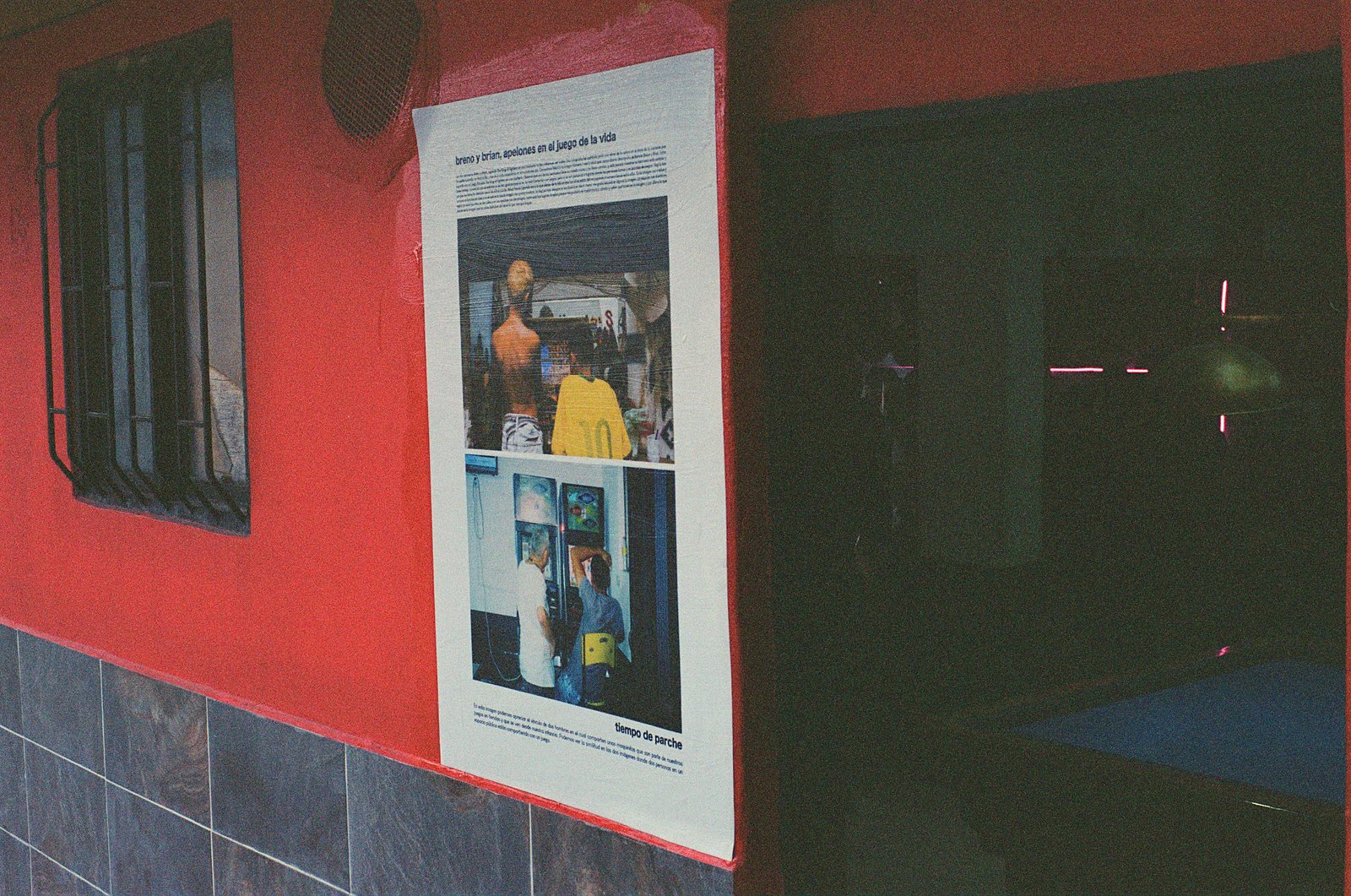
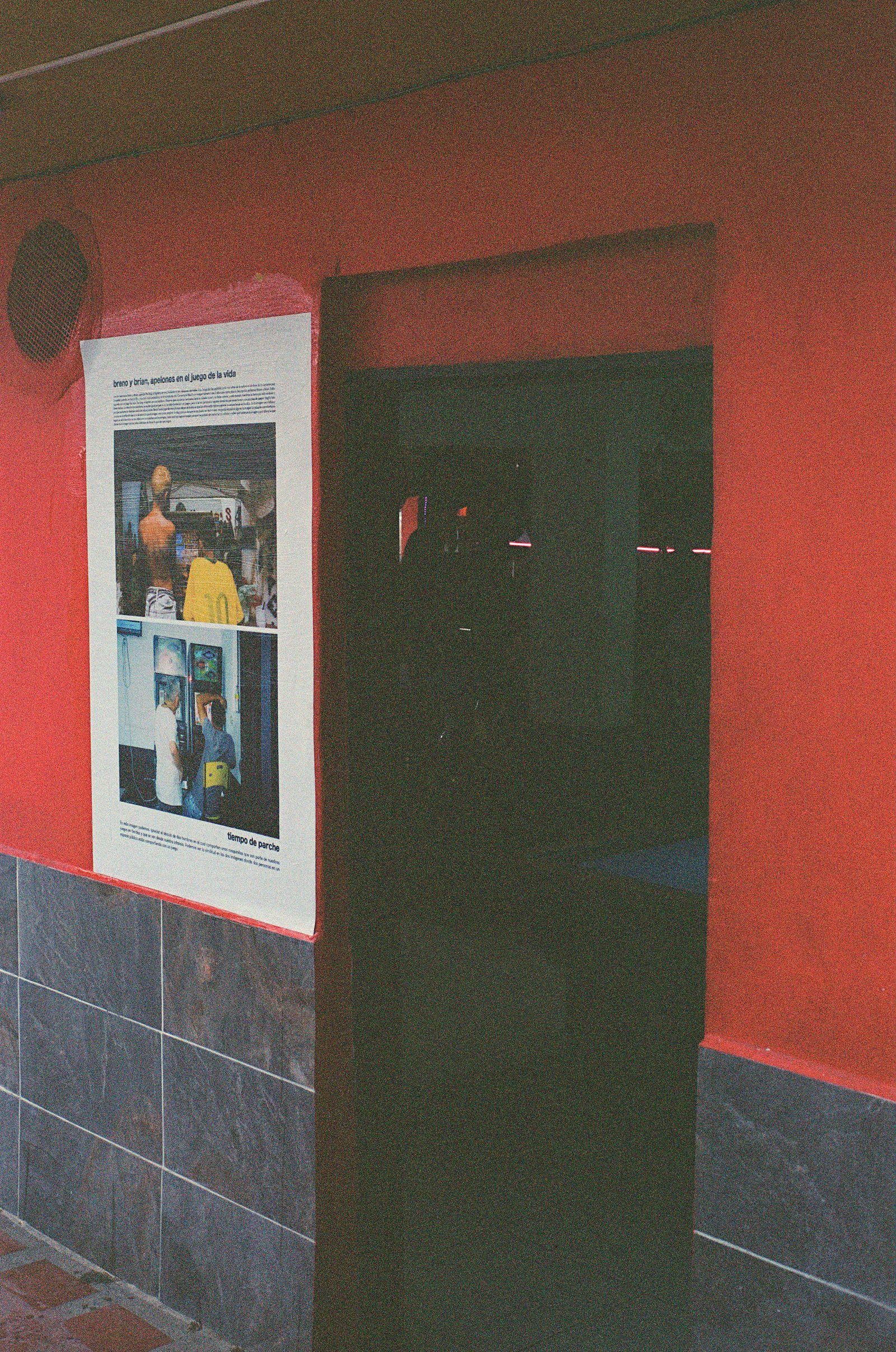
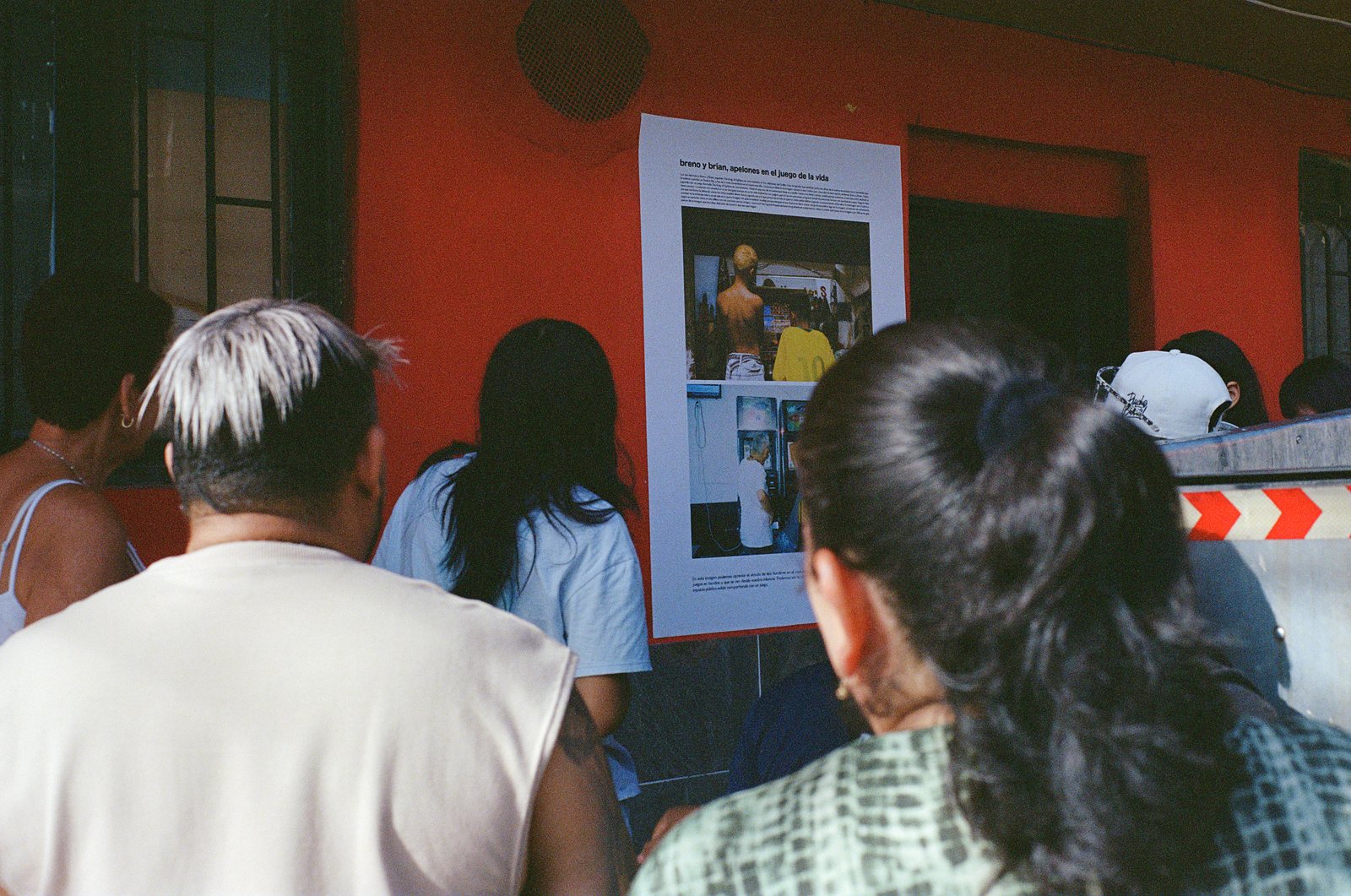
The two brothers, Breno and Brian, playing The King of Fighters in a barbershop in the alleyways of Valão. This photograph was shown, along with others by the photographer, during Brazilian pop singer Ludmilla’s show at Rock in Rio, and was among the most talked-about things in the world that day.
I see two boys who, as the caption says, are called Breno and Brian. They’re playing The King of Fighters in a barbershop. One of the brothers has blond hair and no top on, and he’s standing up while his brother is sitting down. I’ve never seen barbershops with games, but I have seen places where people get together to hang out and play games. I chose the photo because it strikes me how children can spend hours playing: they’re happy playing and sharing with each other.
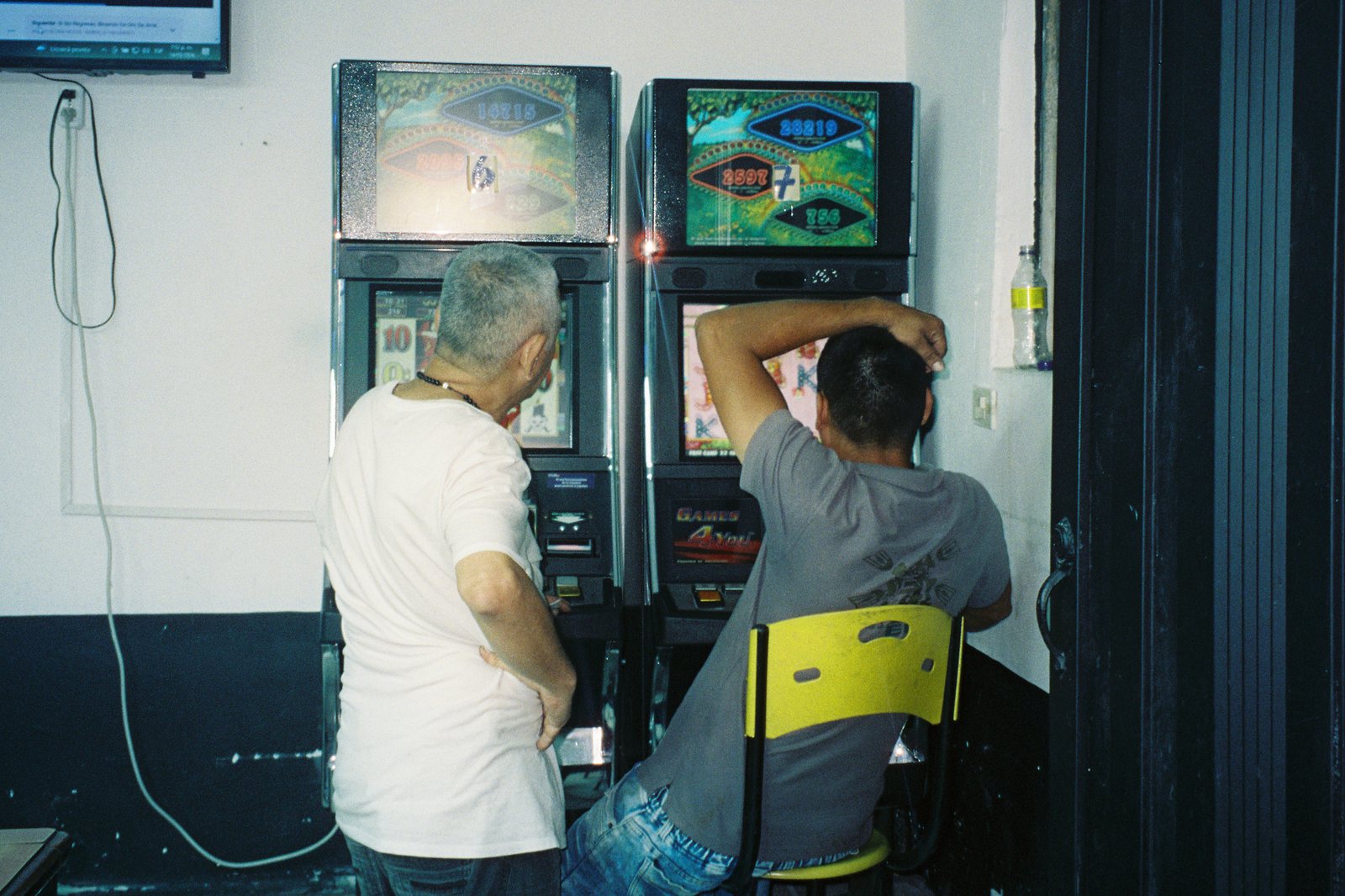
In this image we can see the bond between two men sharing some slot machines, which are part of the games we play in local shops and which we’ve seen since we were children. We can see the similarity between the two images: two people in a public space sharing a game.
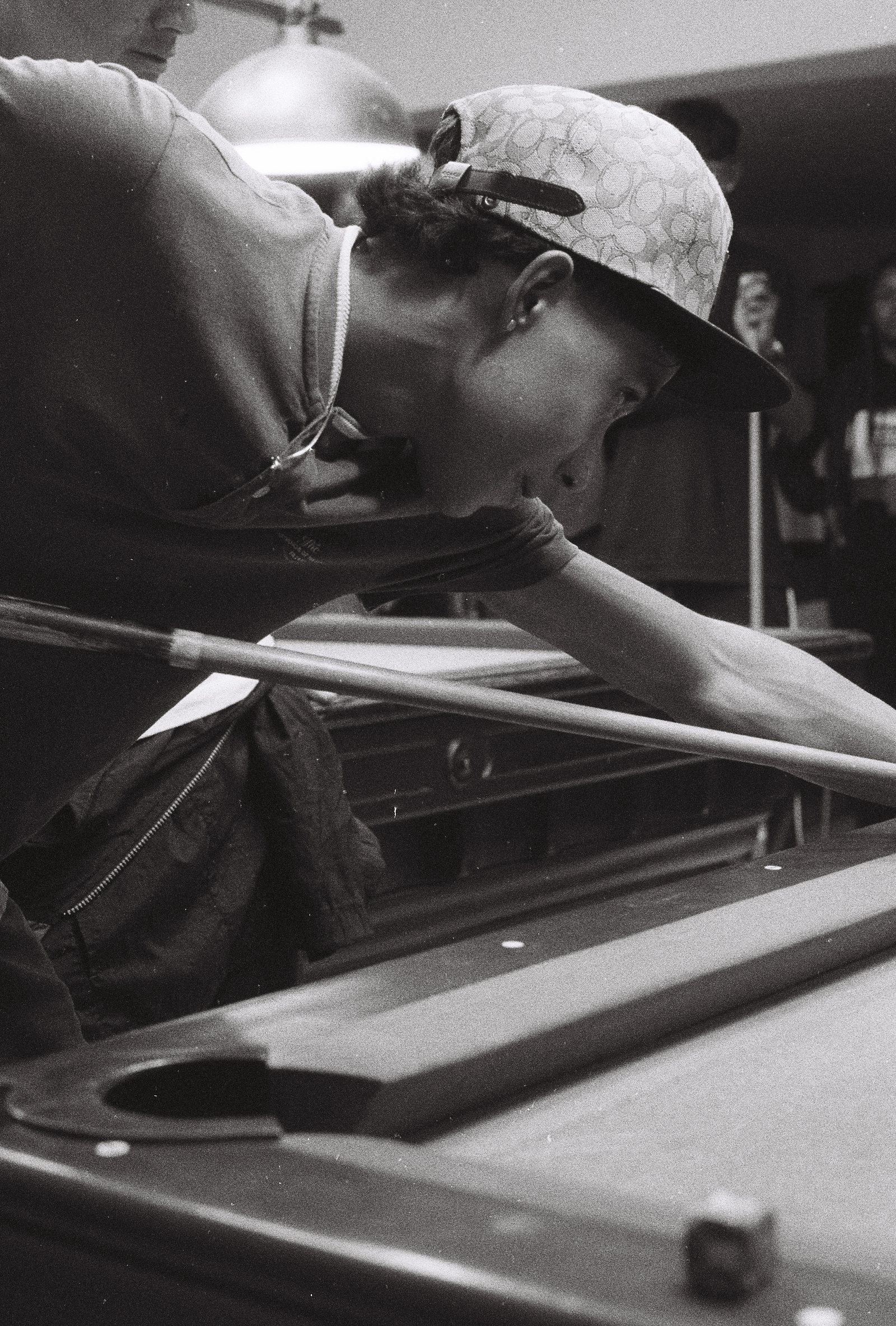
I see some lads playing pool, happy and sharing. They’re passing the time and playing, taking their minds off things.
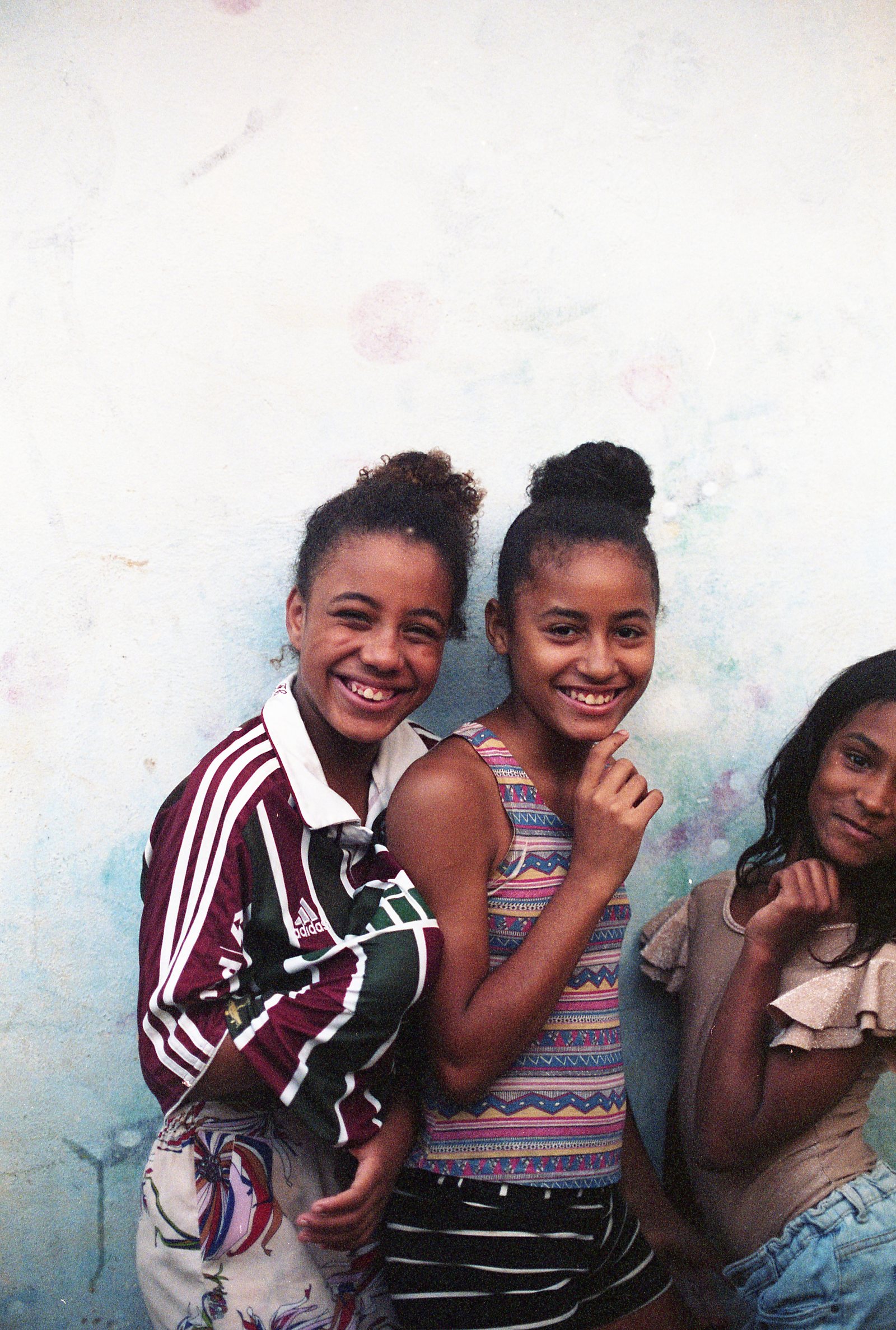
In this photograph I can see some girls posing. It shows me something very joyful. I chose this photograph because it has a lot to do with the girls in my neighbourhood and brings back lovely memories of when I was little and spent lots of time with other girls from my neighbourhood. It also connects me strongly with our roots.
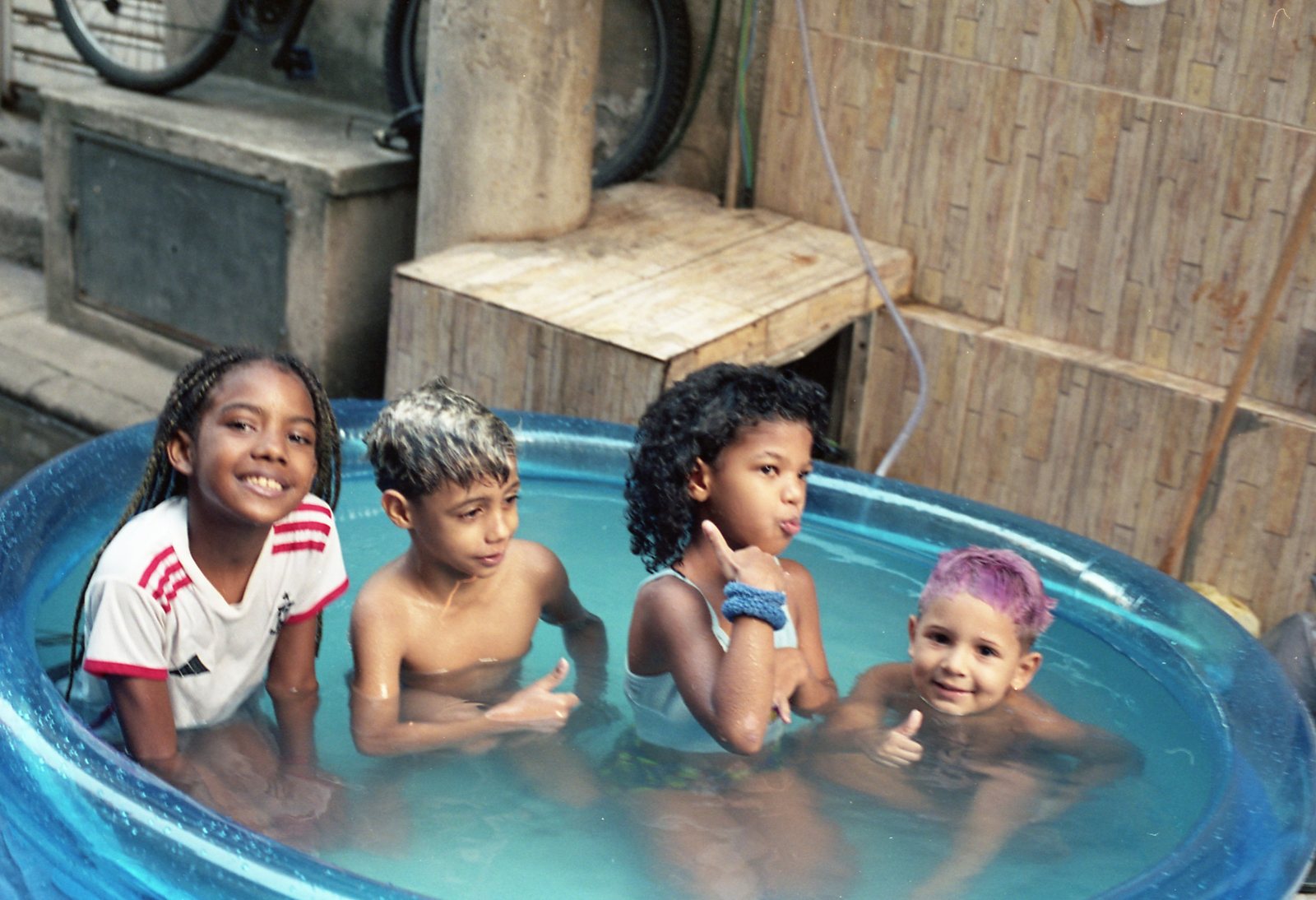
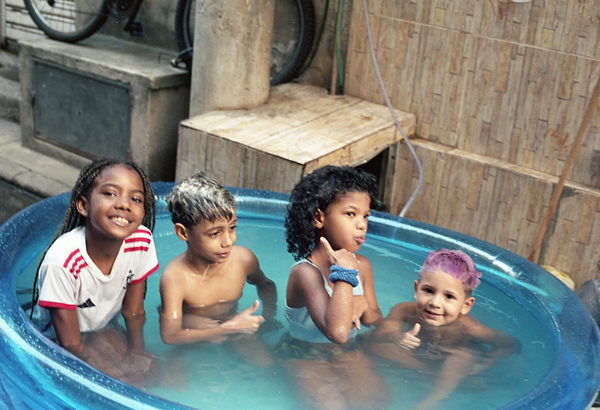
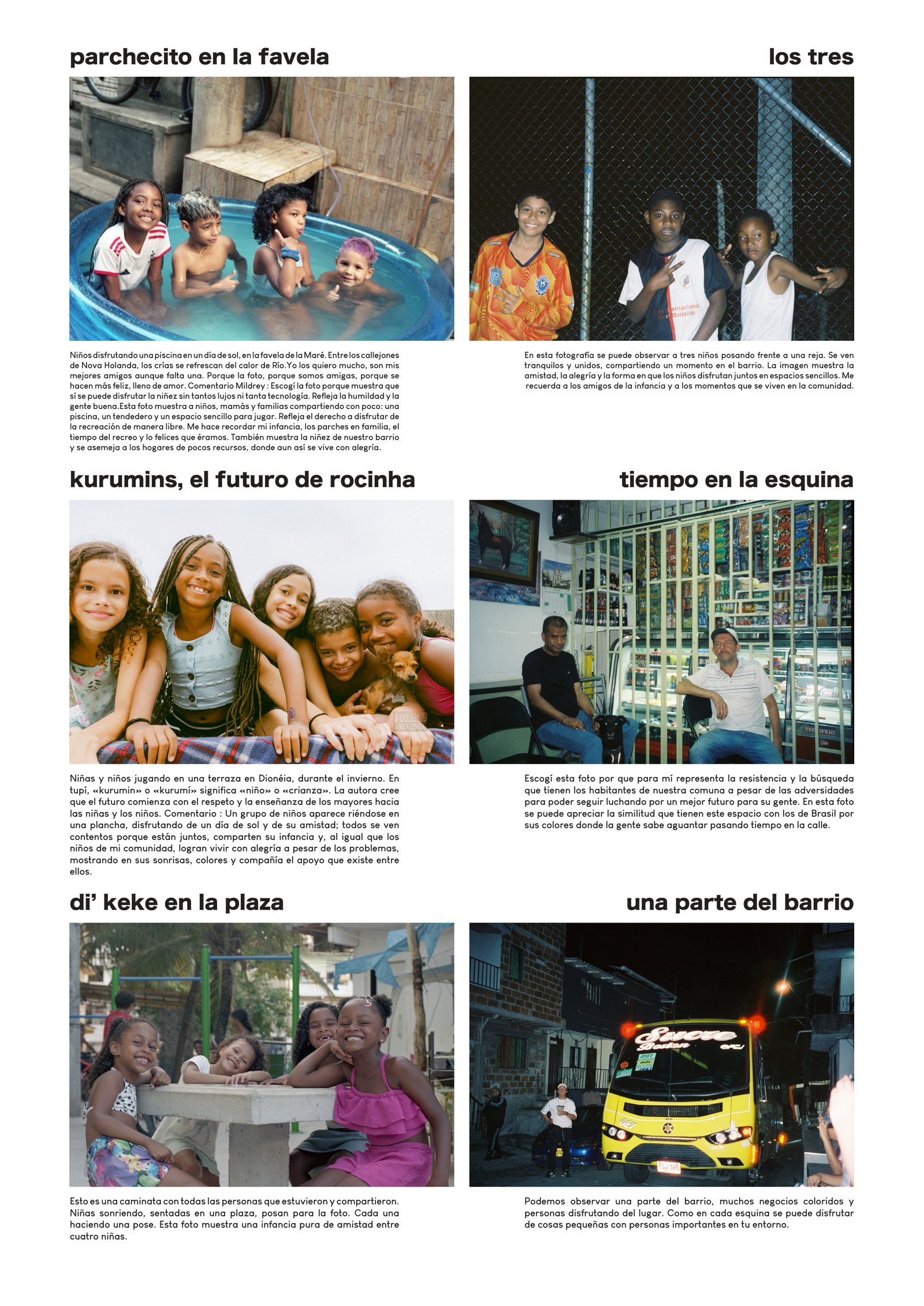
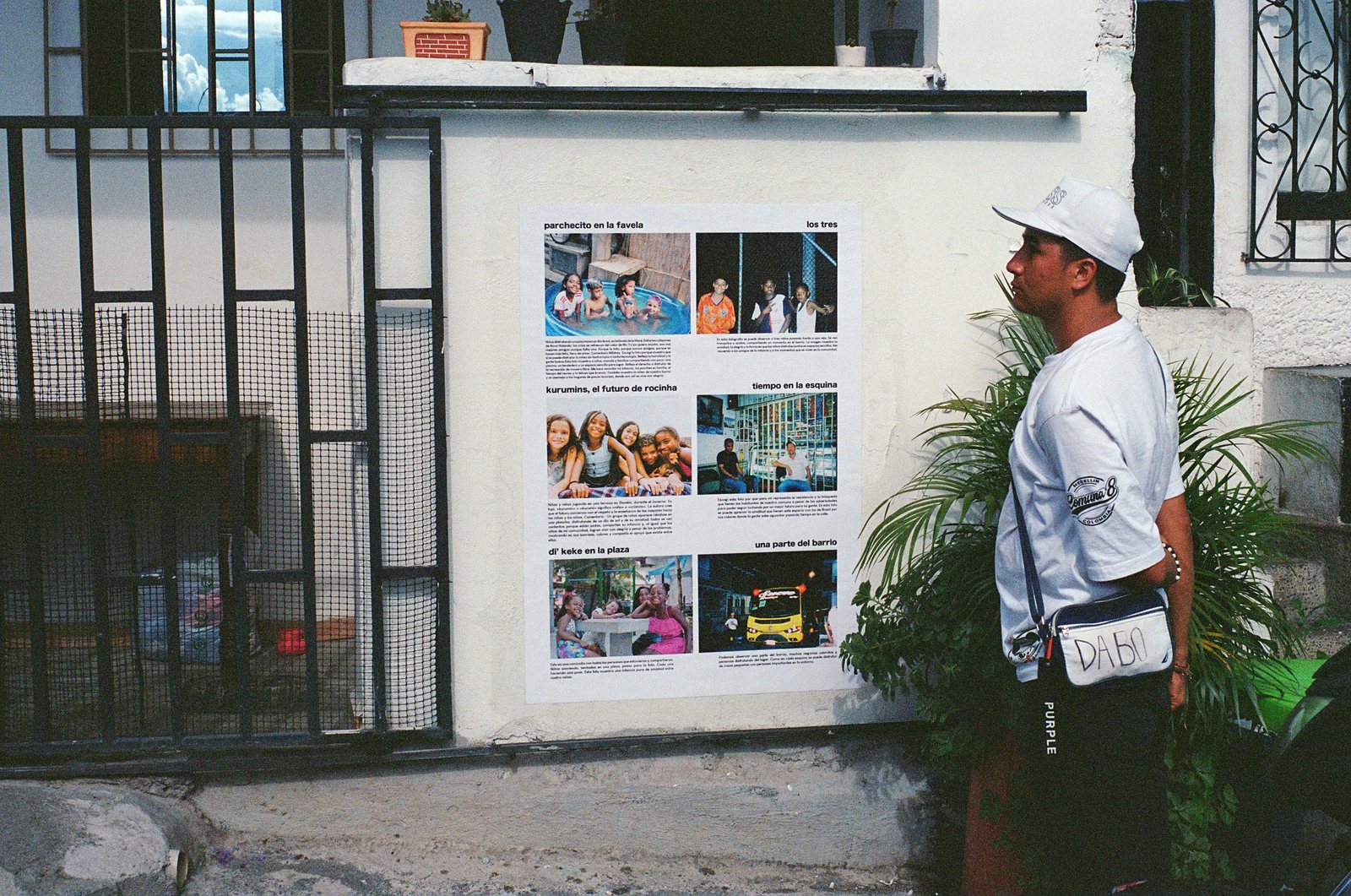
Children enjoying a paddling pool on a sunny day, in the Maré favela. In the alleyways of Nova Holanda, the crias cool off from the Rio heat.
I chose the photo because it shows that you really can enjoy childhood without so many luxuries or so much technology. It reflects humility and good people: children, mums and families sharing with very little, a pool, a washing line and a simple place to play. It reflects the right to play freely. It reminds me of my childhood, family get-togethers, break time at school and how happy we were.
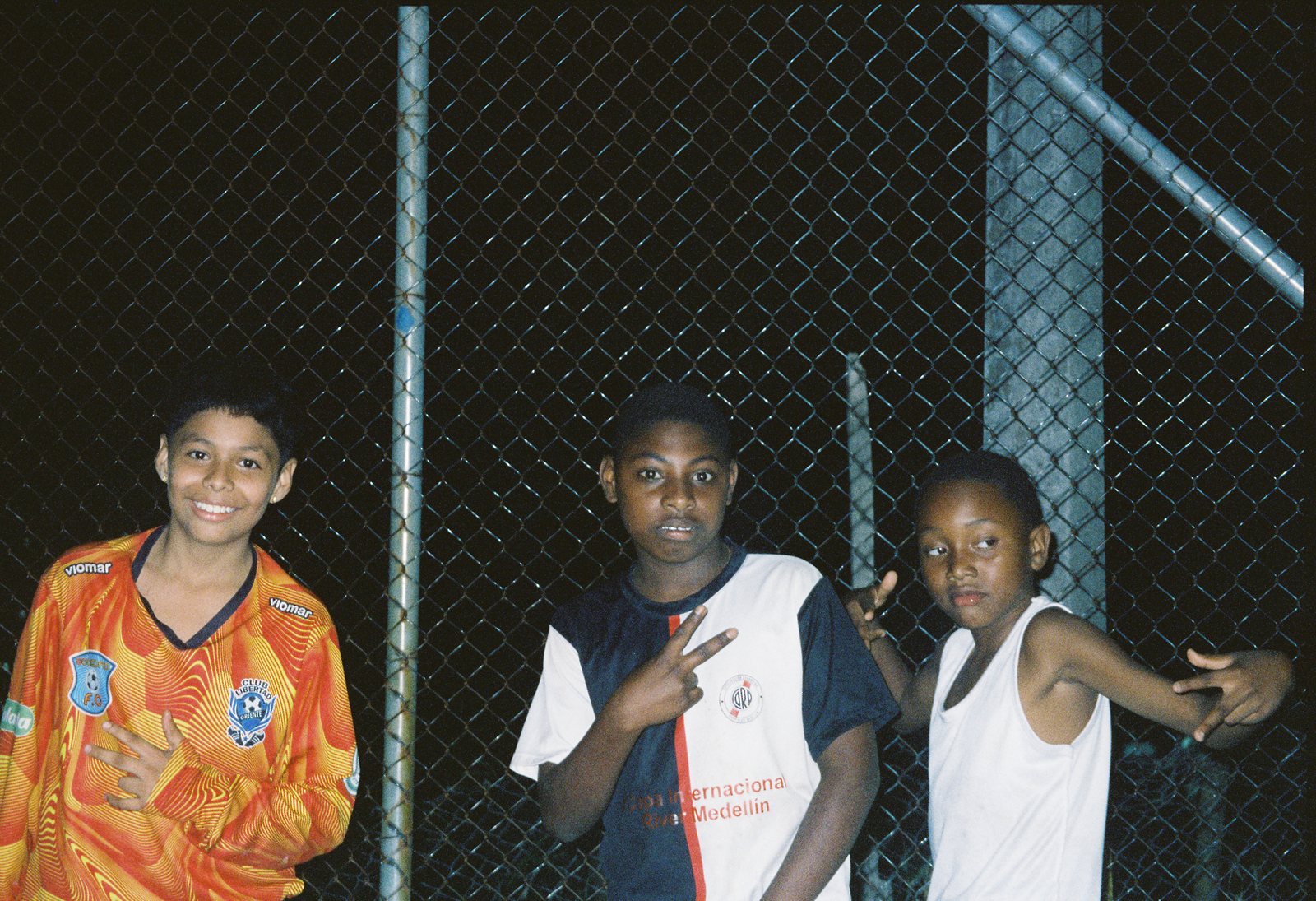
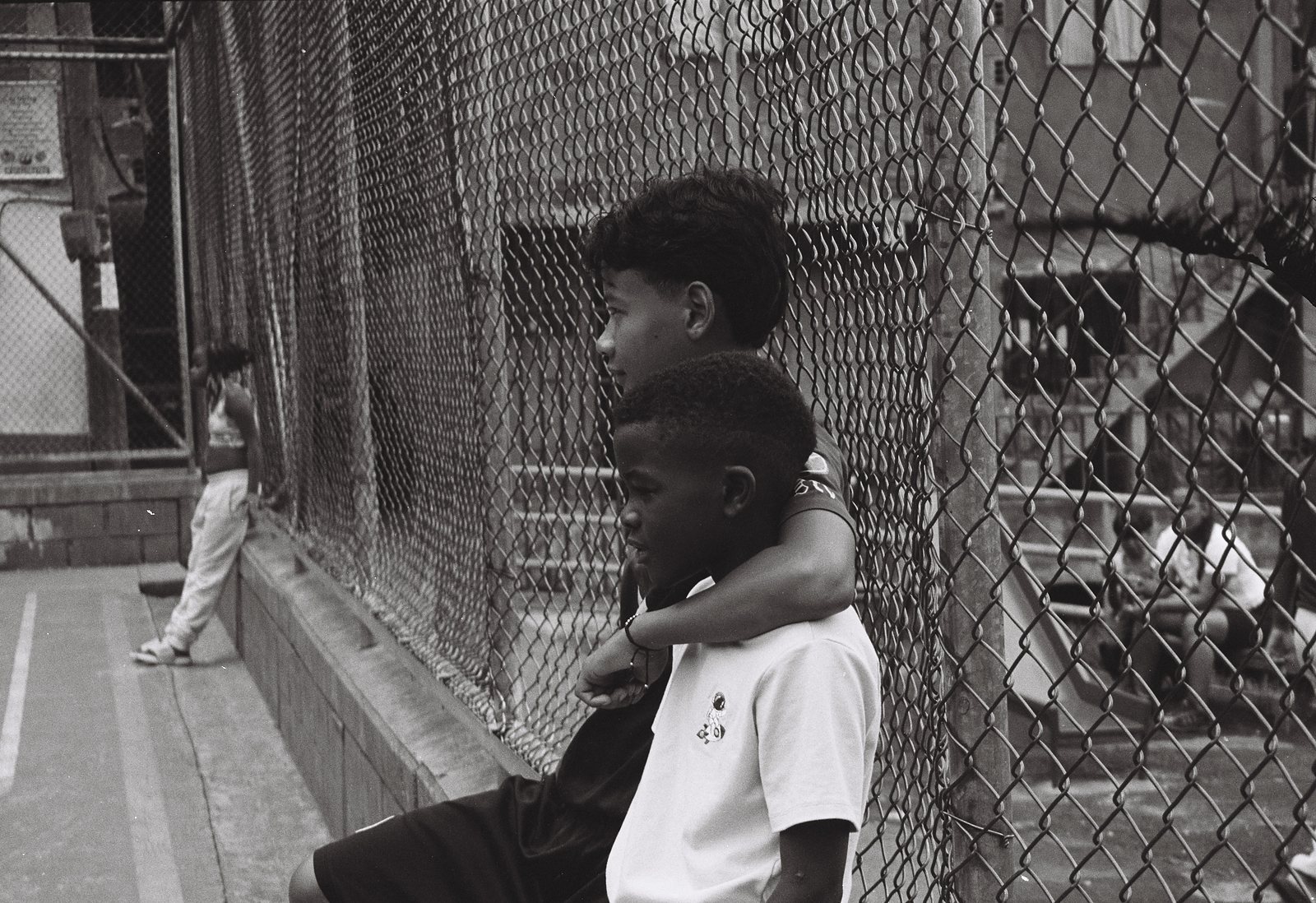
In this photograph you can see three children posing in front of a wire fence. They look calm and close, sharing a moment in the neighbourhood. The image shows friendship, joy and the way children have fun together in simple places. It reminds me of childhood friends and the moments you live in the community.
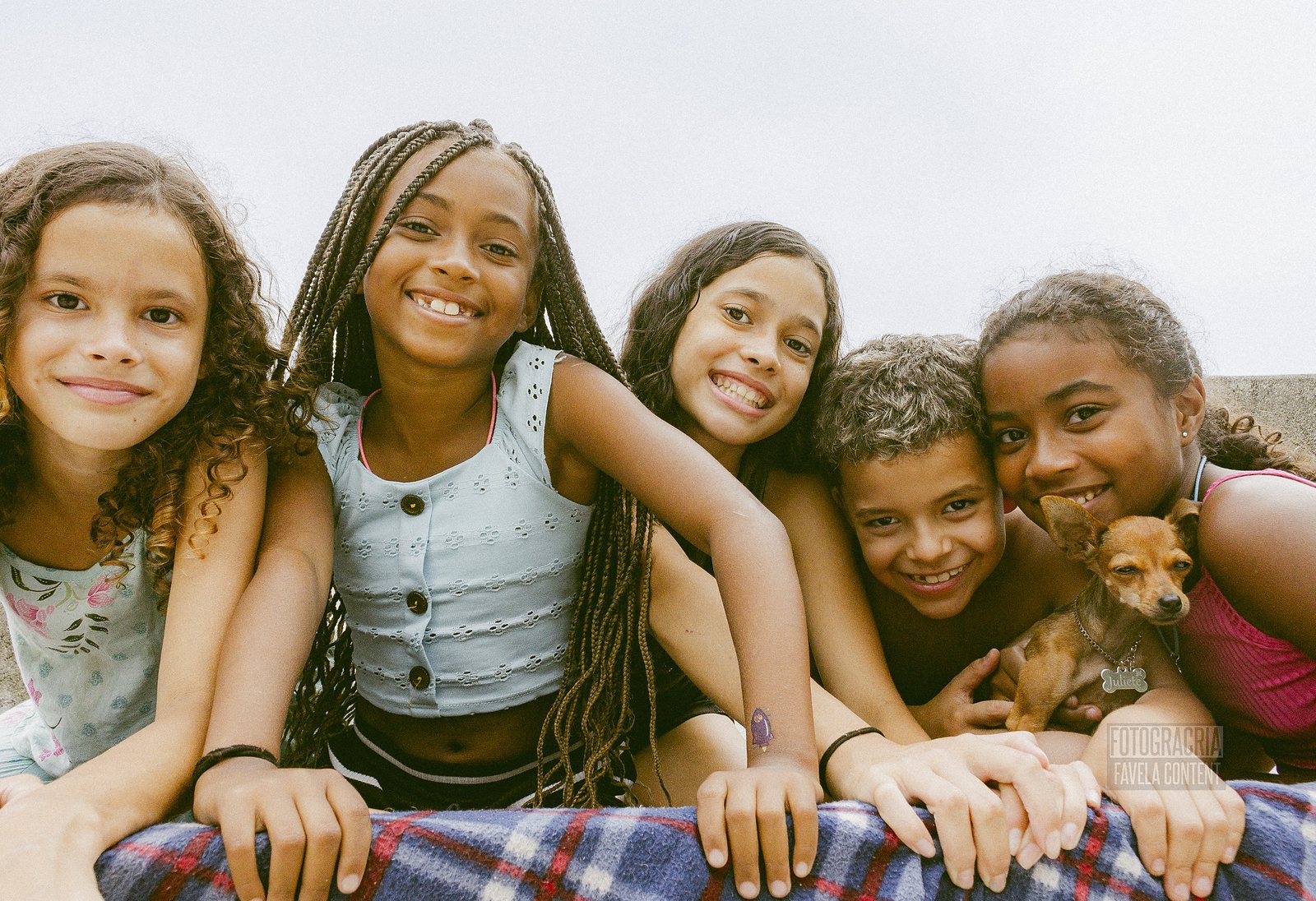
Girls and boys playing on a rooftop terrace in Dionéia, in winter. In Tupi, ‘kurumin’ or ‘kurumí’ means ‘child’. The photographer believes that the future begins with respect, and with elders passing on what they know to children.
A group of children are laughing on a plancha, enjoying a sunny day and their friendship. They all look happy because they’re together and sharing their childhood and, just like the children in my community, they manage to live joyfully despite the problems.
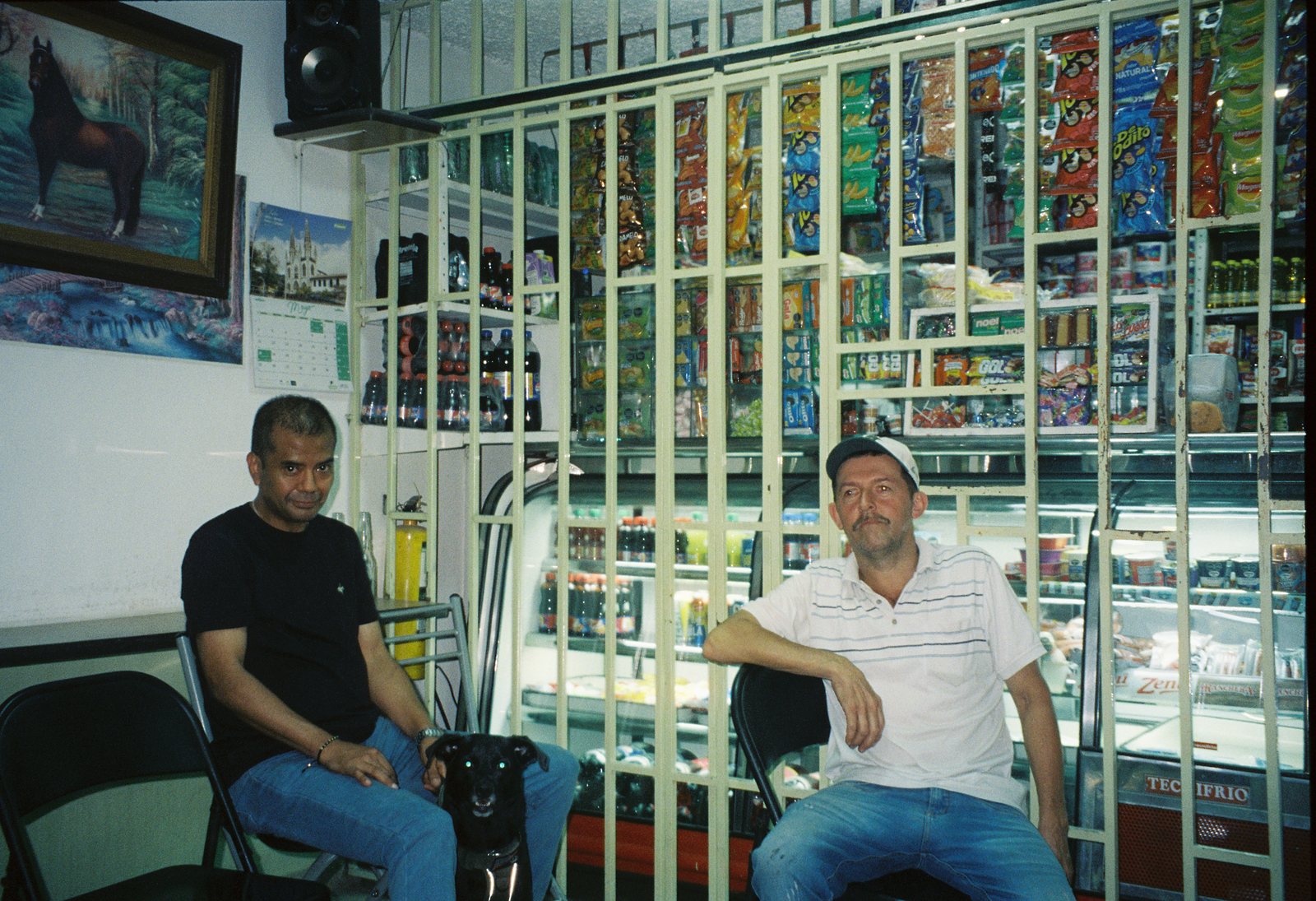
I chose this photo because for me it represents the resistance and determination of the people of our comuna who, despite the hardships, keep fighting for a better future for their people. You can see how this place is like those in Brazil because of its colours, where people spend time in the street.
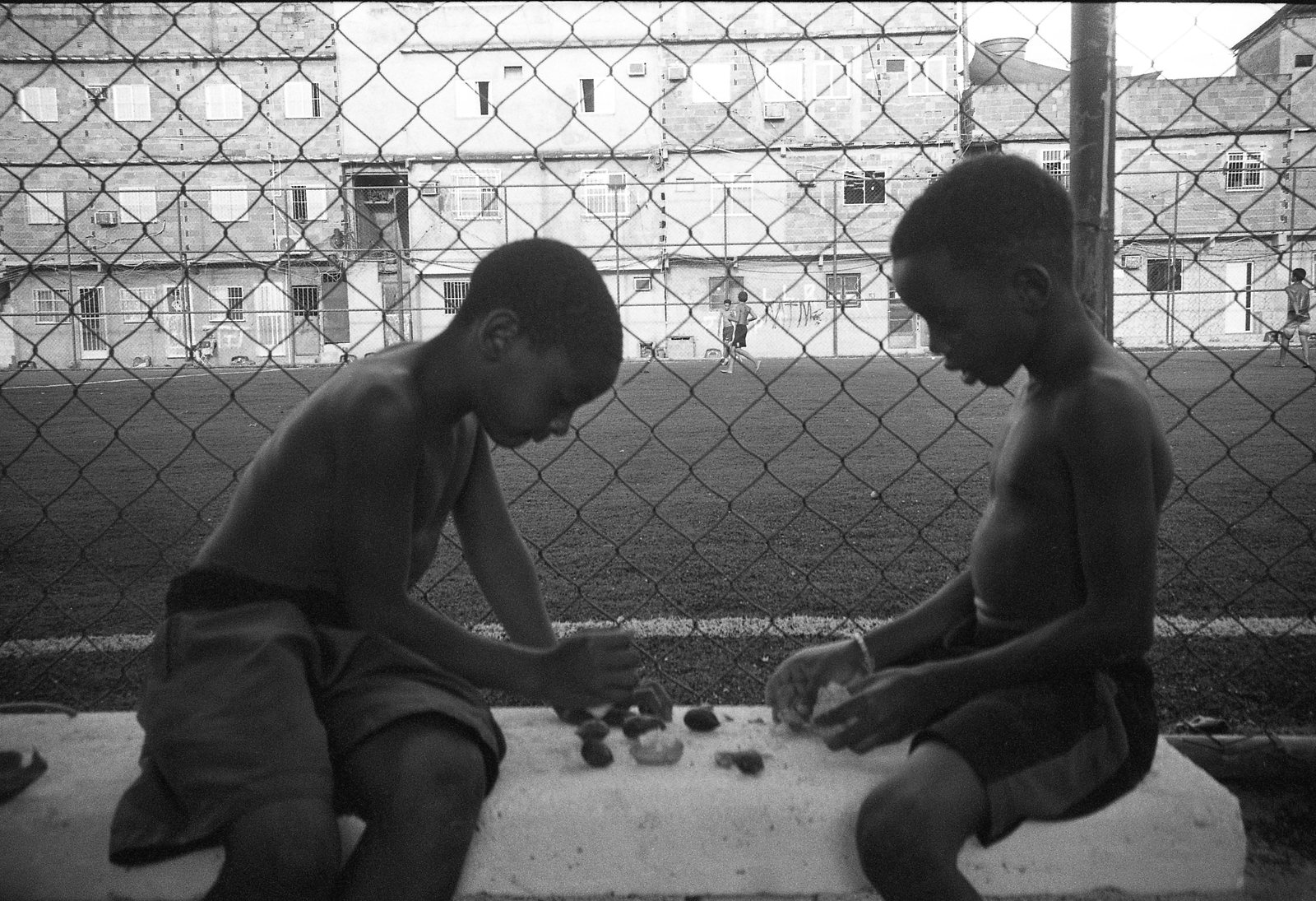
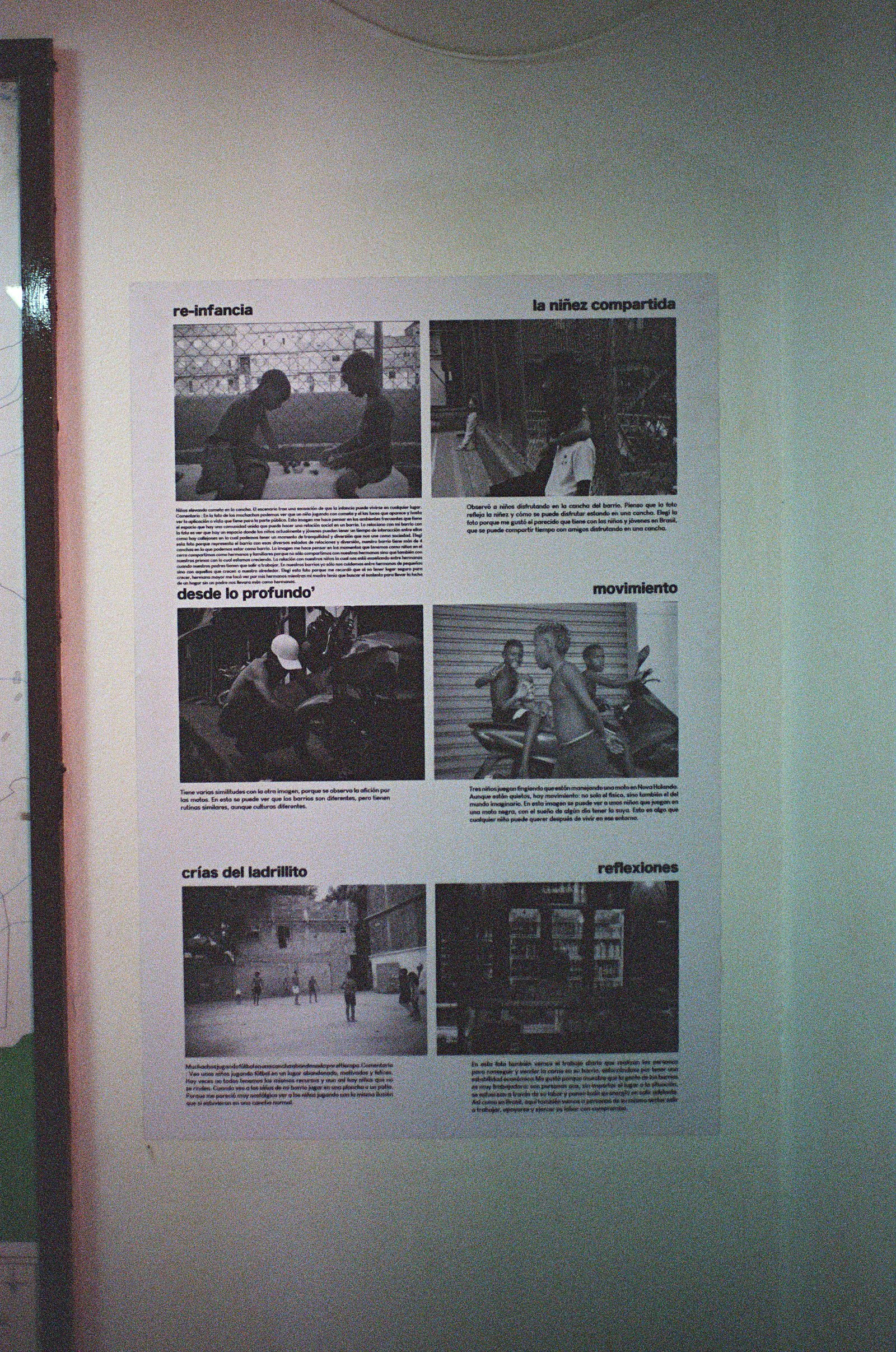
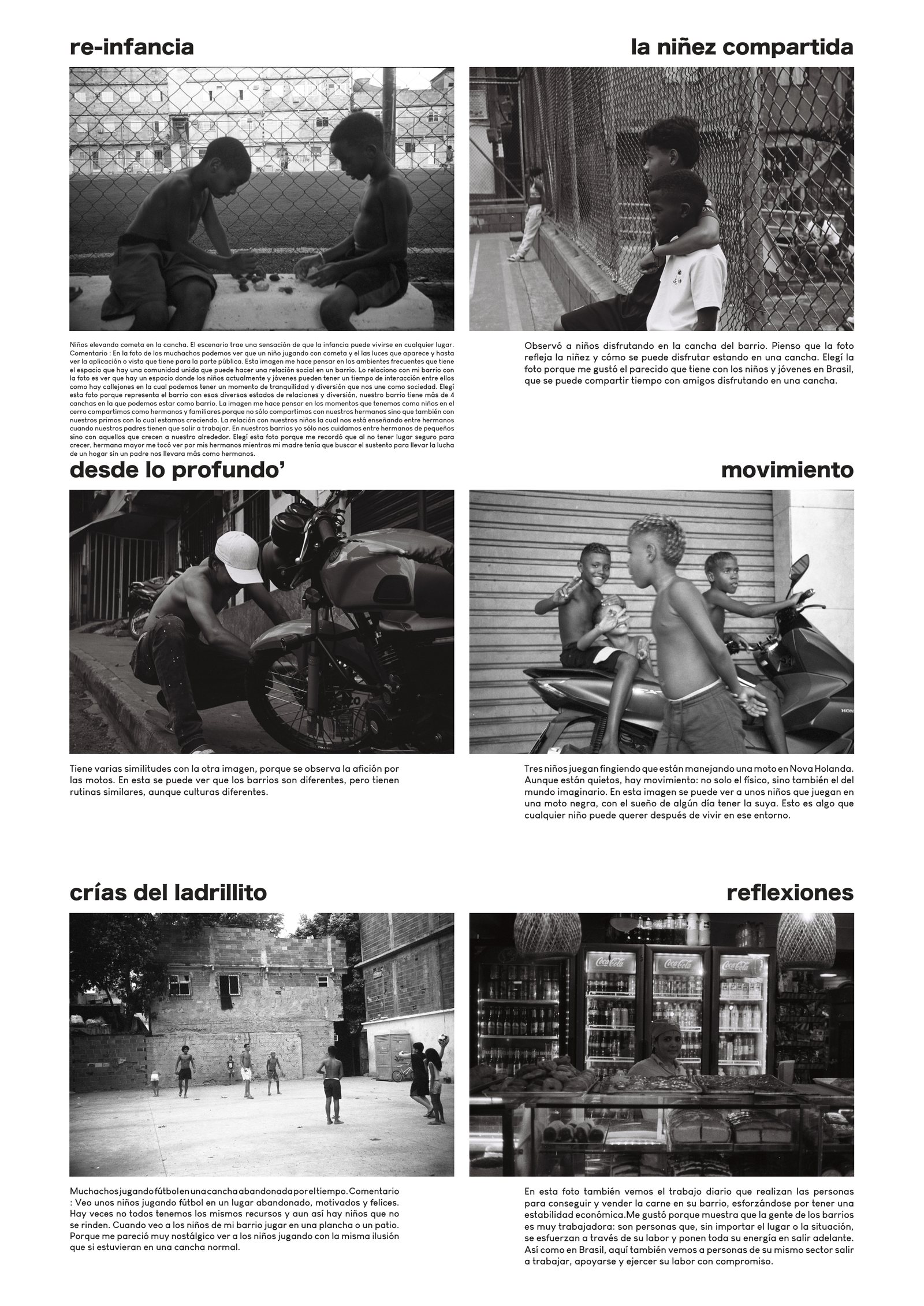
Children flying a kite on the pitch. The setting gives the feeling that childhood can be lived anywhere.
This image makes me think of a close community. Our neighbourhood has more than four pitches where we can all be together as a neighbourhood. It reminds me of the times we have as children on the hill, spending time together as brothers and sisters and with our cousins. I chose this photo because it reminded me that, with no safe place to grow up, as the big sister I had to look after my brothers and sisters while my mother was out earning a living for a home without a father.
I can see children having fun on the neighbourhood pitch. I think the photo reflects childhood and how much fun you can have on a pitch. I chose the photo because I liked how similar it is to the children and young people of Brazil: you can spend time with friends on a pitch.
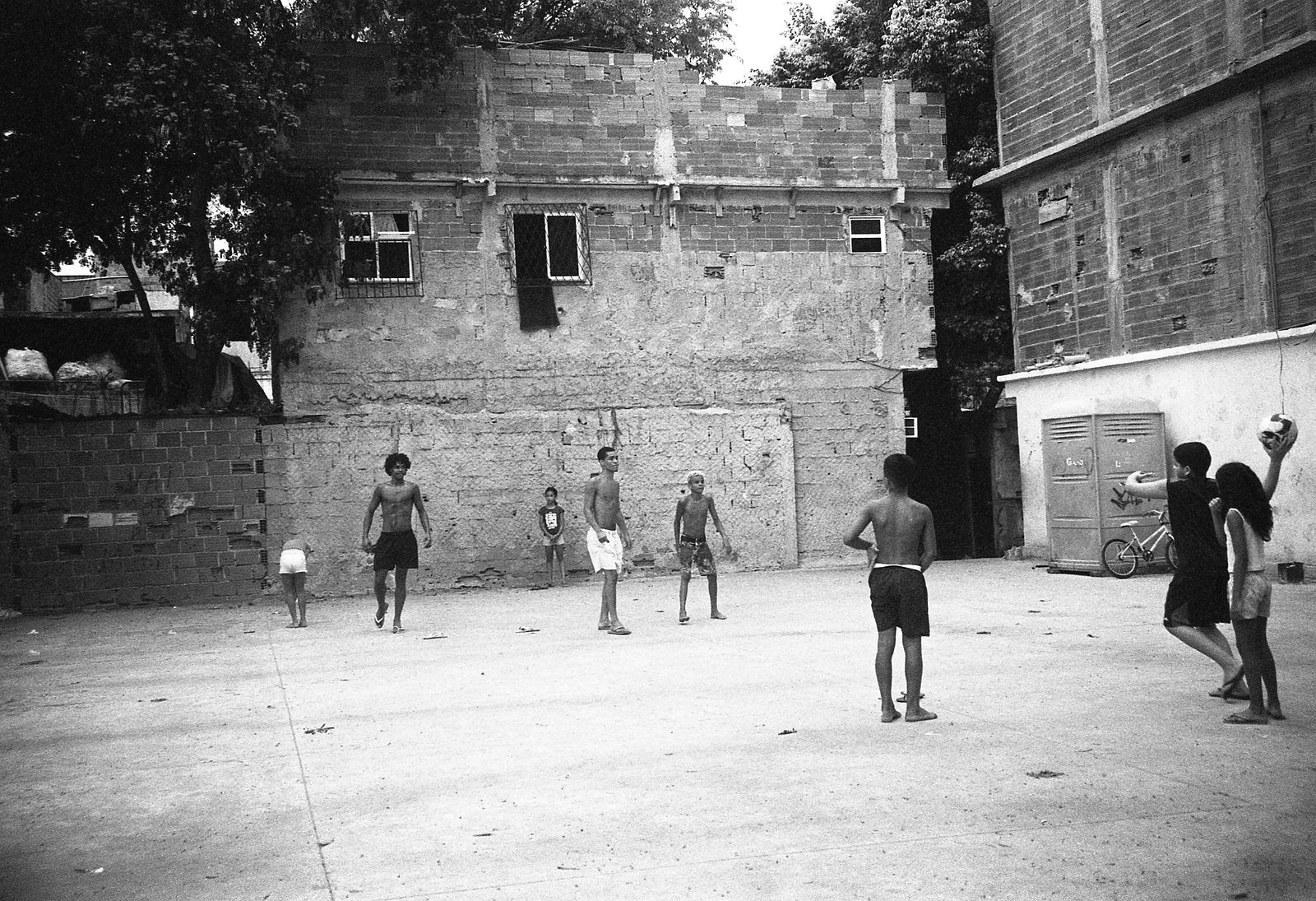
Lads playing football on a pitch that time forgot.
I see some children playing football in an abandoned place, keen and happy. Sometimes we don’t all have the same resources, and even so there are children who don’t give up, like when I see the children in my neighbourhood playing on a plancha or in a yard, just as excited as if they were on a proper pitch.
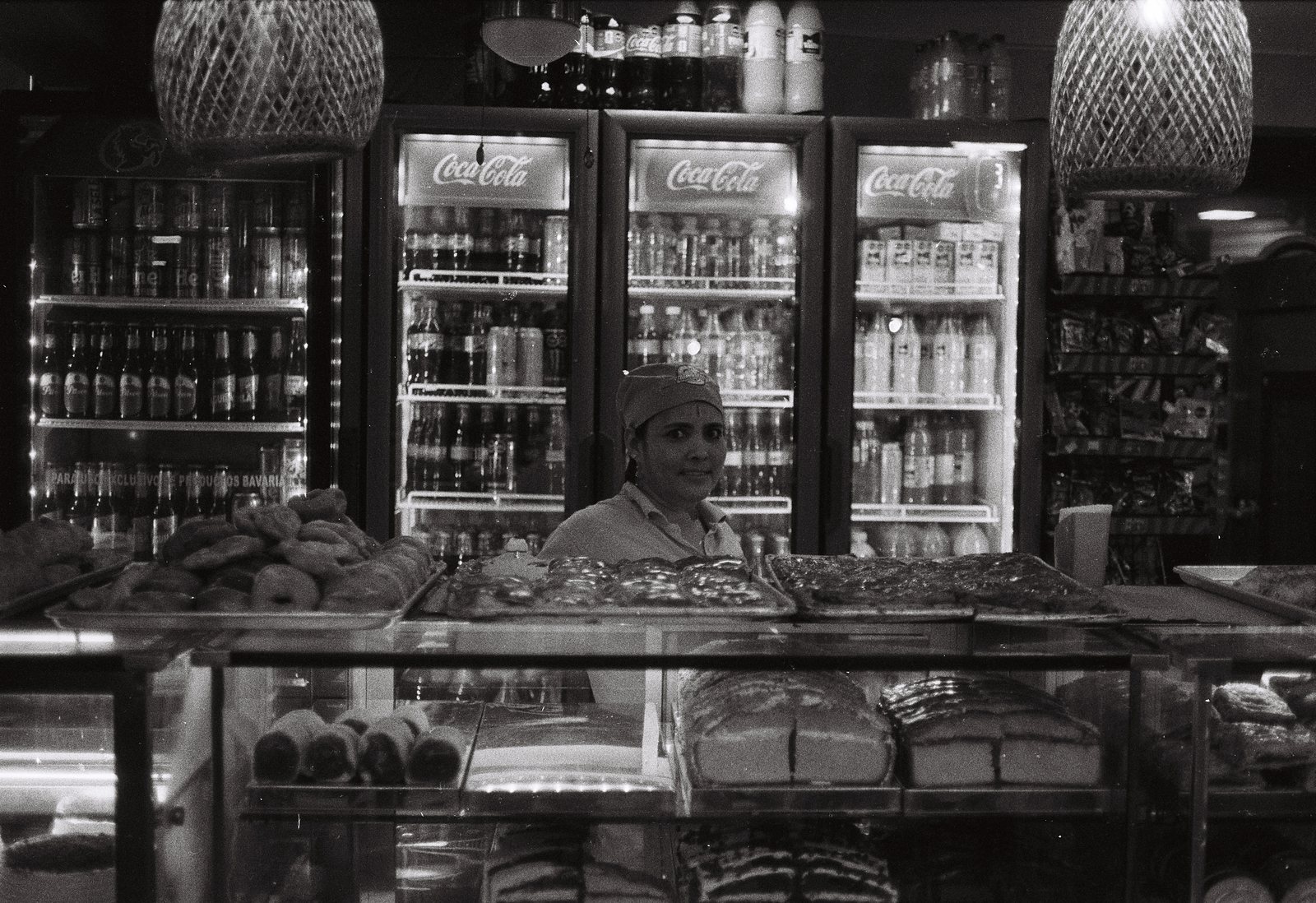
In this photo we see the daily work people do to get hold of meat and sell it in their neighbourhood, working hard for some financial stability. Just as in Brazil, here too we see people from the same area going out to work, supporting each other and doing their job with commitment.
Faces that hold the camera's gaze, from one favela to another.
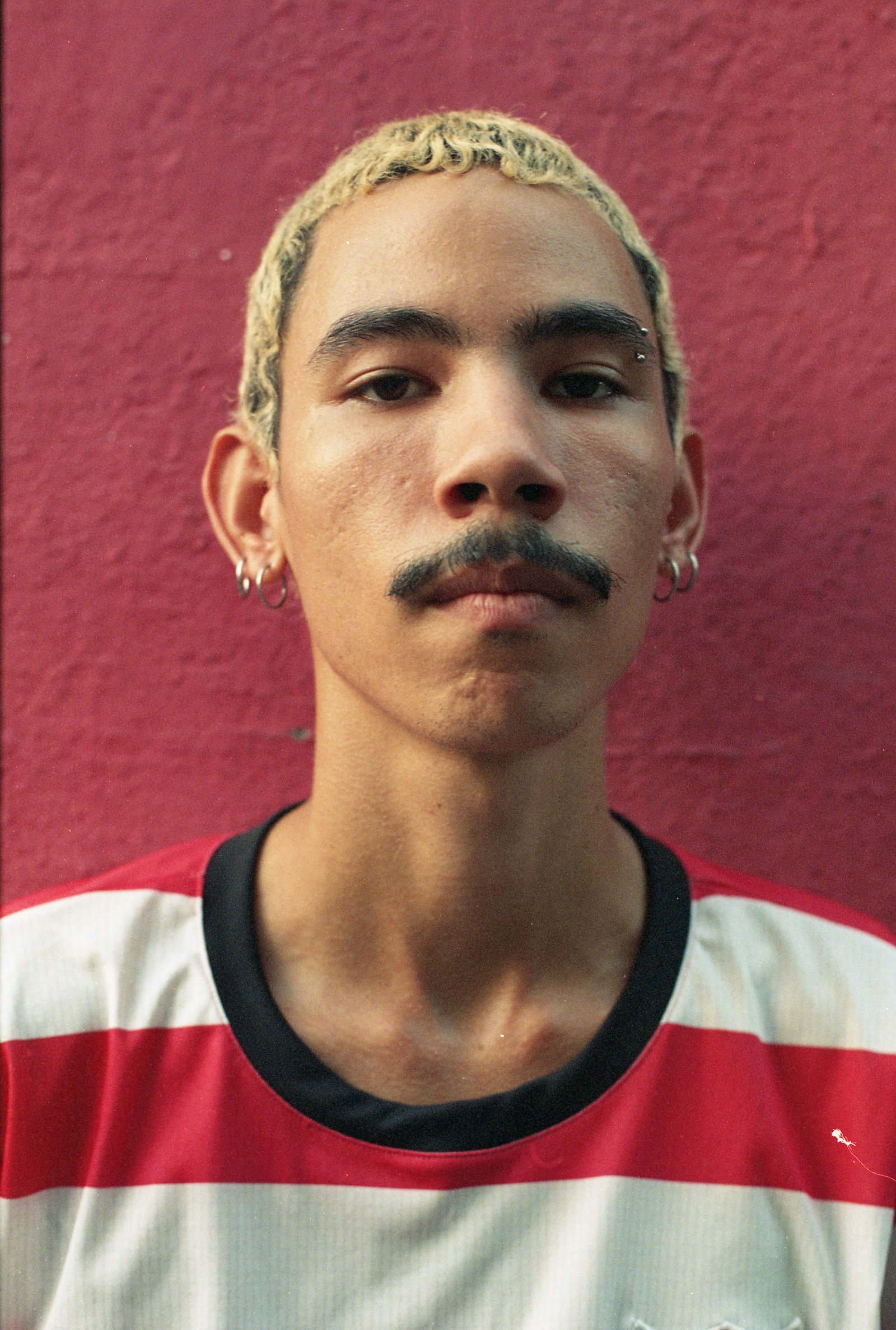
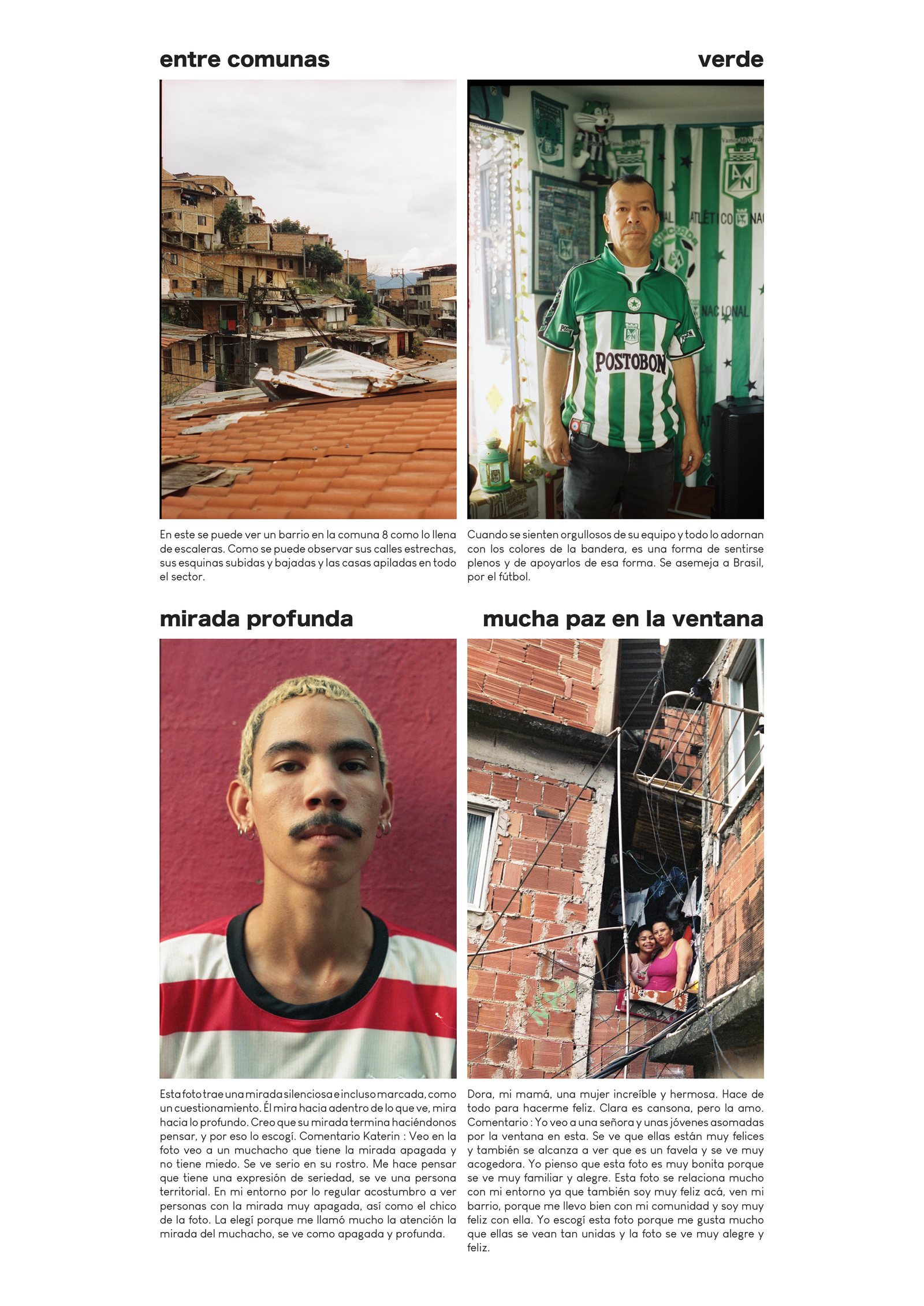
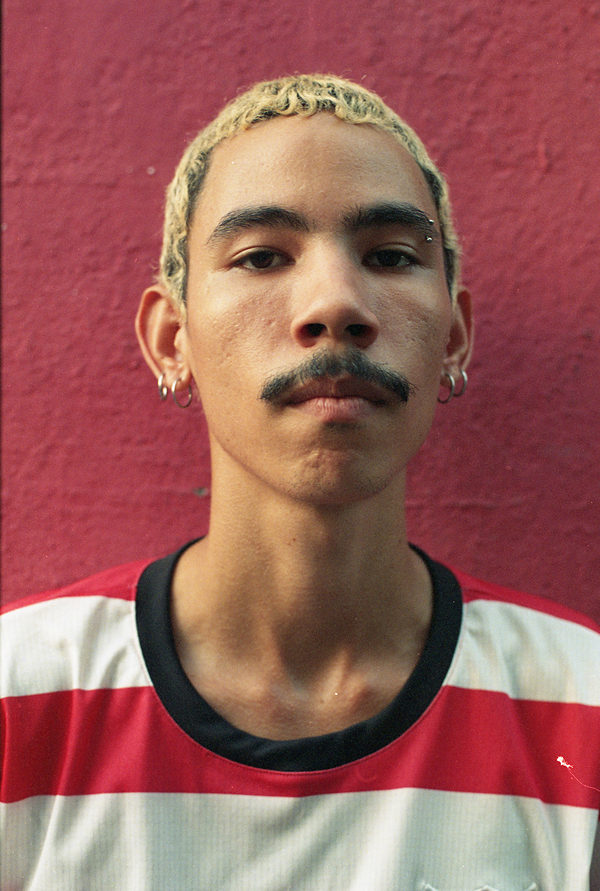
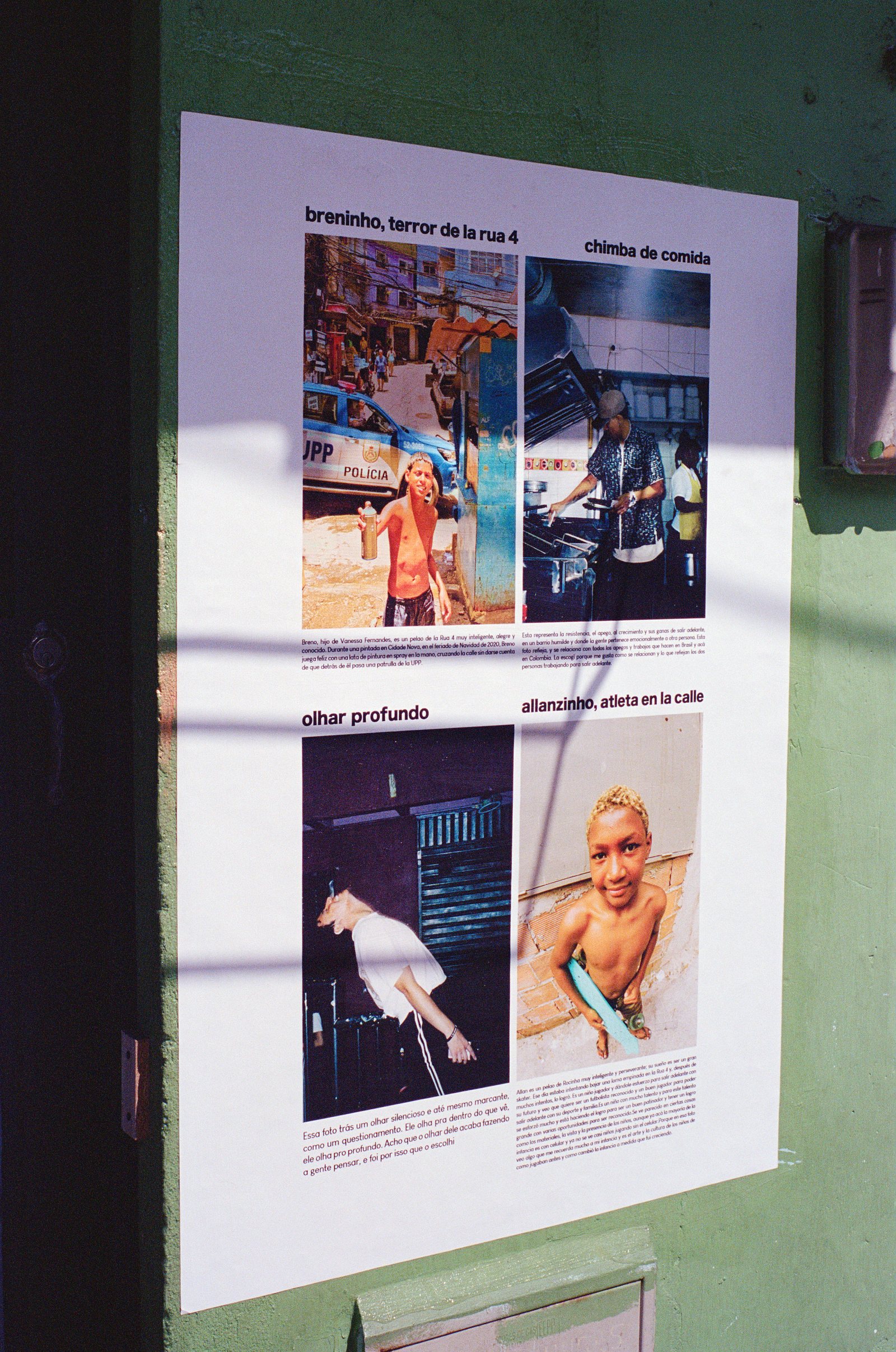
This photo carries a silent, even striking gaze, like a question. He looks into what he sees, he looks into the depths. I think his gaze ends up making us think, and that’s why I chose it.
I see a young man whose eyes have lost their spark, and who isn’t afraid. His face looks serious. It makes me think he has a serious expression; he looks like a territorial kind of person. Around me I often see people whose eyes have lost all their spark, just like the boy in the photo. I chose it because I was really struck by his gaze, so deep and with the spark gone out of it.
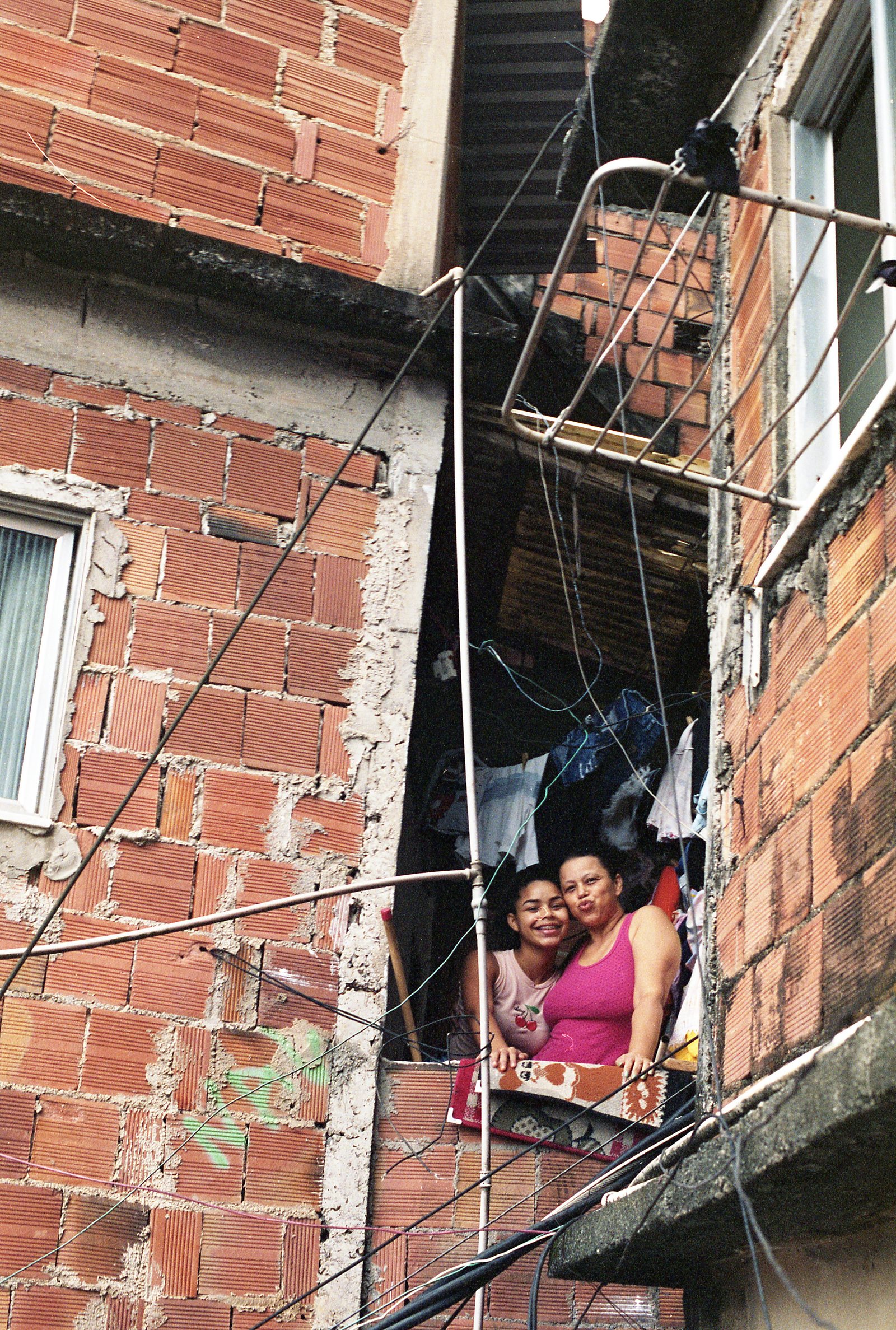
Dora, my mum, an amazing and beautiful woman. She does everything to make me happy. Clara is a pain, but I love her.
I see a lady and some girls leaning out of the window. You can tell they’re very happy, and you can also just make out that it’s a favela, and it looks very welcoming. This photo has a lot in common with where I live, because I’m very happy here too: I get on well with my community. I chose it because I really like how close they look.
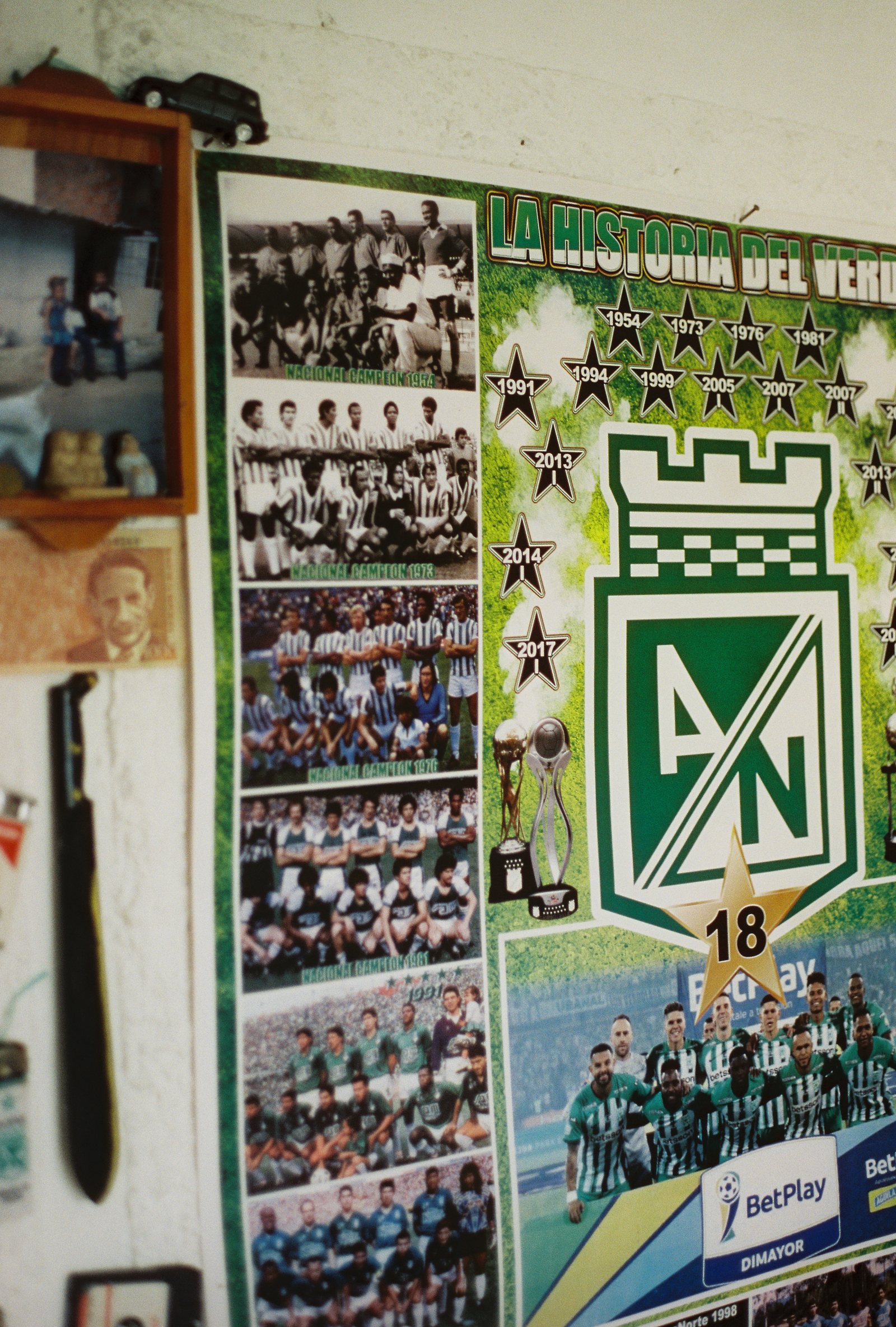
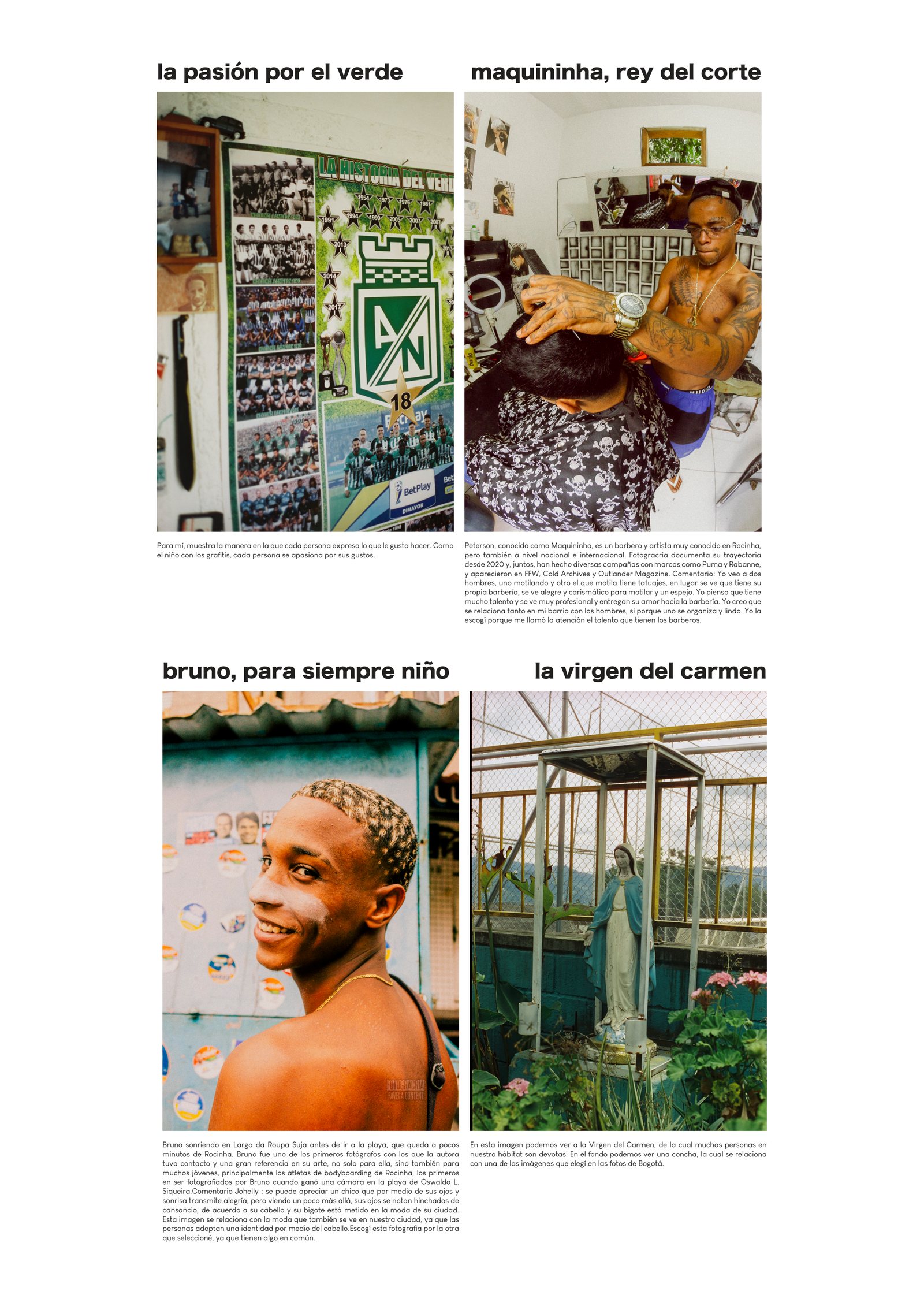
For me, it shows the way each person expresses what they love doing. Like the boy with the graffiti, everyone gets passionate about the things they love.
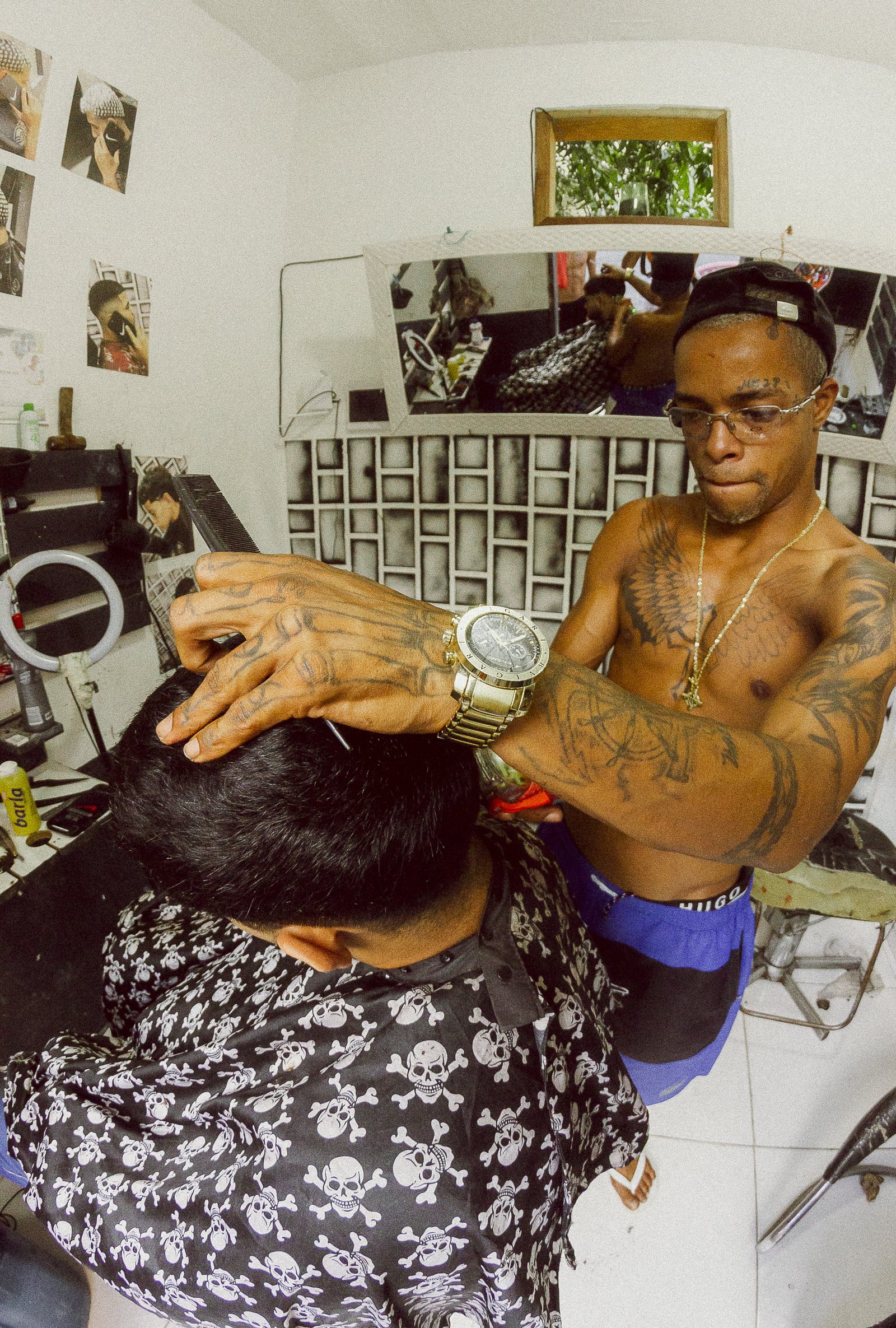
Peterson, known as Maquininha, is a barber and artist who is well known in Rocinha, and also across Brazil and abroad. Fotogracria has been documenting his journey since 2020.
I see two men, one cutting the other’s hair. The one doing the cutting has tattoos; you can tell he has his own barbershop, and he looks cheerful and charismatic. I think he’s very talented and puts all his love into barbering. I chose it because the barbers’ talent really caught my attention.
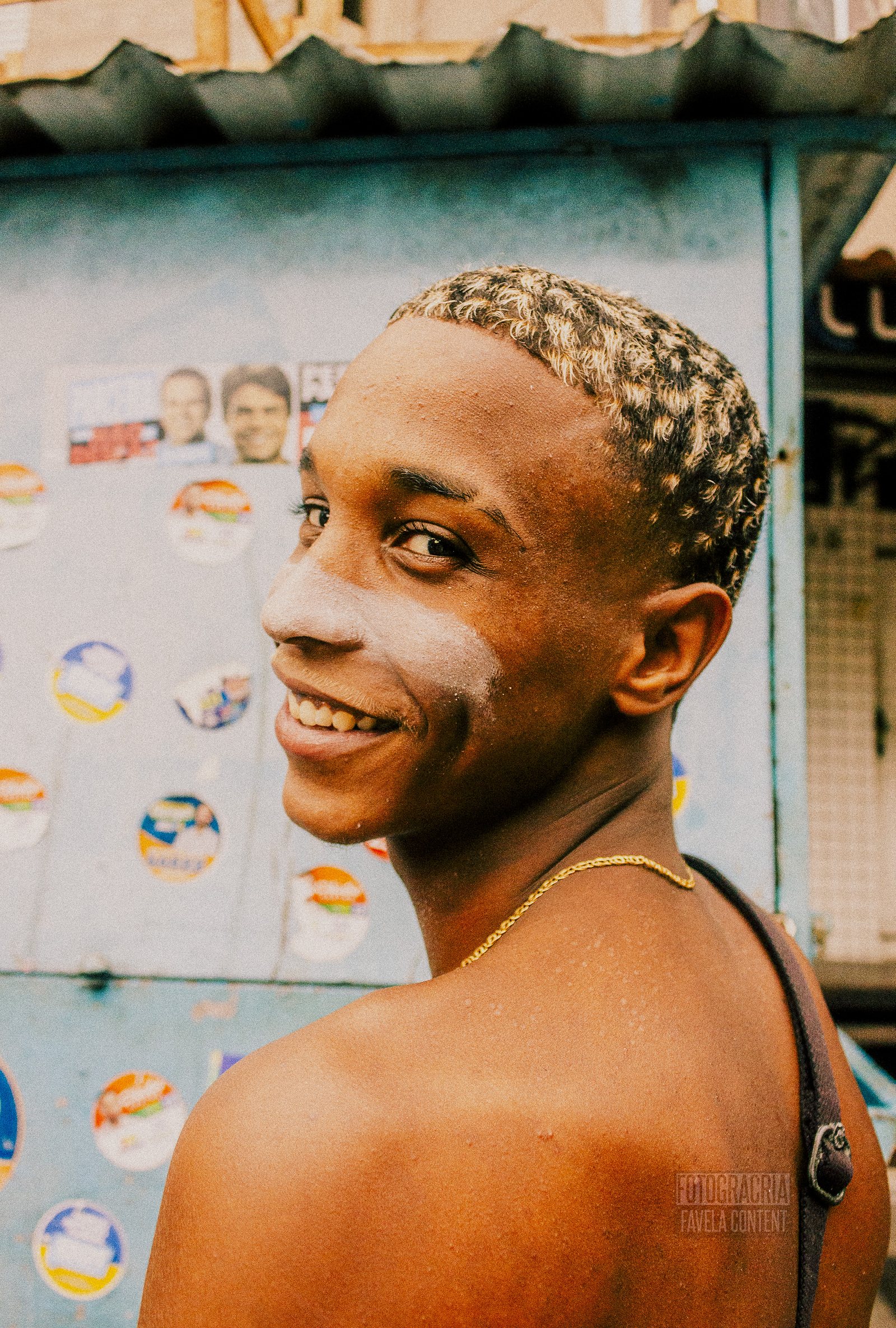
Bruno smiling in Largo da Roupa Suja before heading to the beach, a few minutes from Rocinha. Bruno was one of the first photographers the artist got to know, and a major influence on her art.
You can see a boy whose eyes and smile give off joy but, looking a little deeper, his eyes look puffy with tiredness. With his hair and his moustache, he’s into the fashion of his city. This image connects with the fashion you also see in our city: people take on an identity through their hair.
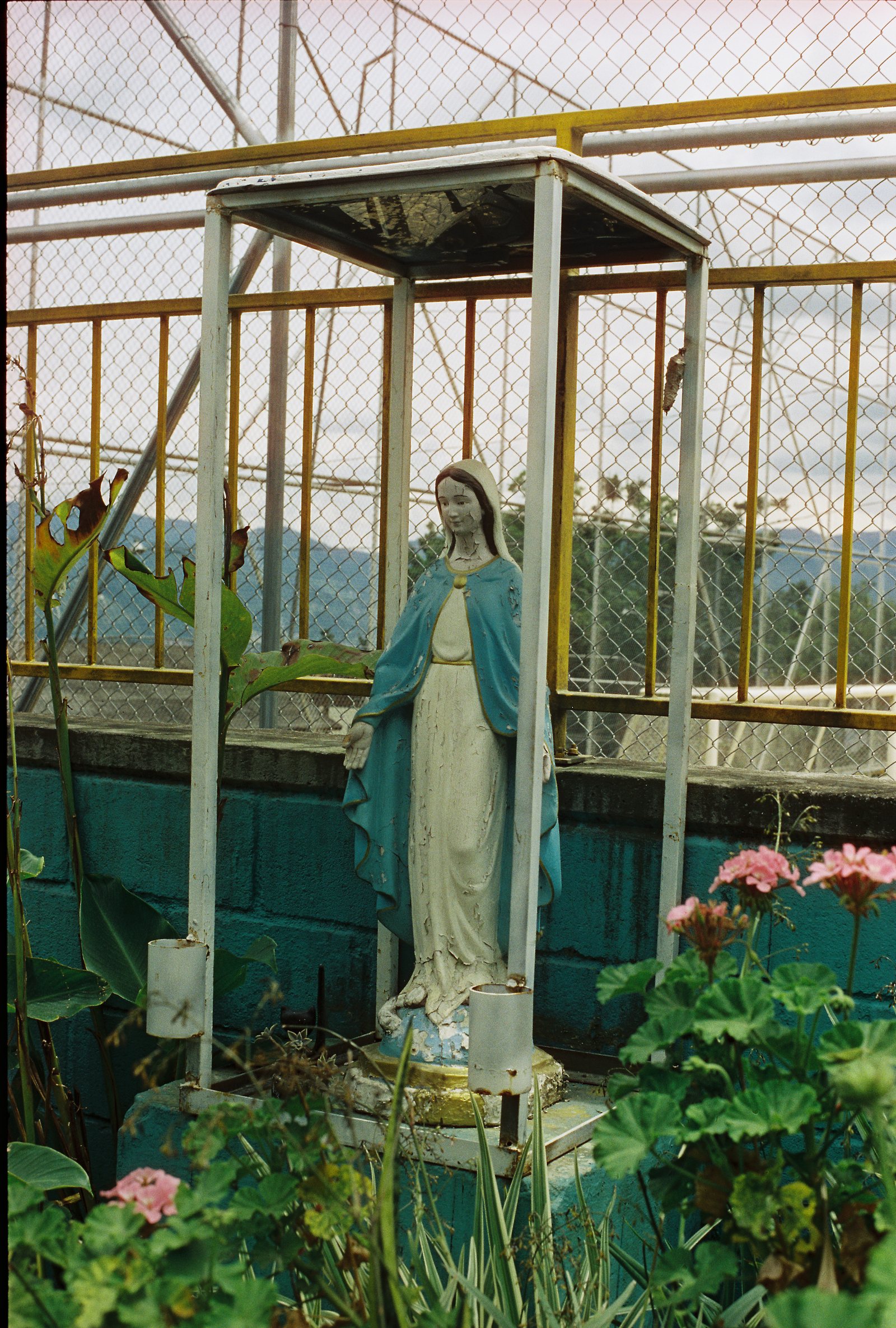
In this image we can see Our Lady of Mount Carmel, to whom many people where we live are devoted. In the background we can see a shell.
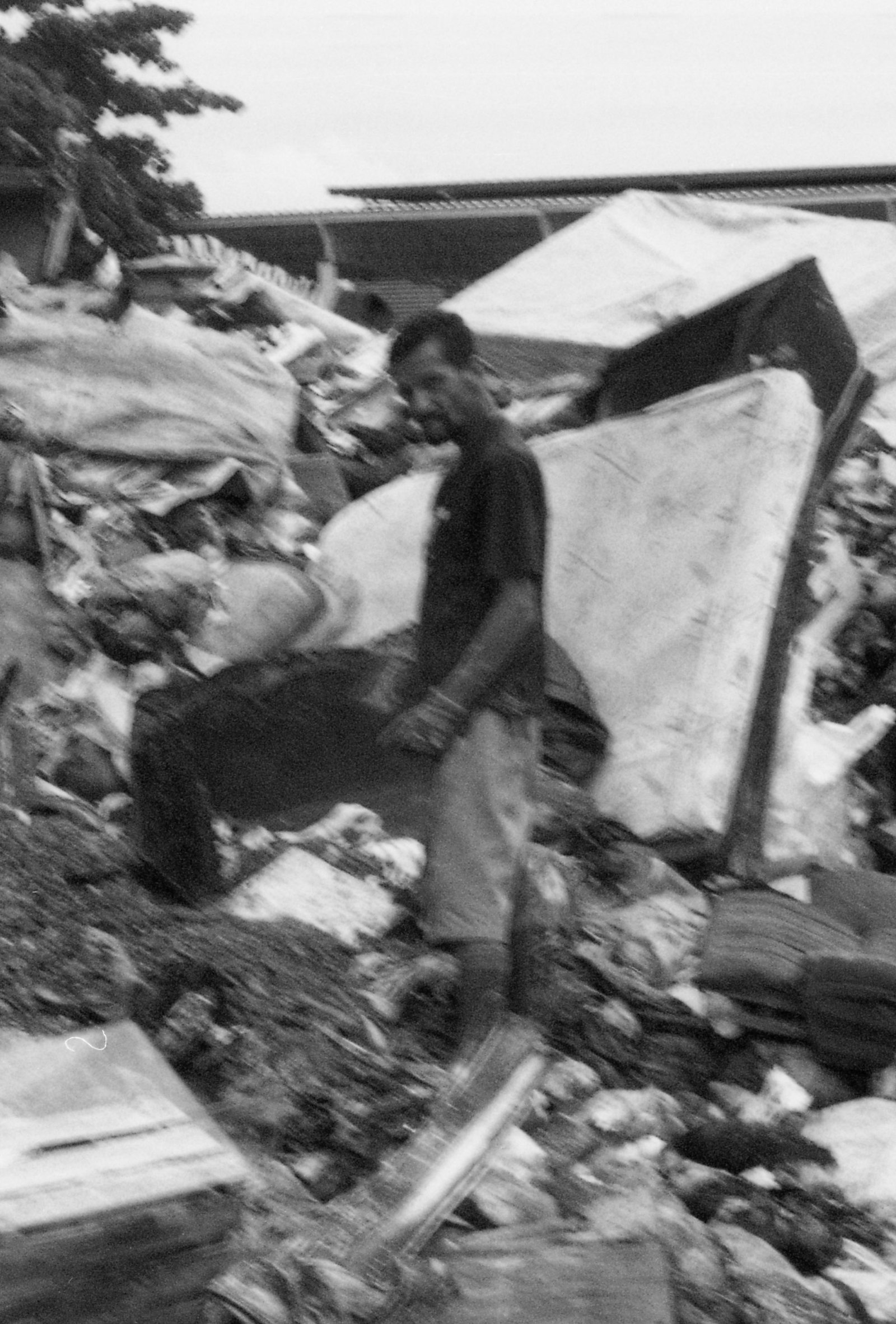
This photo carries a silent, even striking gaze, like a question. He looks into what he sees, he looks into the depths. I think his gaze ends up making us think, and that’s why I chose it.
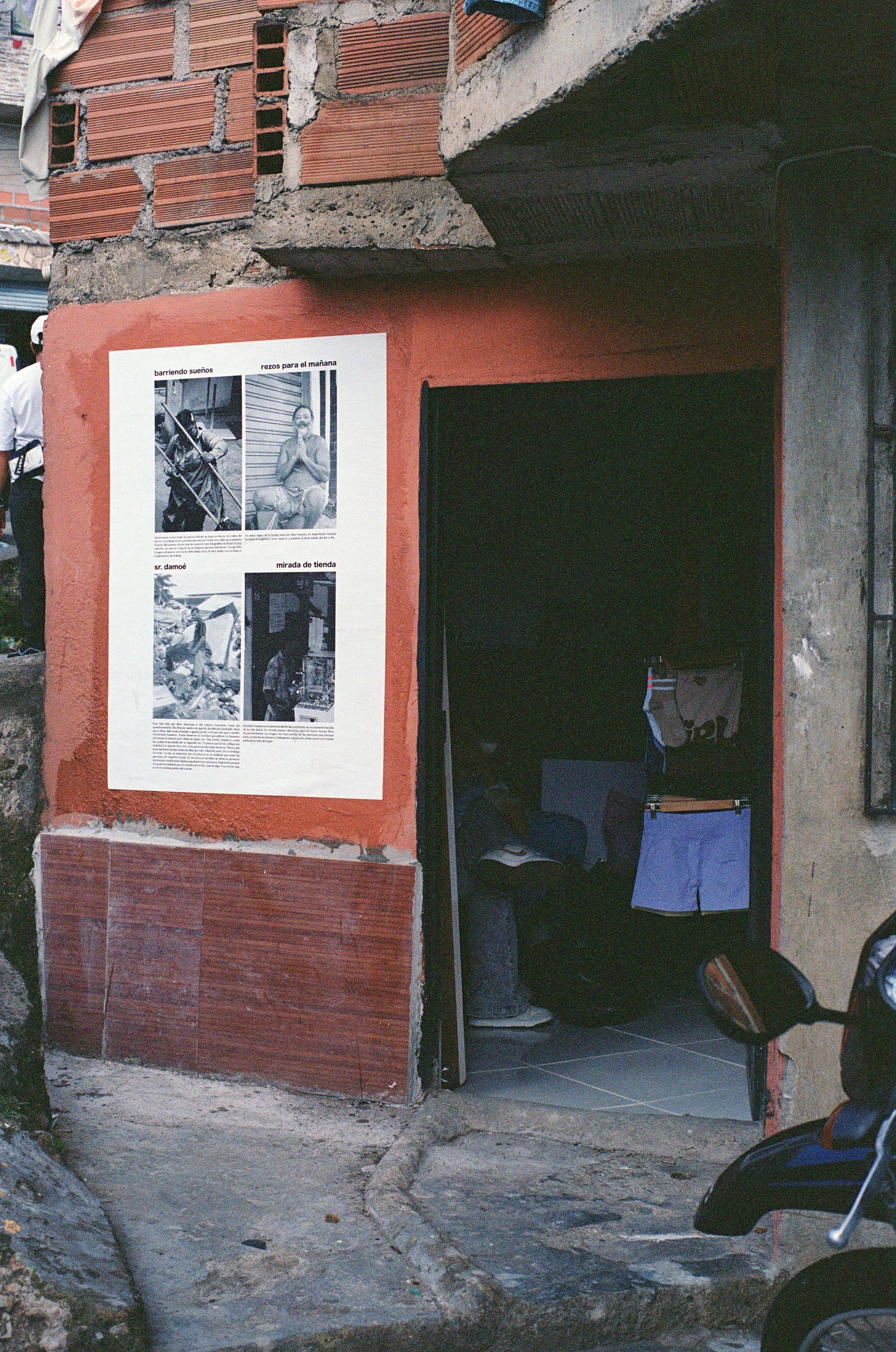
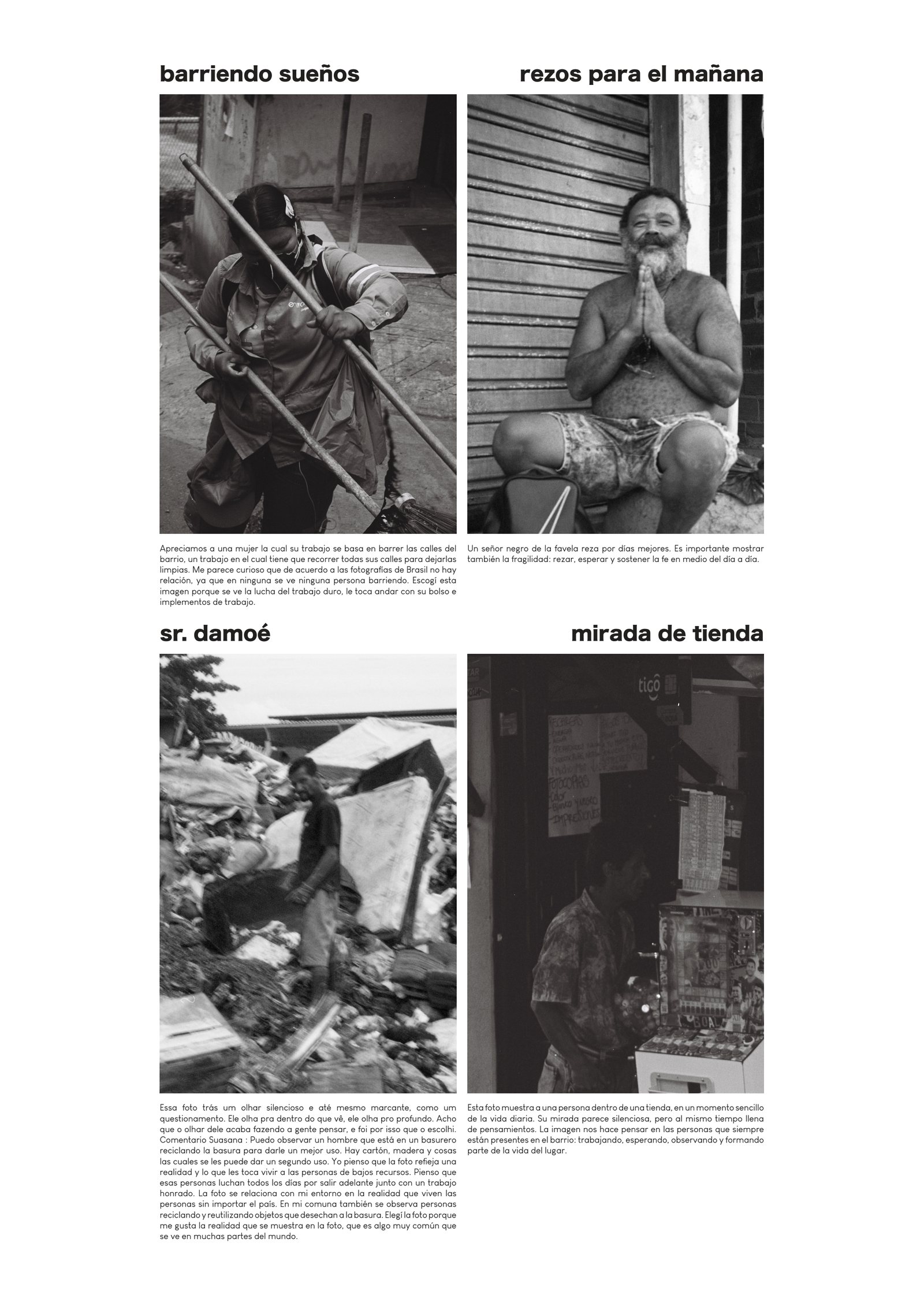
I can see a man at a rubbish dump, recycling to give the rubbish a better use: cardboard, wood and things that can be used a second time. The photo shows what people on low incomes have to go through, fighting every day to get ahead through honest work. In my comuna you also see people recycling. It’s very common in lots of places around the world.
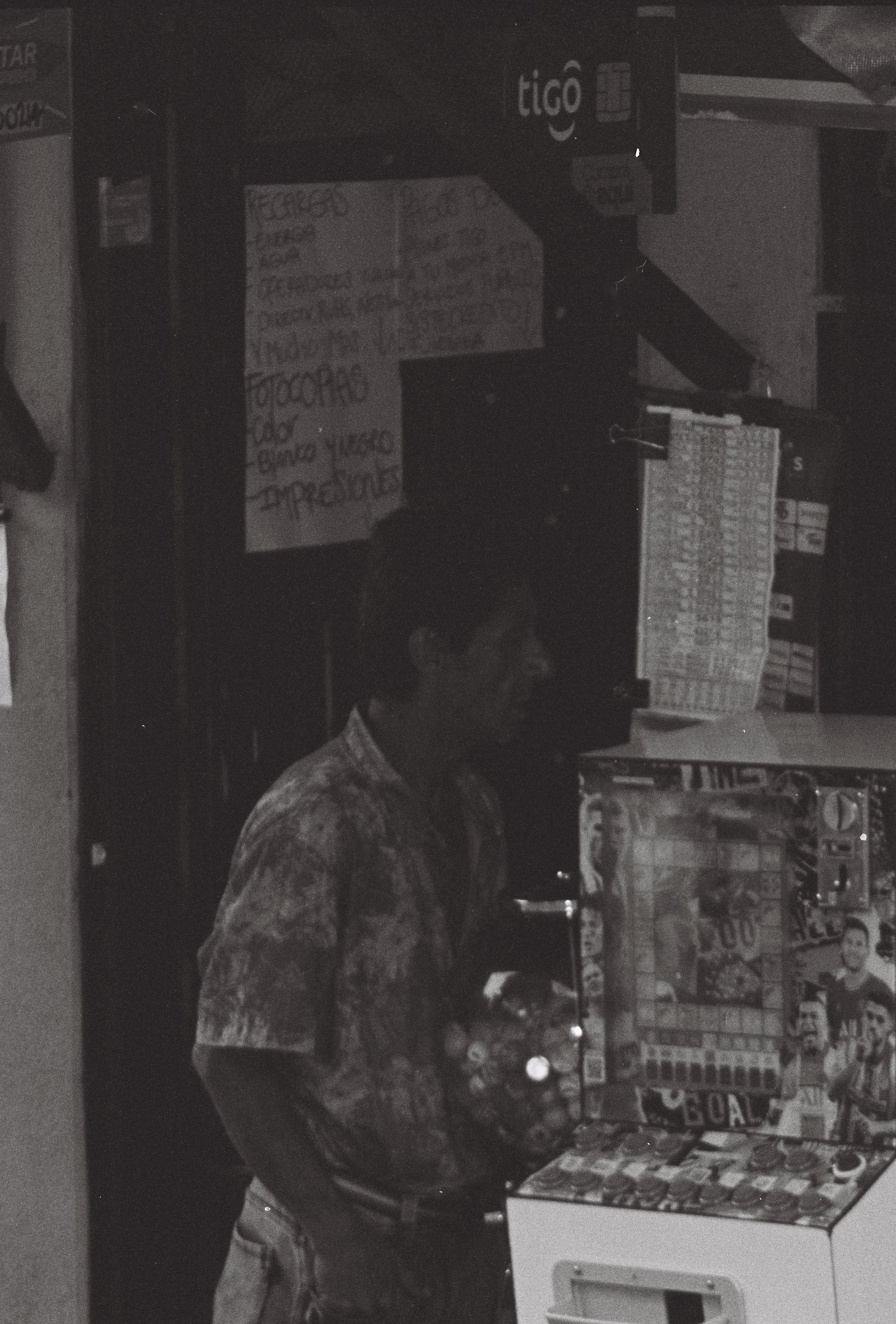
This photo shows someone inside a shop, in a simple moment of everyday life. Their gaze seems silent, but at the same time full of thoughts. The image makes us think of the people who are always there in the neighbourhood: working, waiting, watching and being part of the life of the place.
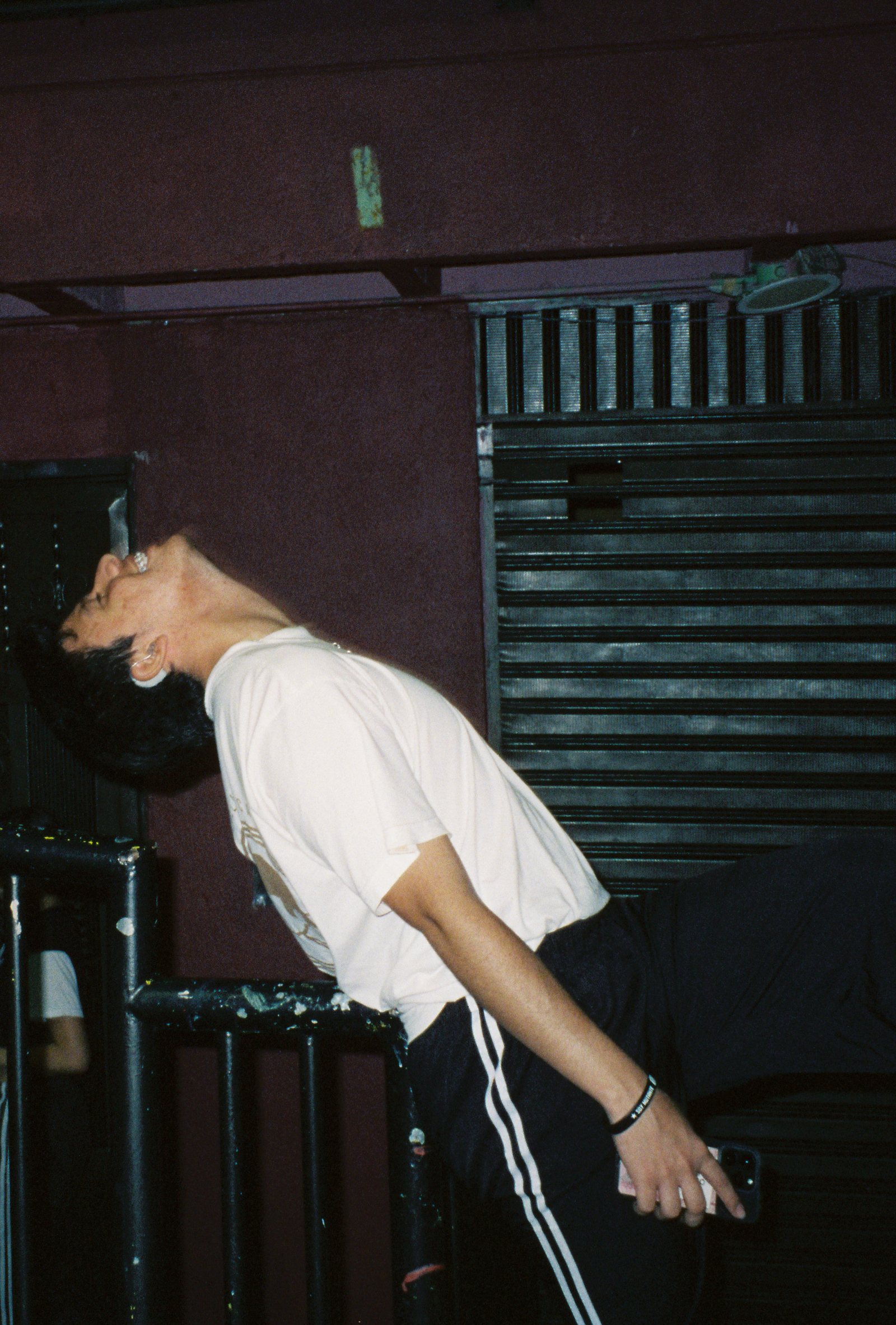
This photo carries a silent, even striking gaze, like a question. He looks into what he sees, he looks into the depths. I think his gaze ends up making us think, and that’s why I chose it.
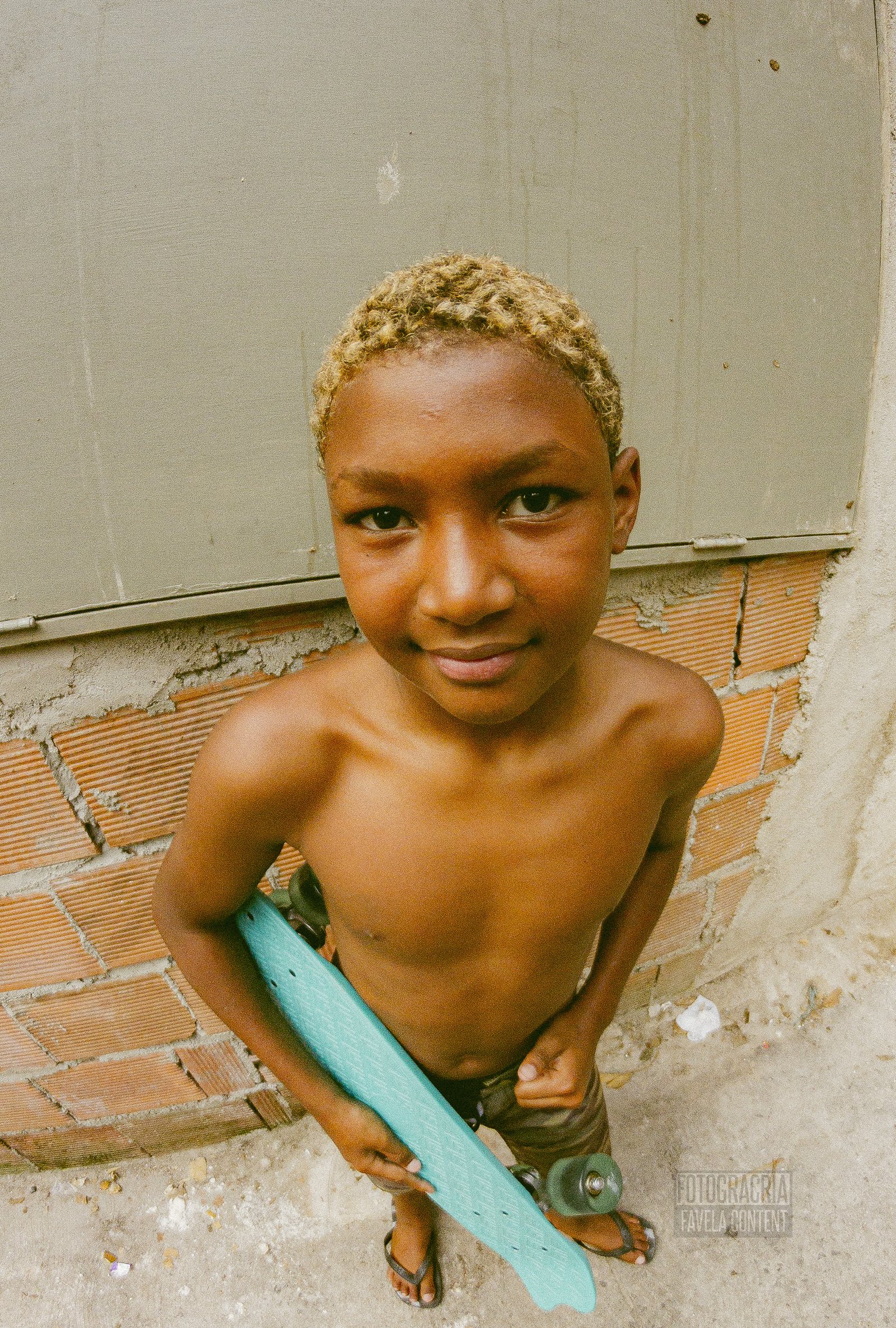
Allan is a pelao from Rocinha, very bright and determined; his dream is to become a great skater. That day he was trying to make it down a steep slope on Rua 4 and, after lots of attempts, he managed it.
It looks similar in some ways: the materials, the view and the children being there, although here most of childhood is spent on a phone and you hardly ever see children playing without one any more. In this photo I see something that really reminds me of my childhood: children’s art and culture, how they used to play and how childhood changed as I was growing up.
The corner shop, the bakery, the square, the climb: life lived out of doors, in Rio as in Medellín.
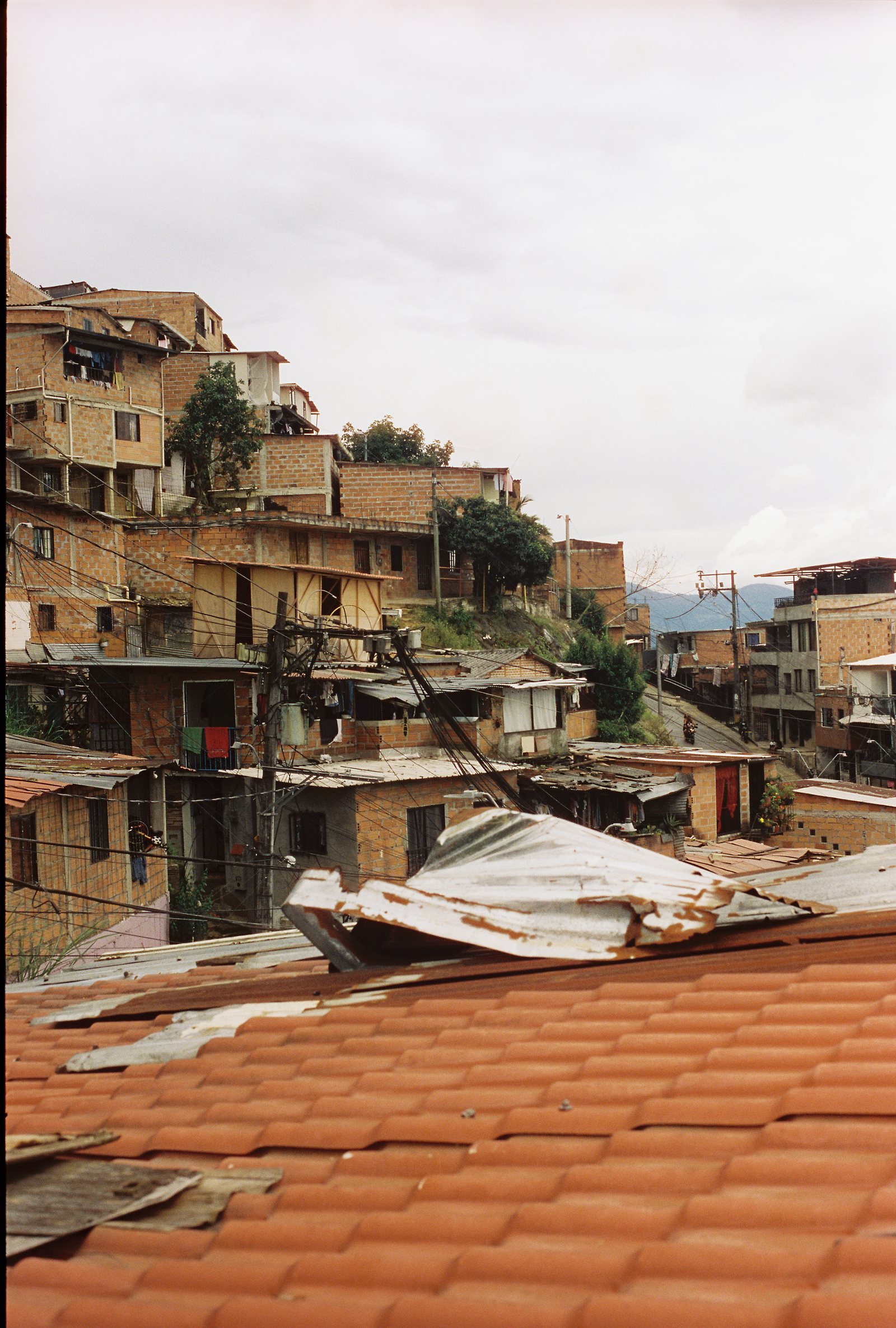
In this photo you can see a neighbourhood in comuna 8 full of steps. As you can see: its narrow streets, its corners going up and down, and the houses piled up across the whole area.
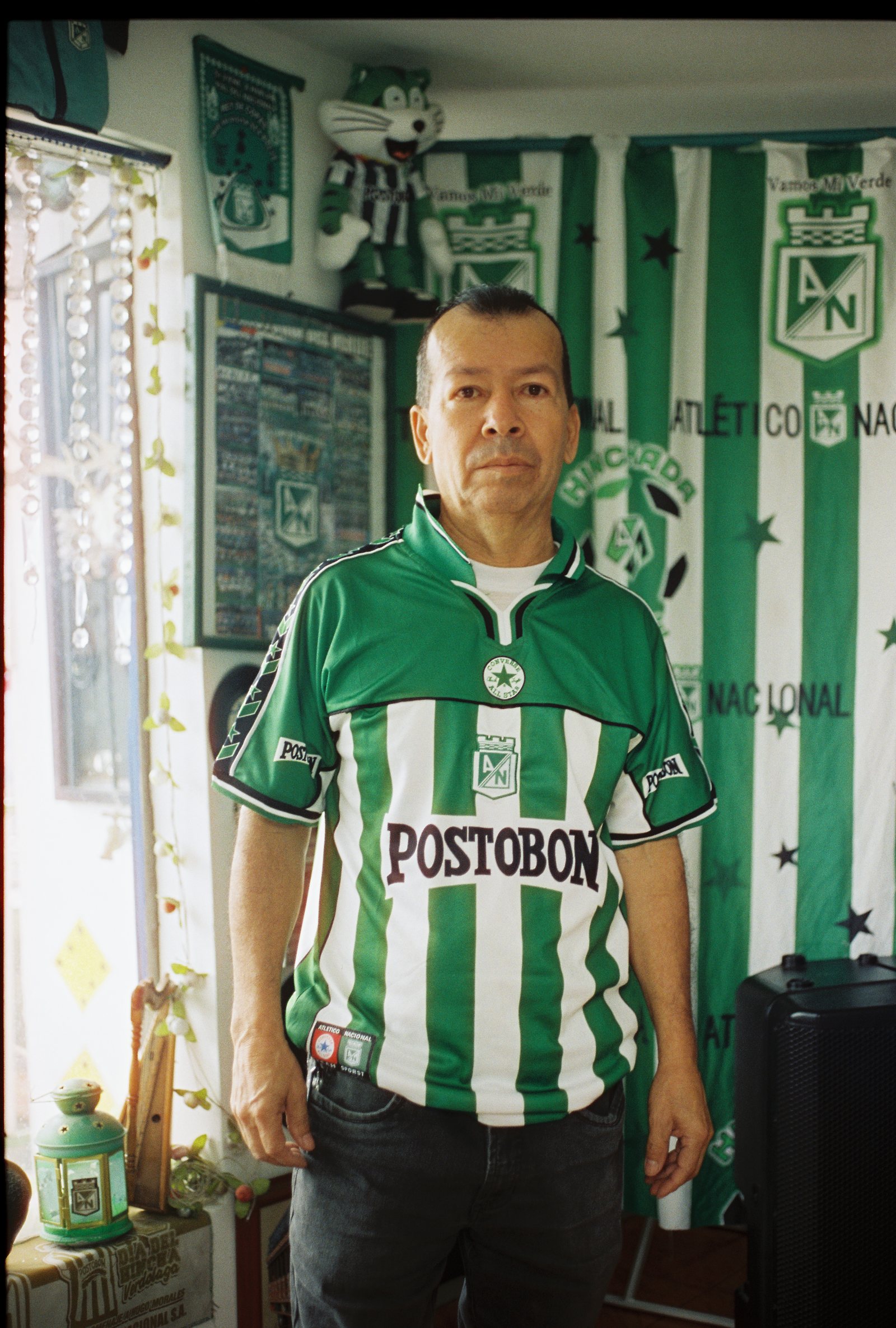
When people are proud of their team and decorate everything in the colours of its flag, it’s a way of feeling whole and of supporting them. It’s like Brazil, because of football.
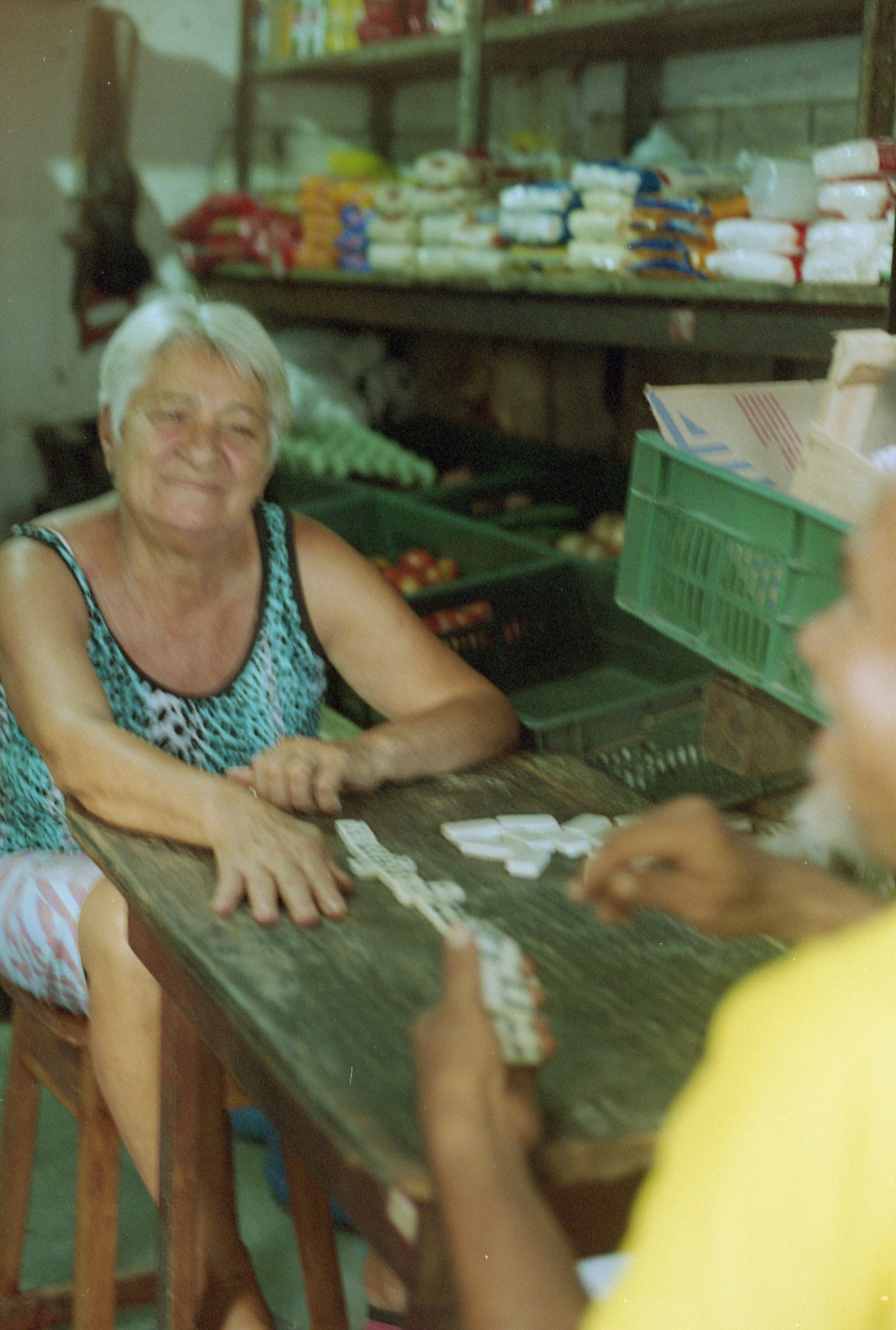
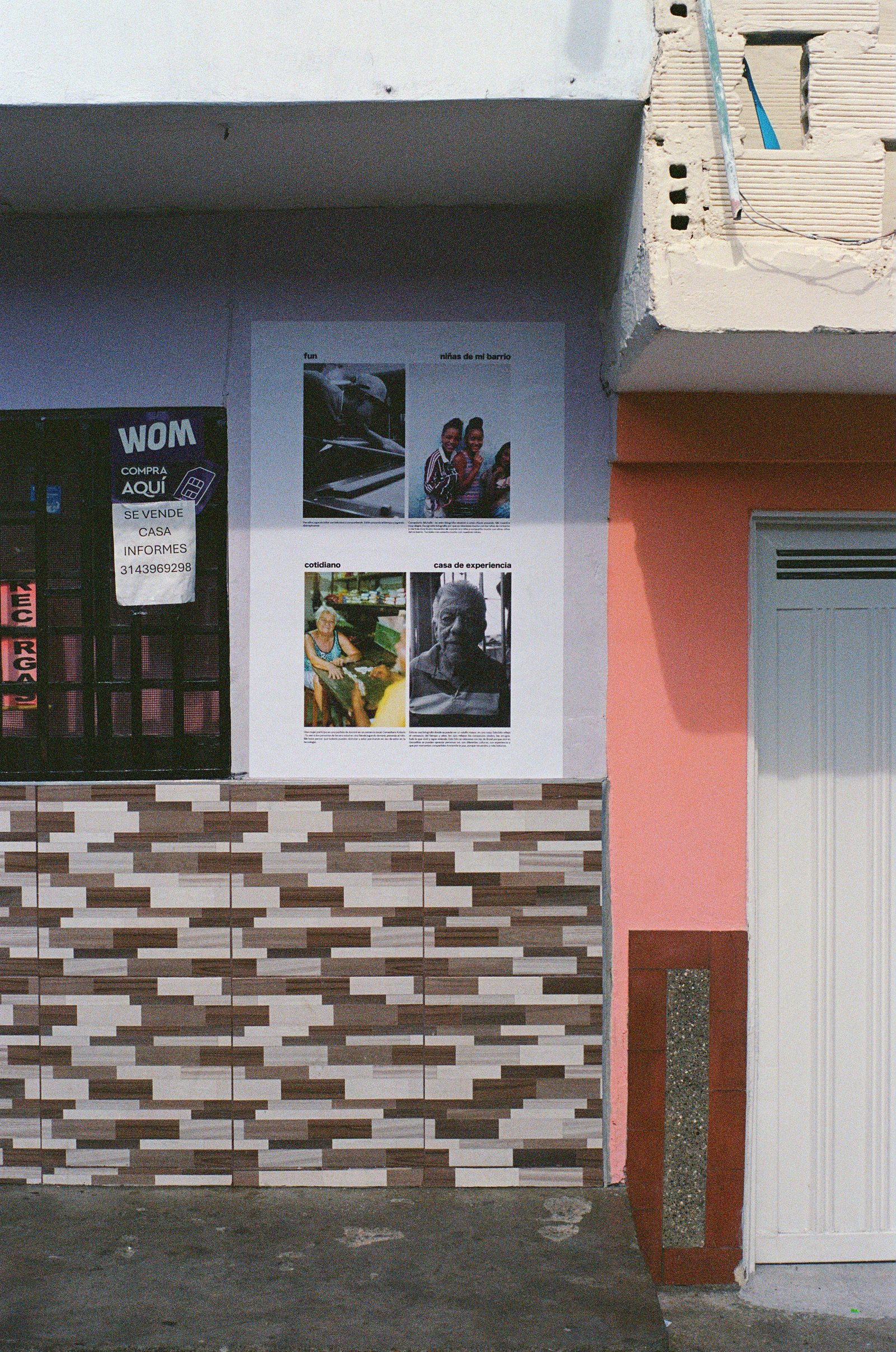
A woman takes part in a game of dominoes in a local shop.
I see two elderly people in a shop playing dominoes, passing the time. It makes me think they can still enjoy themselves and hang out together instead of being on their screens.
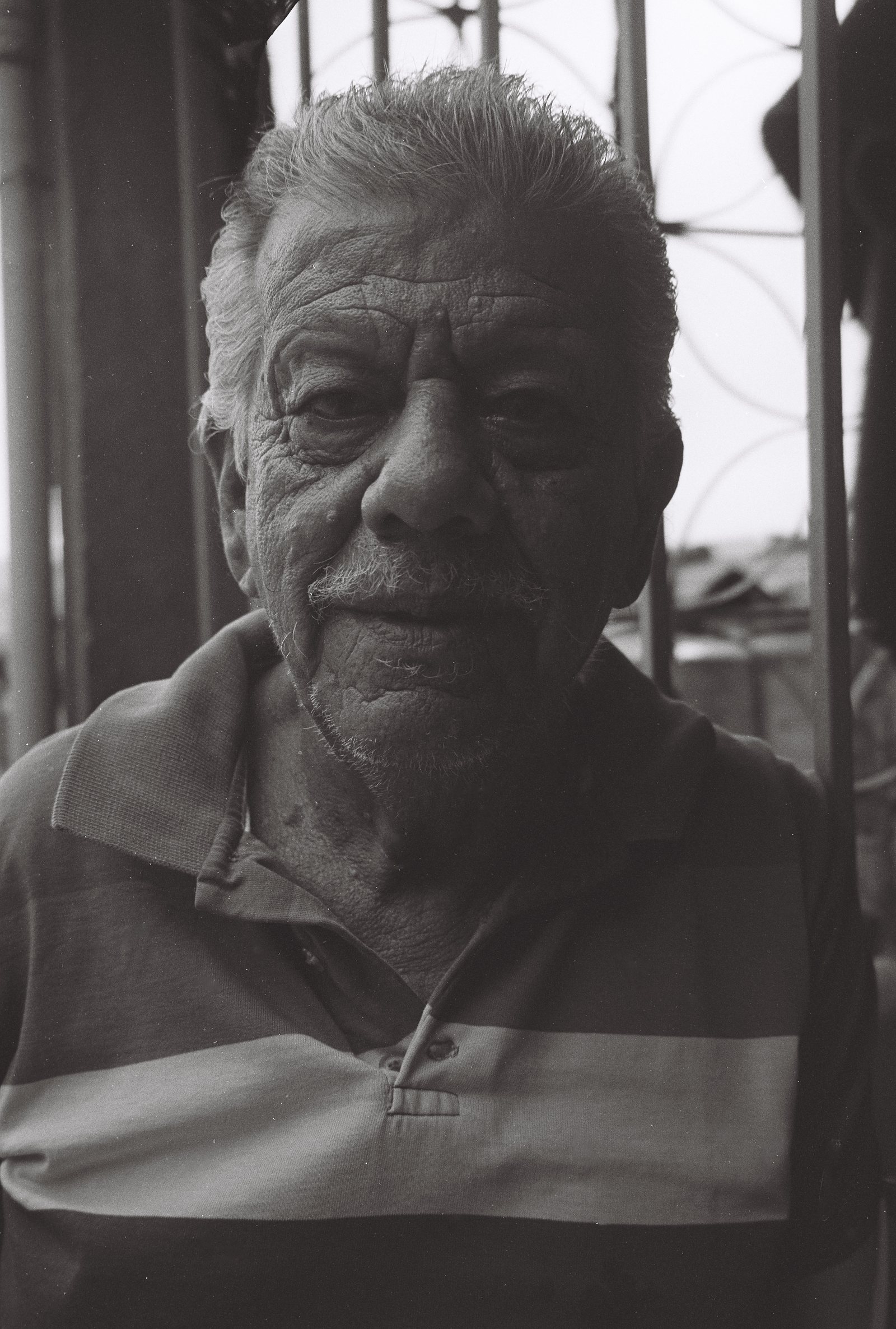
This is a photograph where you can see an older person in a house. It reflects the weariness of time and of the years: the eyes show all the tiredness lived through, the wrinkles, everything they have lived and are still living. It connects with the ones from Brazil because here in Llanaditas you can see people like this, full of experience, who pass on peace, memories and more stories in the moments we share.
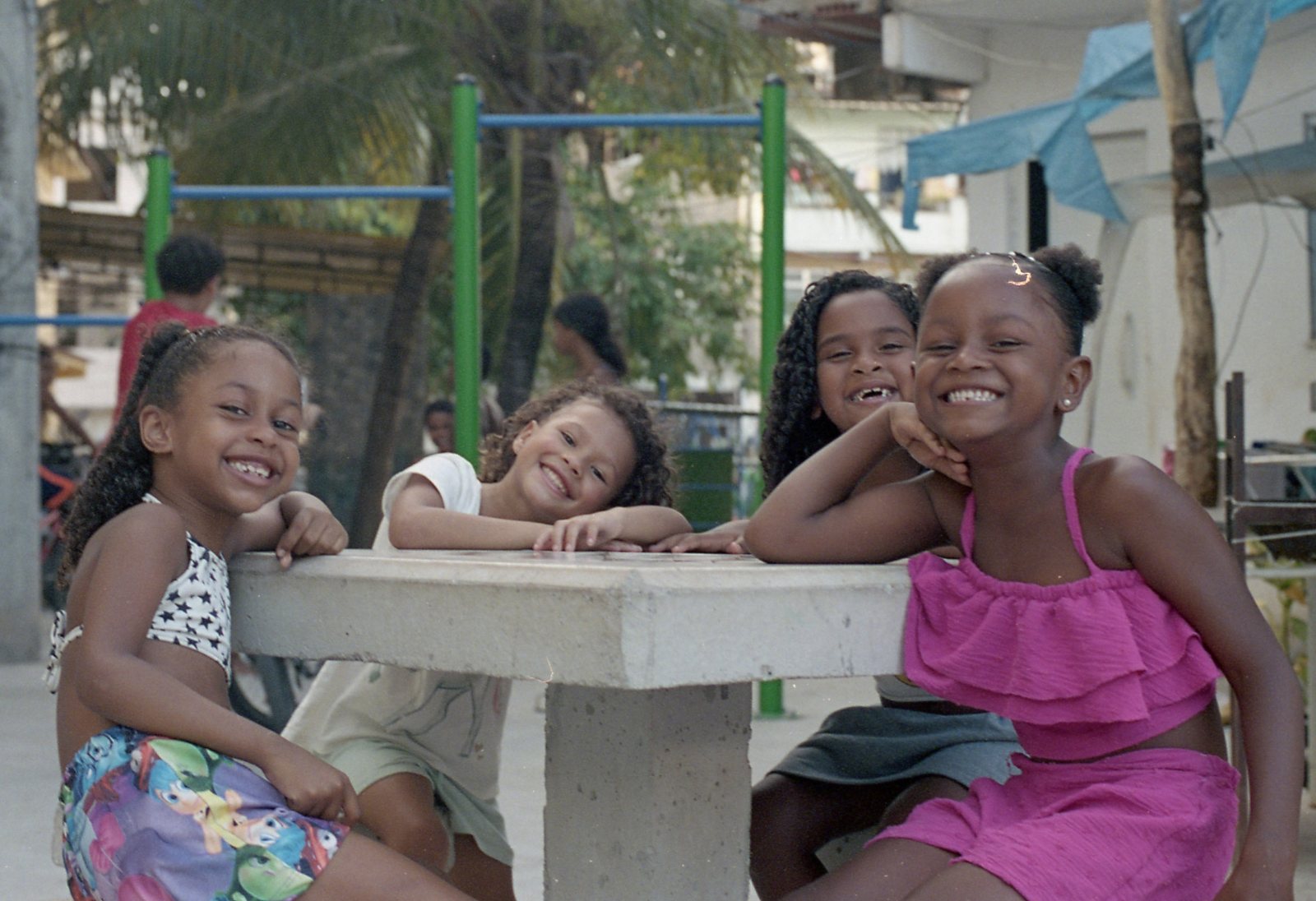
Smiling girls, sitting in a square, pose for the photo, each striking a pose of her own. This photo shows a childhood of pure friendship between four girls.
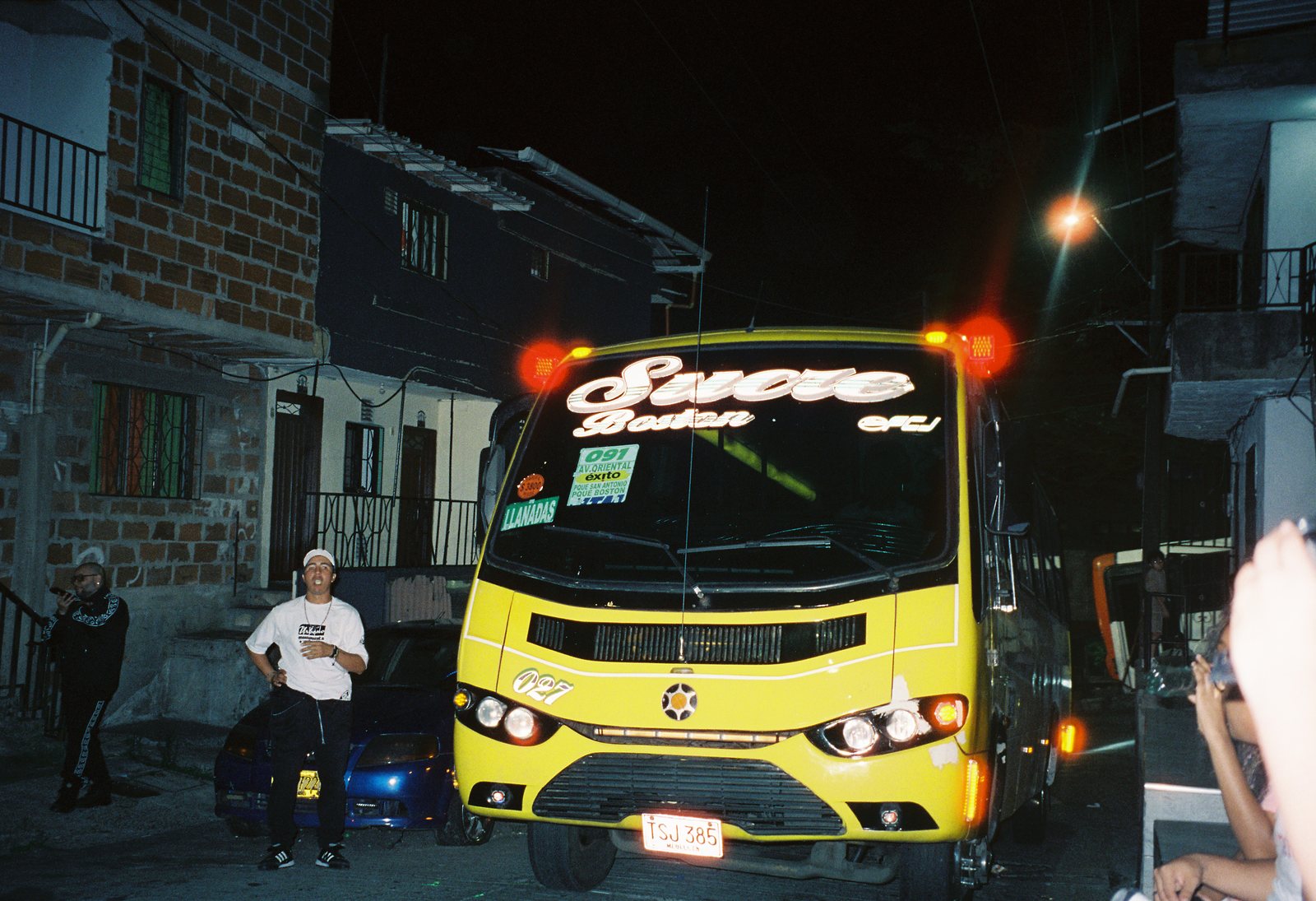
We can see part of the neighbourhood, lots of colourful shops and people enjoying the place. On every corner you can enjoy little things with people who matter to you.
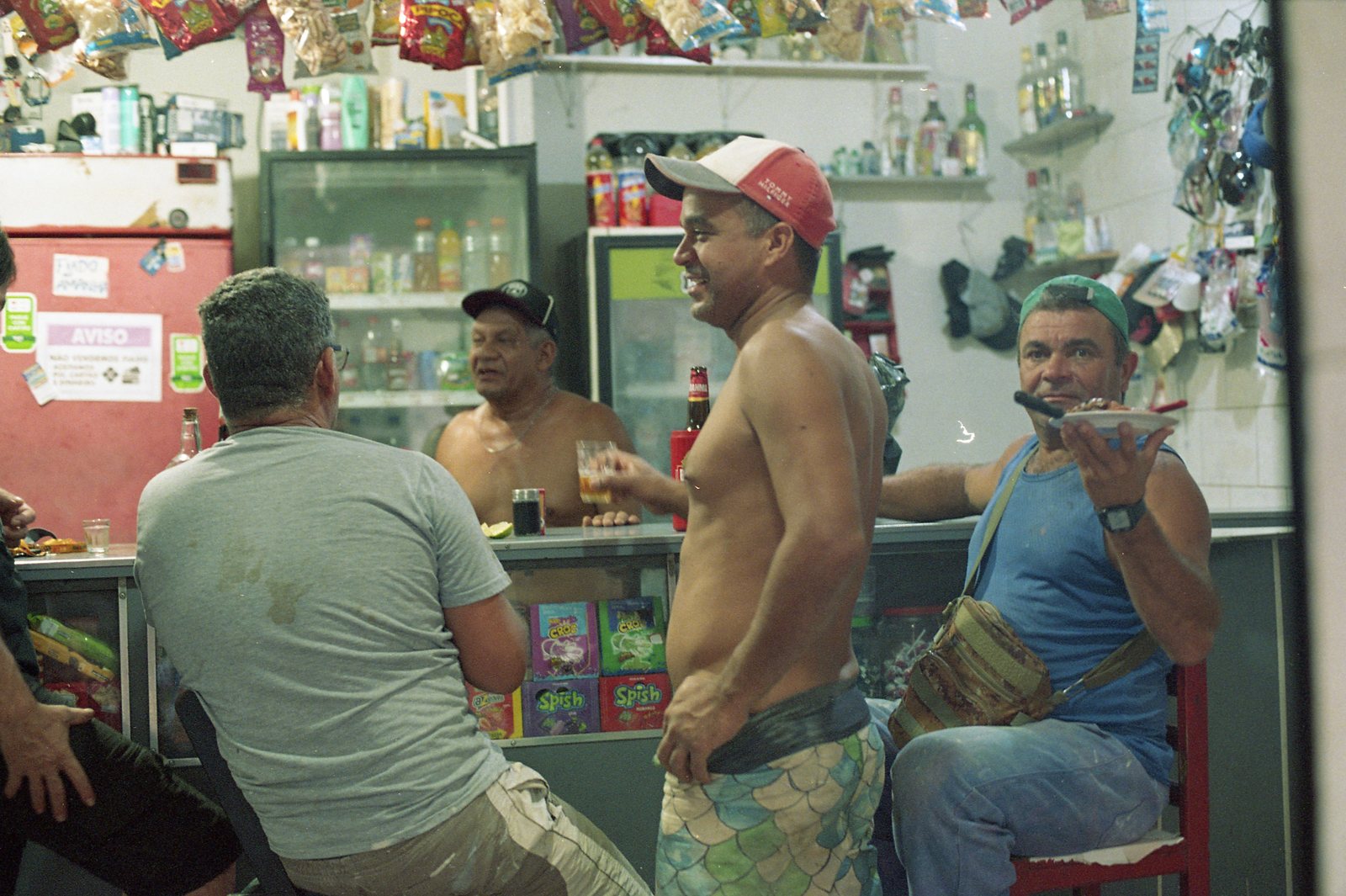
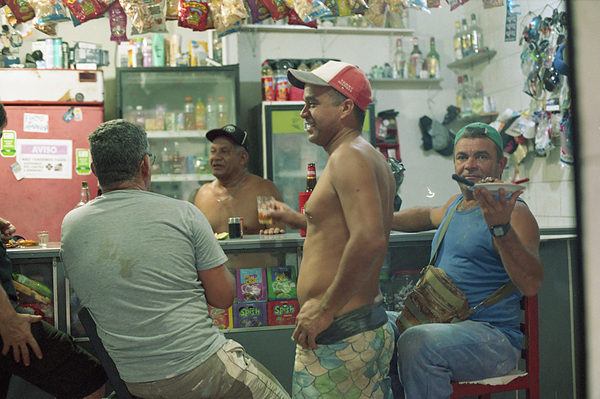
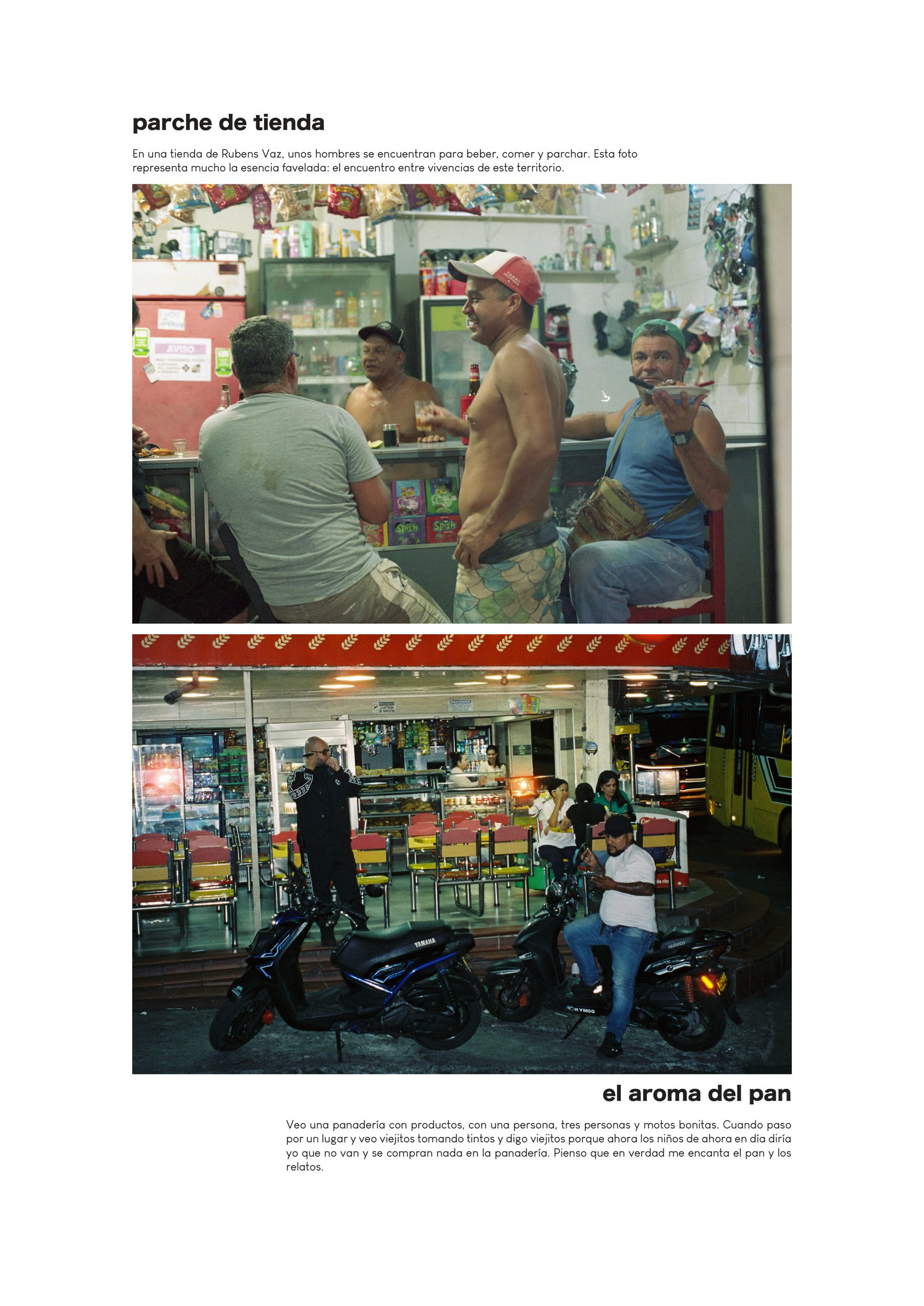
In a shop in Rubens Vaz, some men meet up to drink, eat and hang out. This photo really captures the essence of the favela: the coming together of the lives lived here.
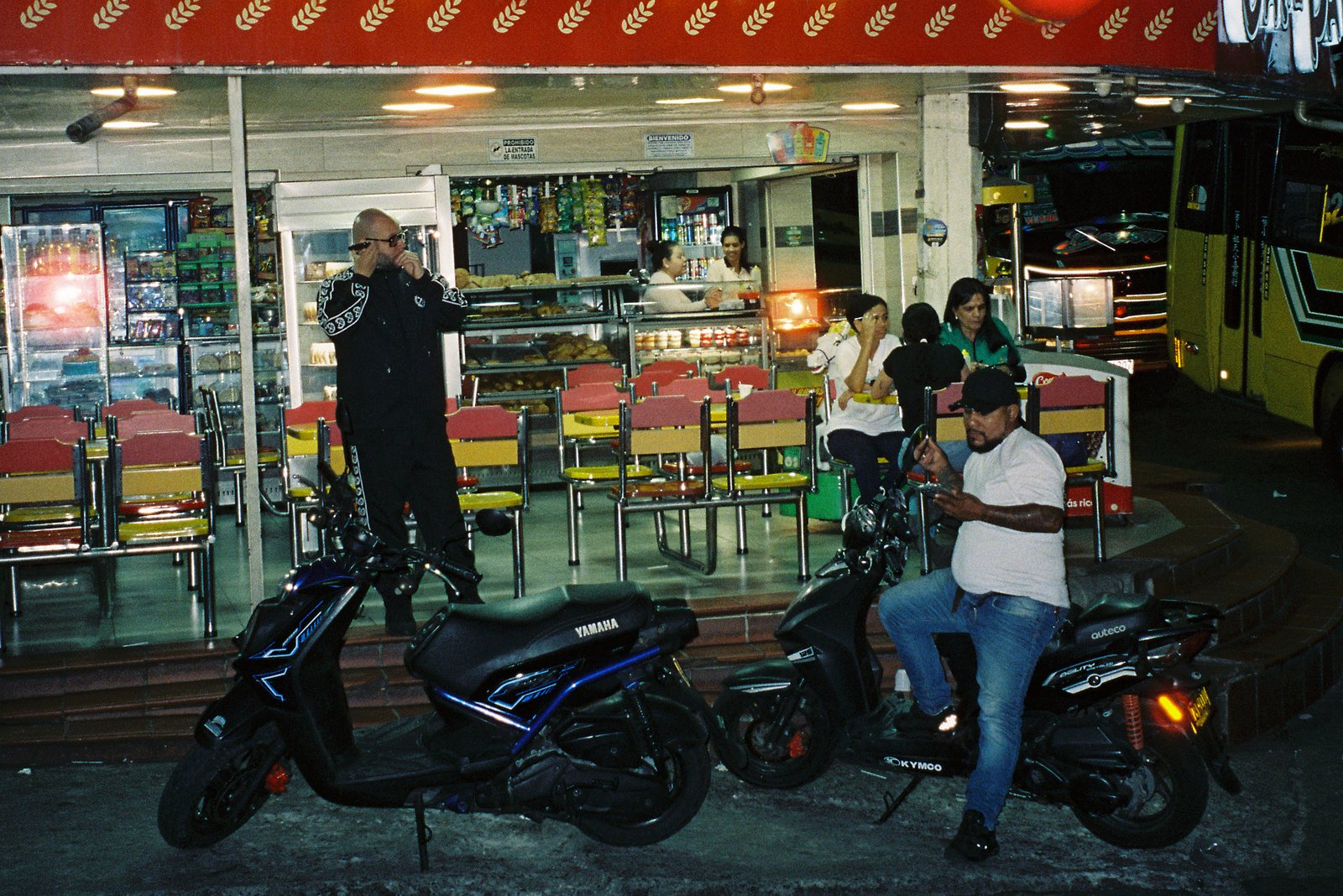
I see a bakery with its goods, three people and some nice motorbikes. When I walk past, I see old folk drinking tintos, and I say old folk because kids these days don’t go to the bakery to buy anything. I think that, really, I just love bread and stories.
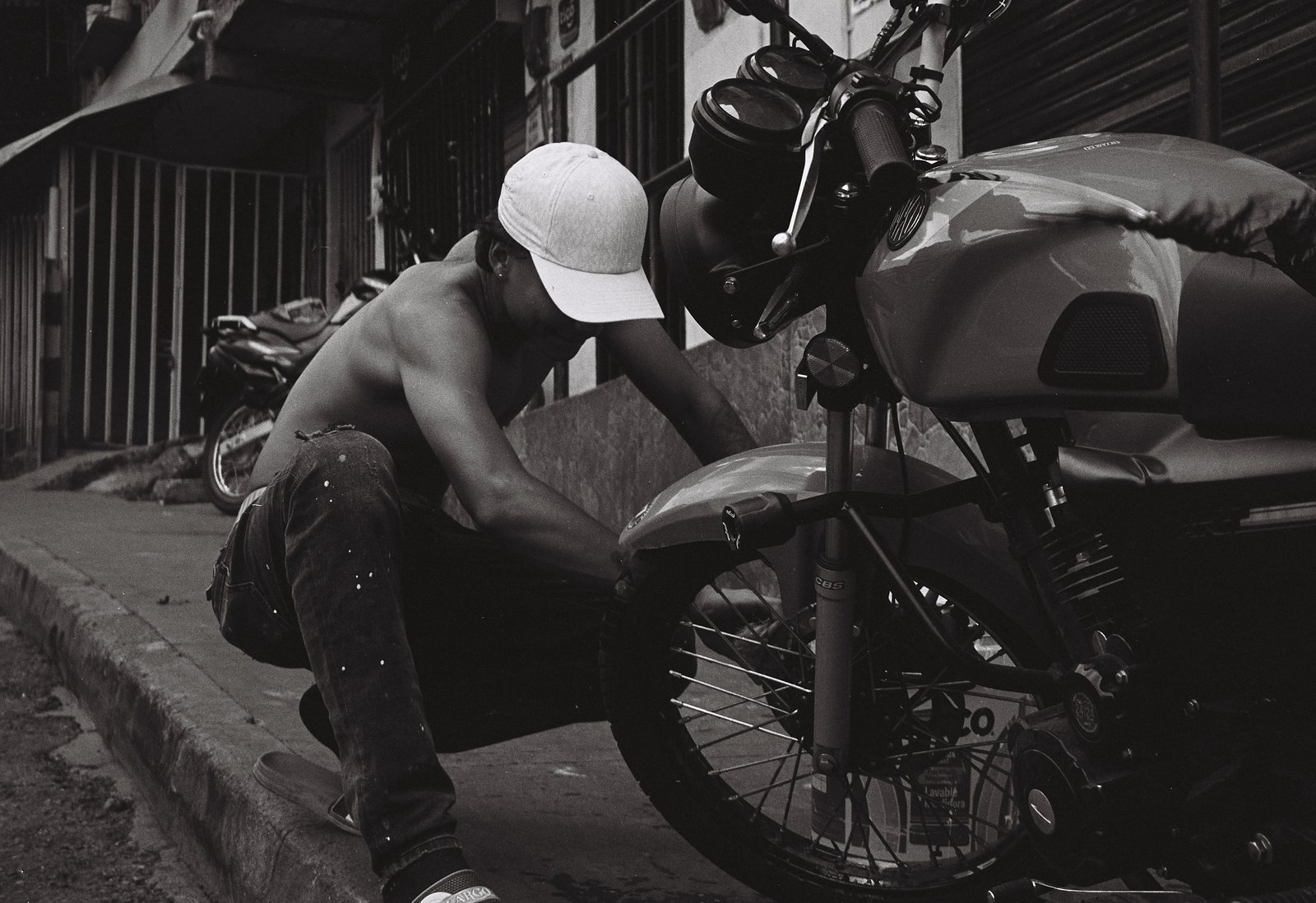
It has several things in common with the other image, because you can see a love of motorbikes. You can see that the neighbourhoods are different but have similar routines, even though their cultures are different.
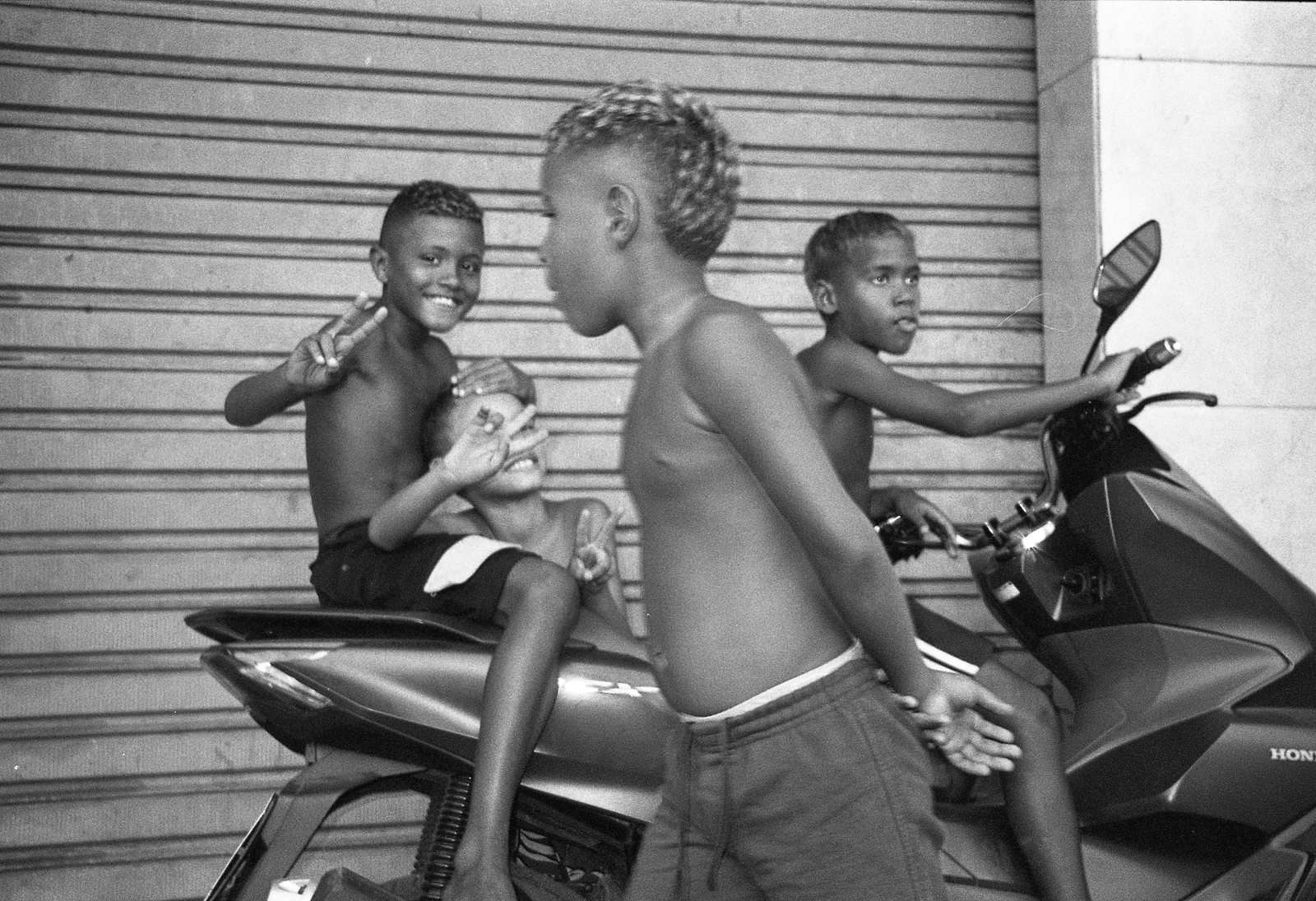
Three children play at riding a motorbike in Nova Holanda. Even though they are standing still, there is movement: not only physical movement, but also that of an imaginary world, with the dream of one day having their own.
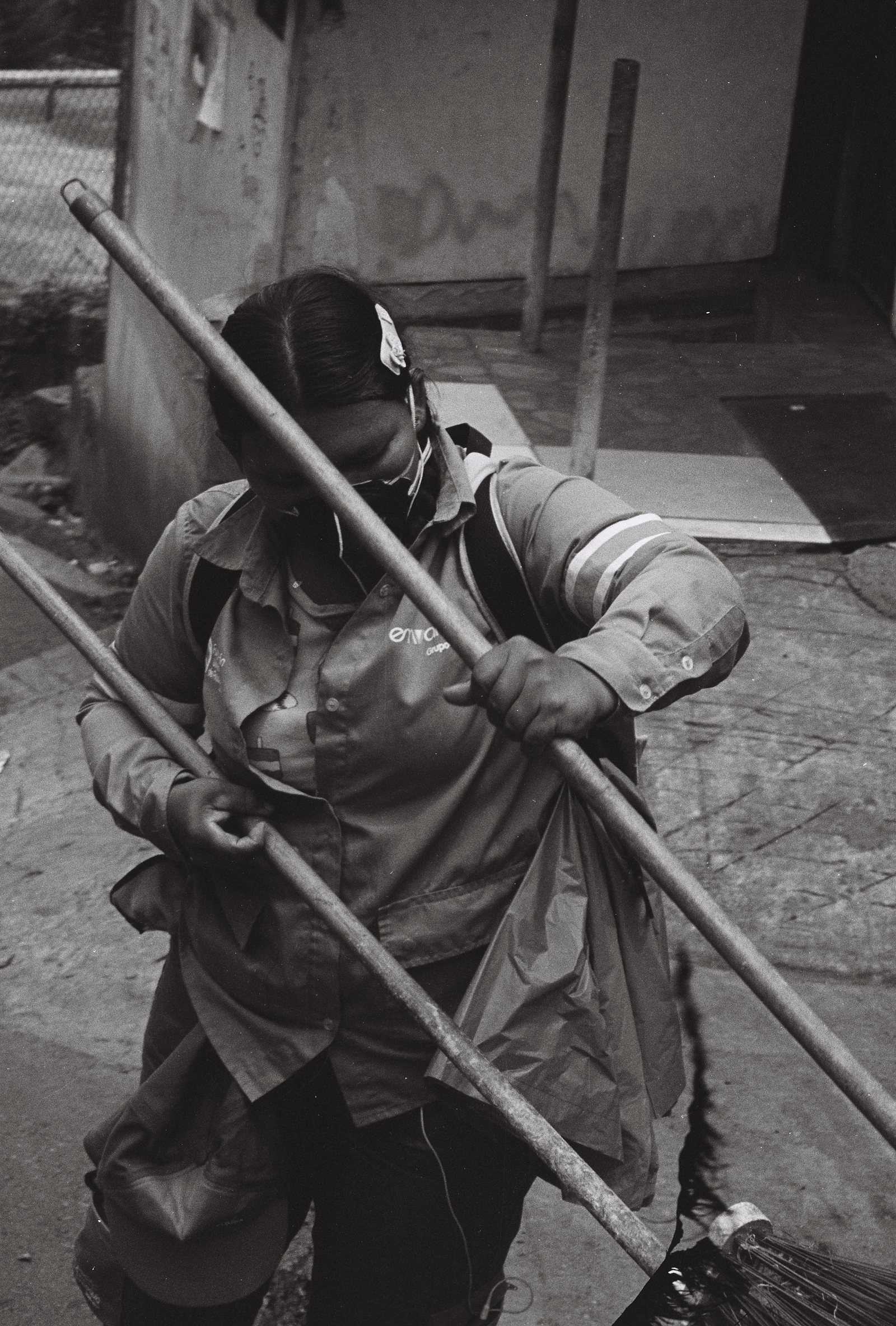
We see a woman whose job is to sweep the streets of the neighbourhood: she has to go along every one of them to leave them clean. I find it curious that in the photographs from Brazil you don’t see anyone sweeping. I chose this image because it shows the struggle of hard work.
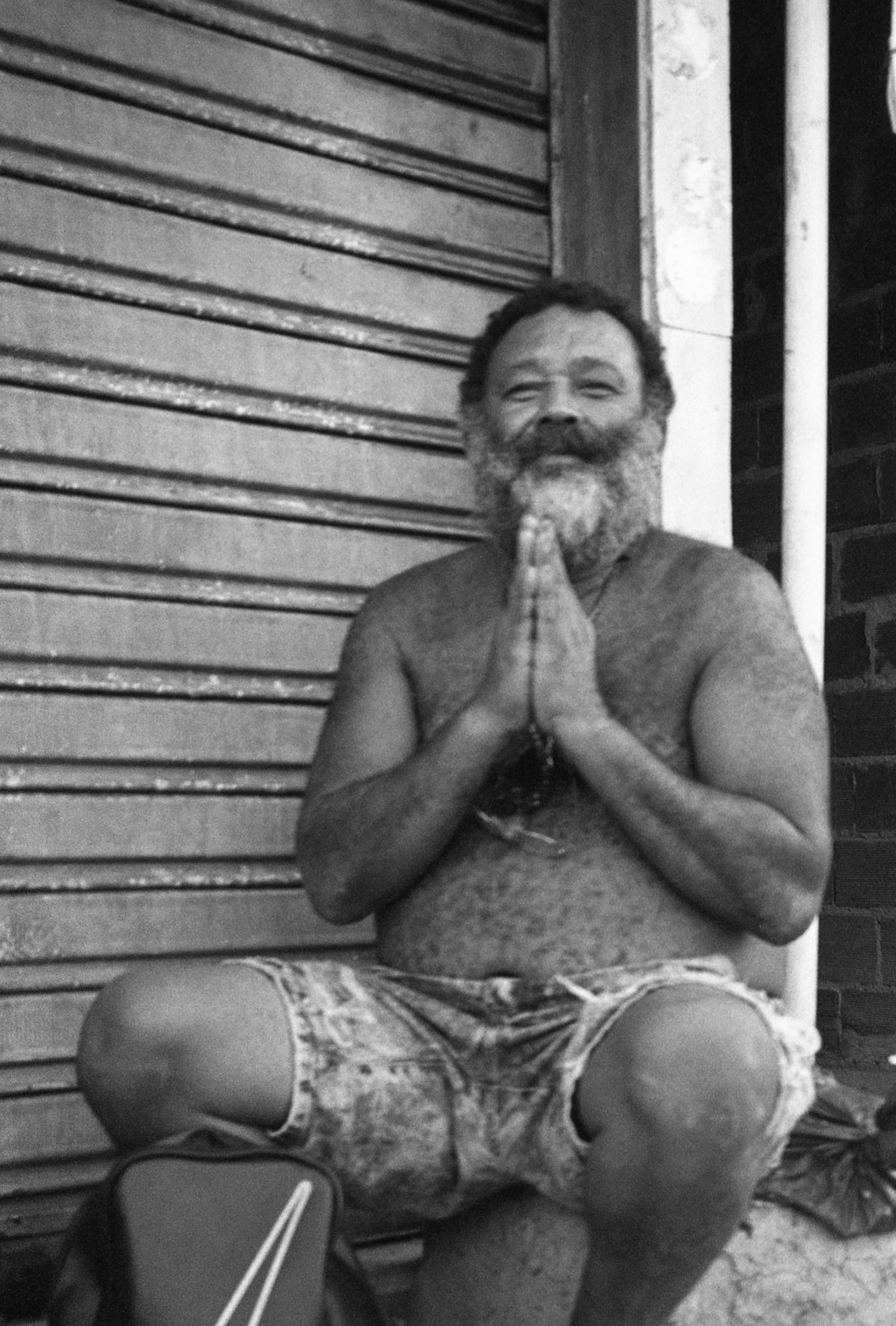
A Black man from the favela prays for better days. It is important to show fragility too: praying, waiting and holding on to faith in the midst of everyday life.
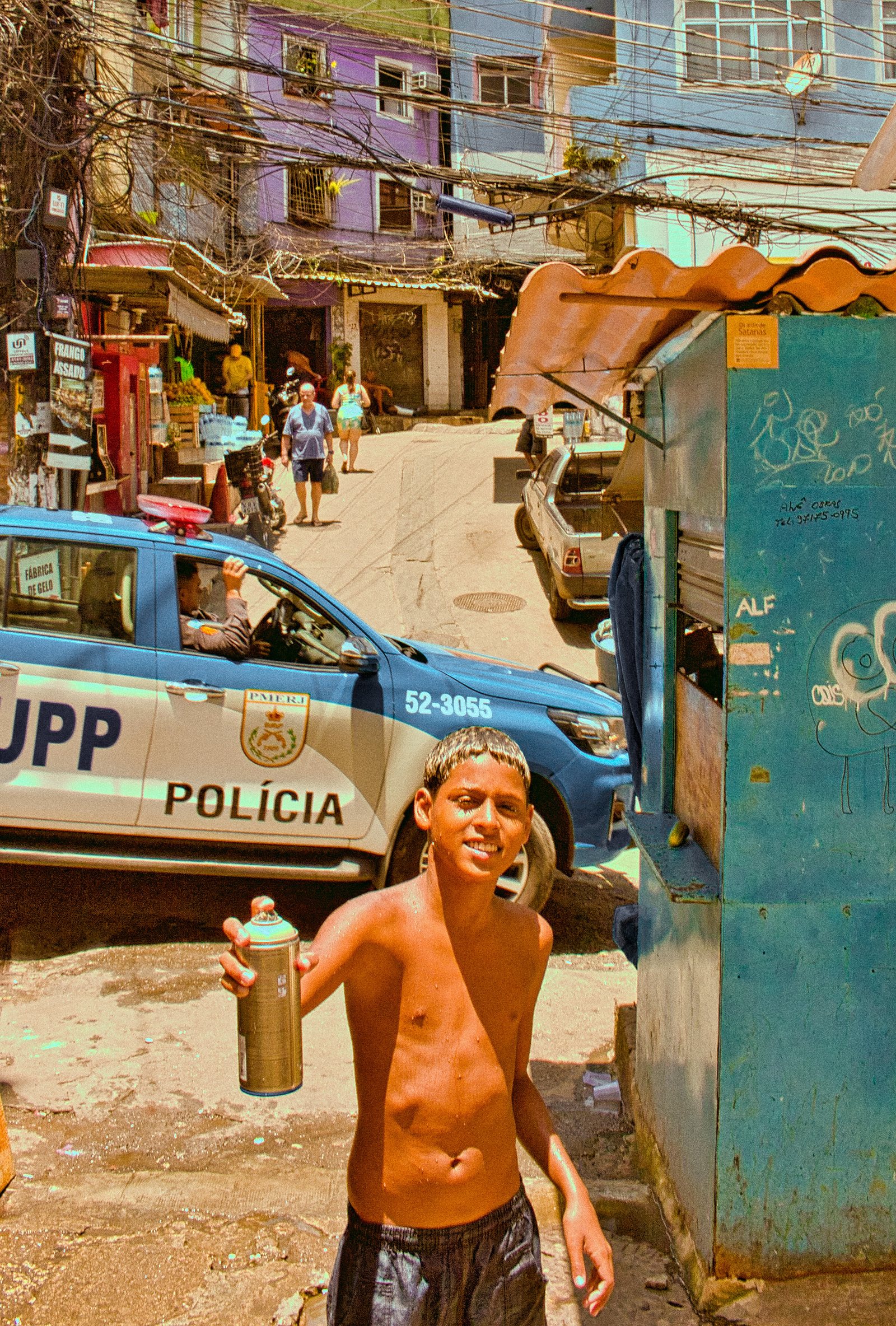
Breno, son of Vanessa Fernandes, is a pelao from Rua 4, very bright, cheerful and well known. During a painting session in Cidade Nova, over the 2020 Christmas holiday, Breno is playing happily with a can of spray paint in his hand, crossing the street without noticing that a UPP police patrol is passing behind him.
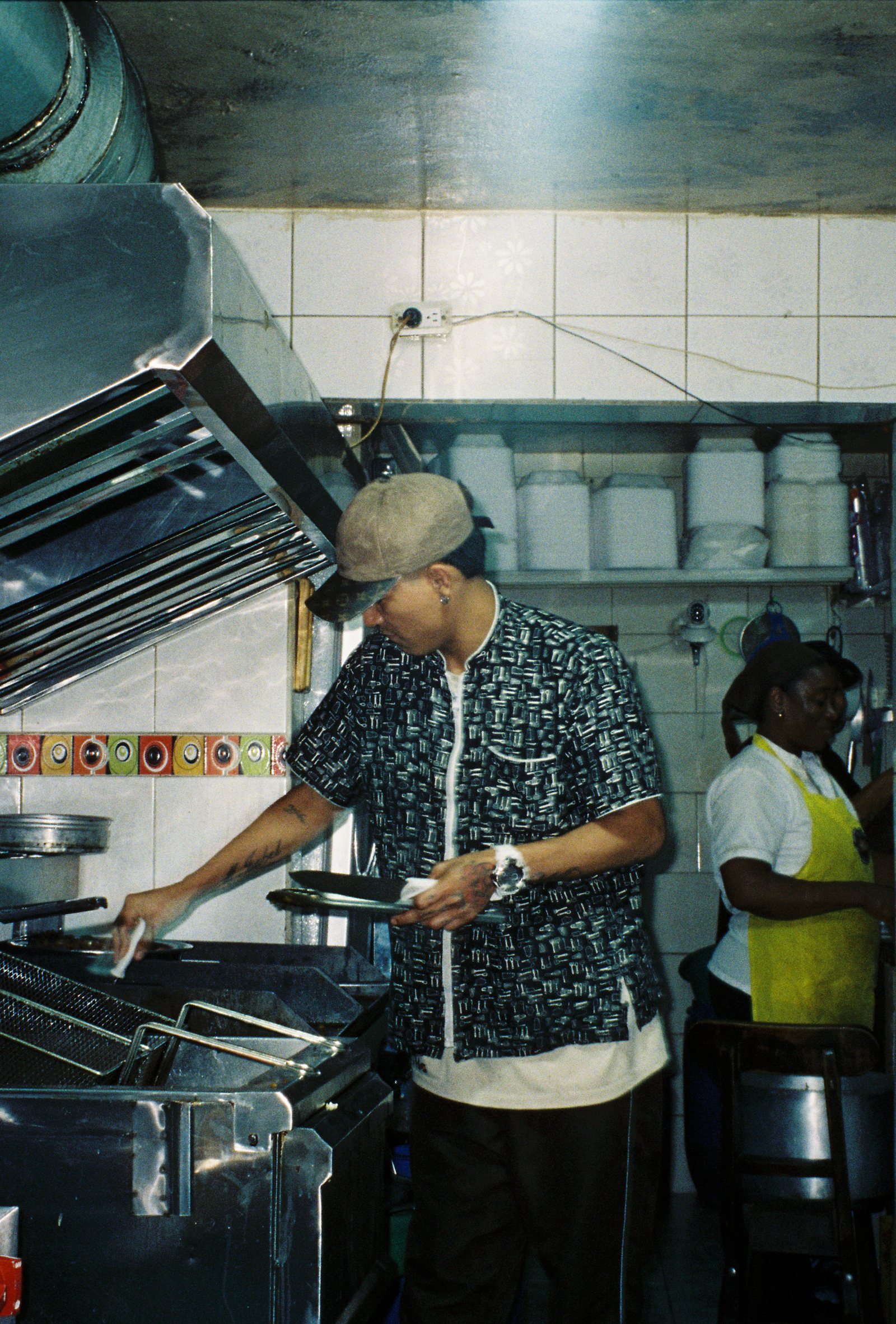
This photo represents resistance, attachment and the drive to get ahead in a humble neighbourhood. It connects with all the kinds of work people do in Brazil and here in Colombia. I chose it because I like what these two people, working to get ahead, convey.
Looking at an image from the other side of the continent is also a way of looking at yourself. The young people’s comments talk about Rio, and very soon about their own childhoods, their streets, their mothers.
Nikol, Katerin, Michelle, Mildrey, Johelly, Suasana
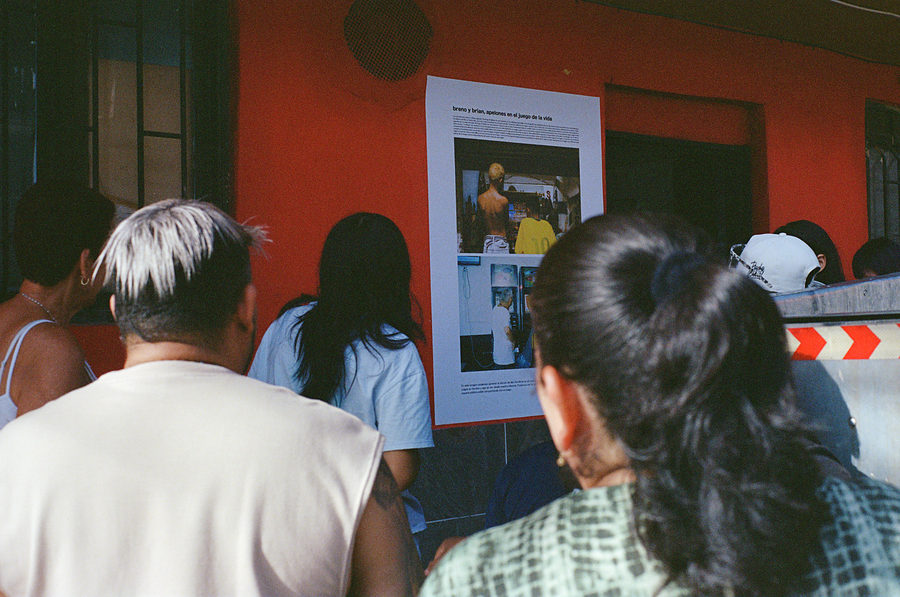
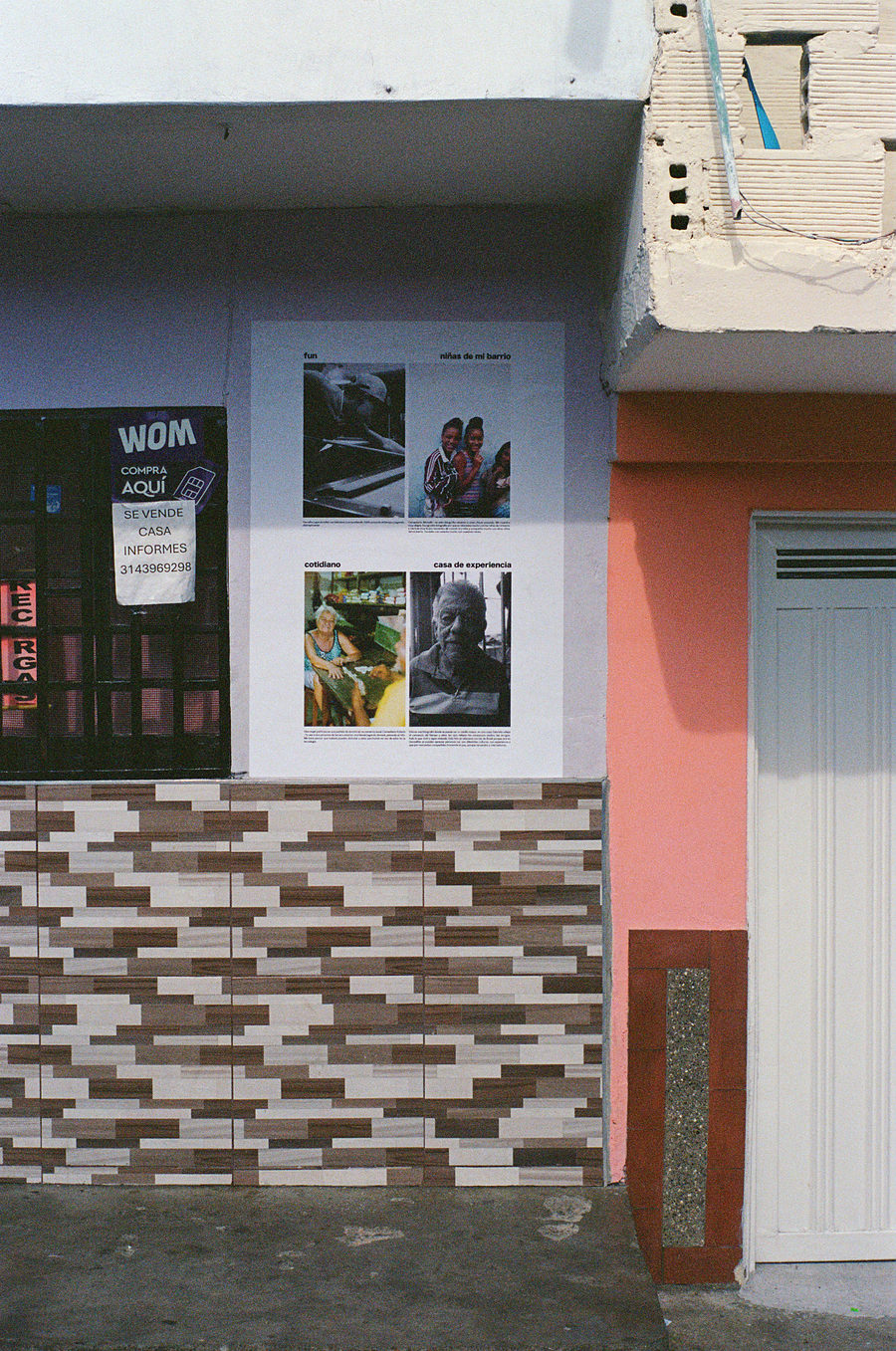
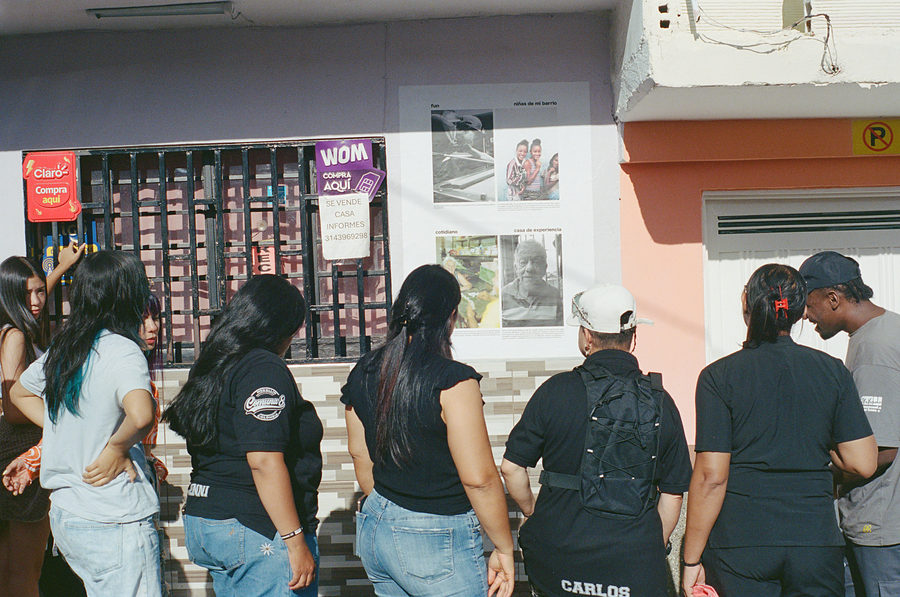
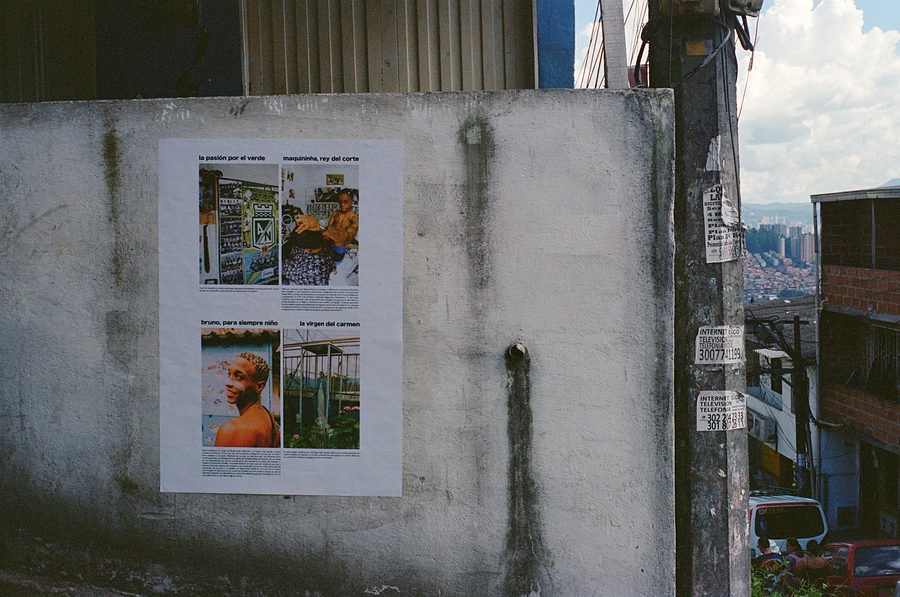
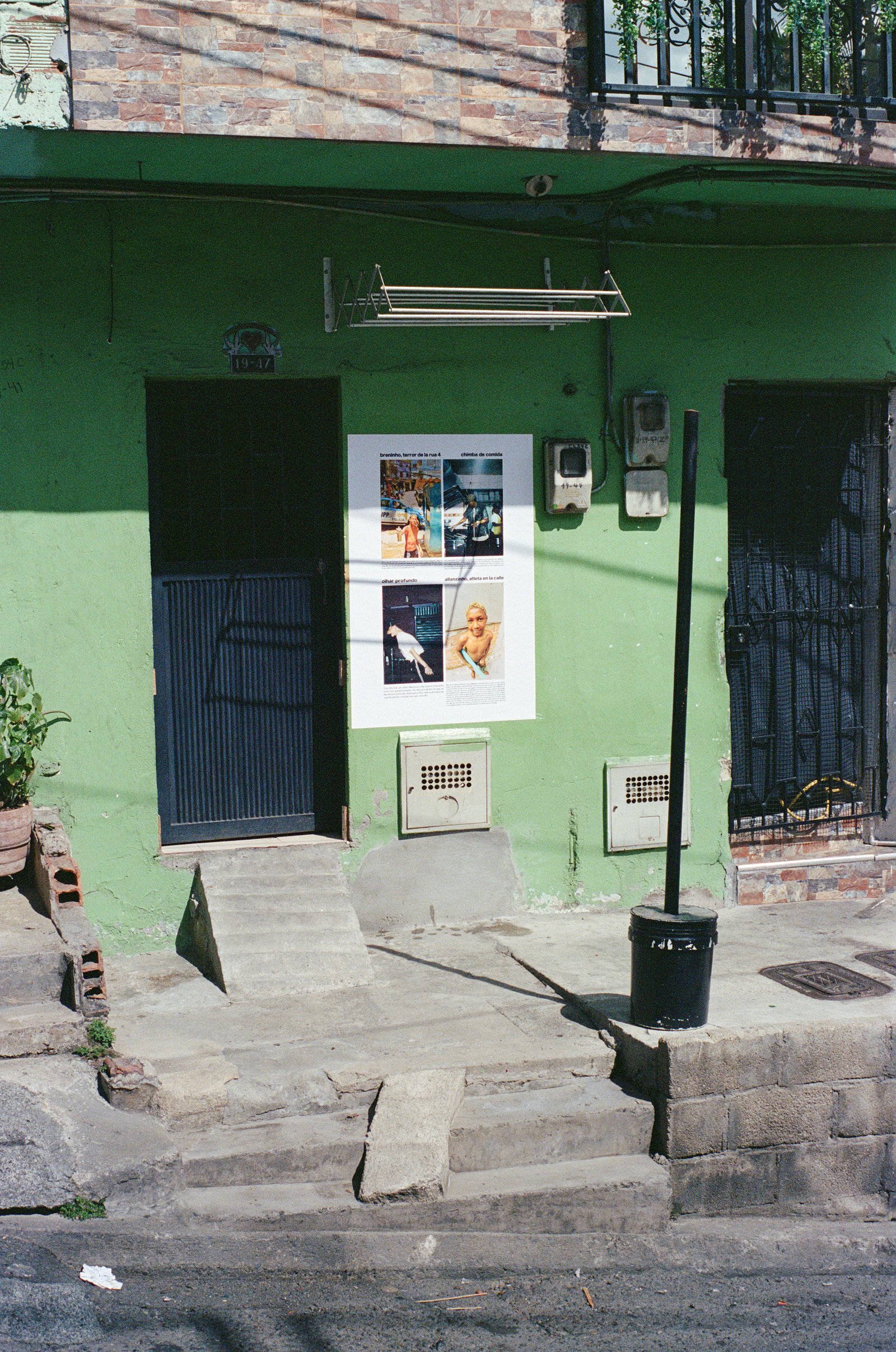
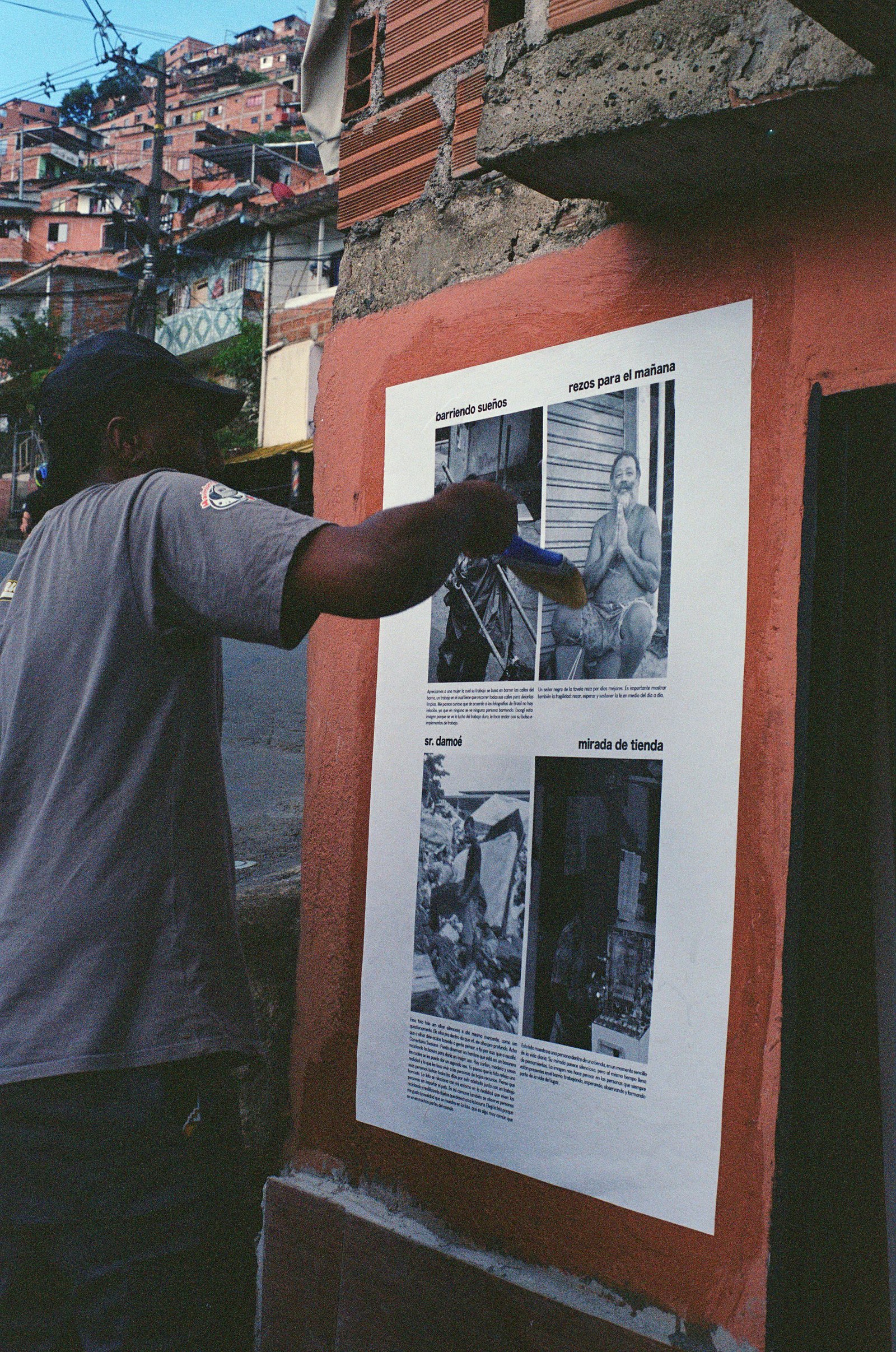
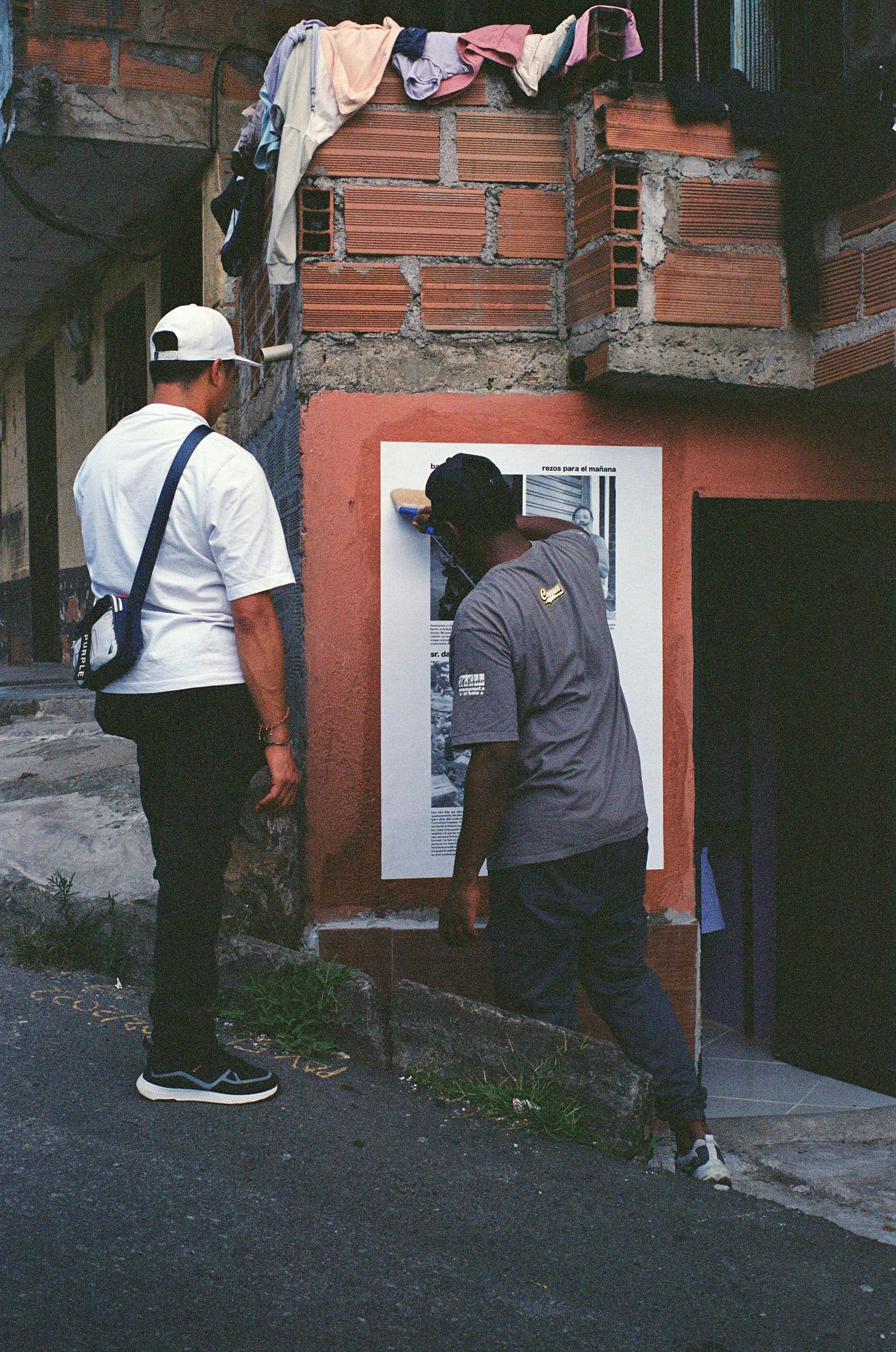
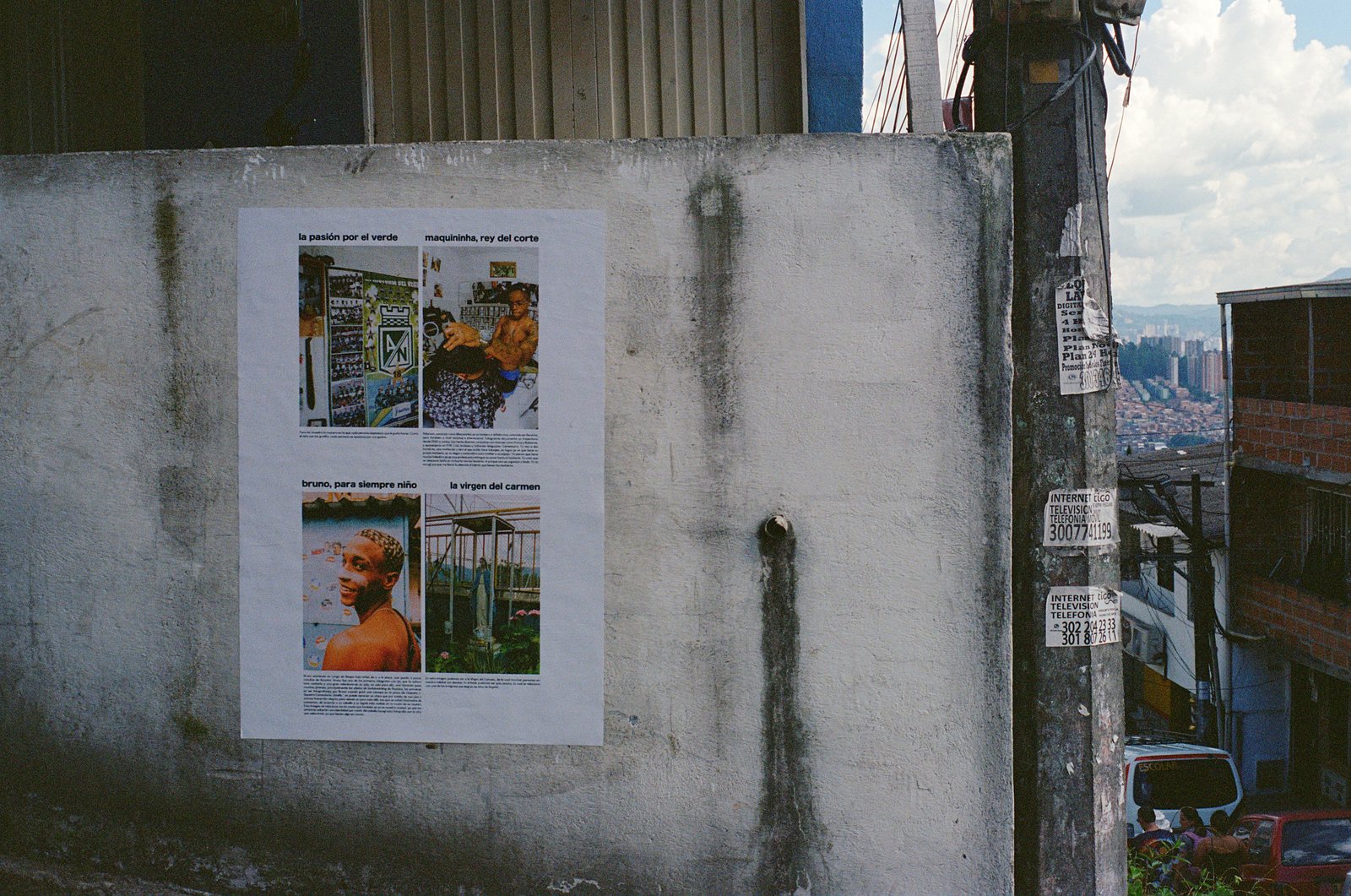
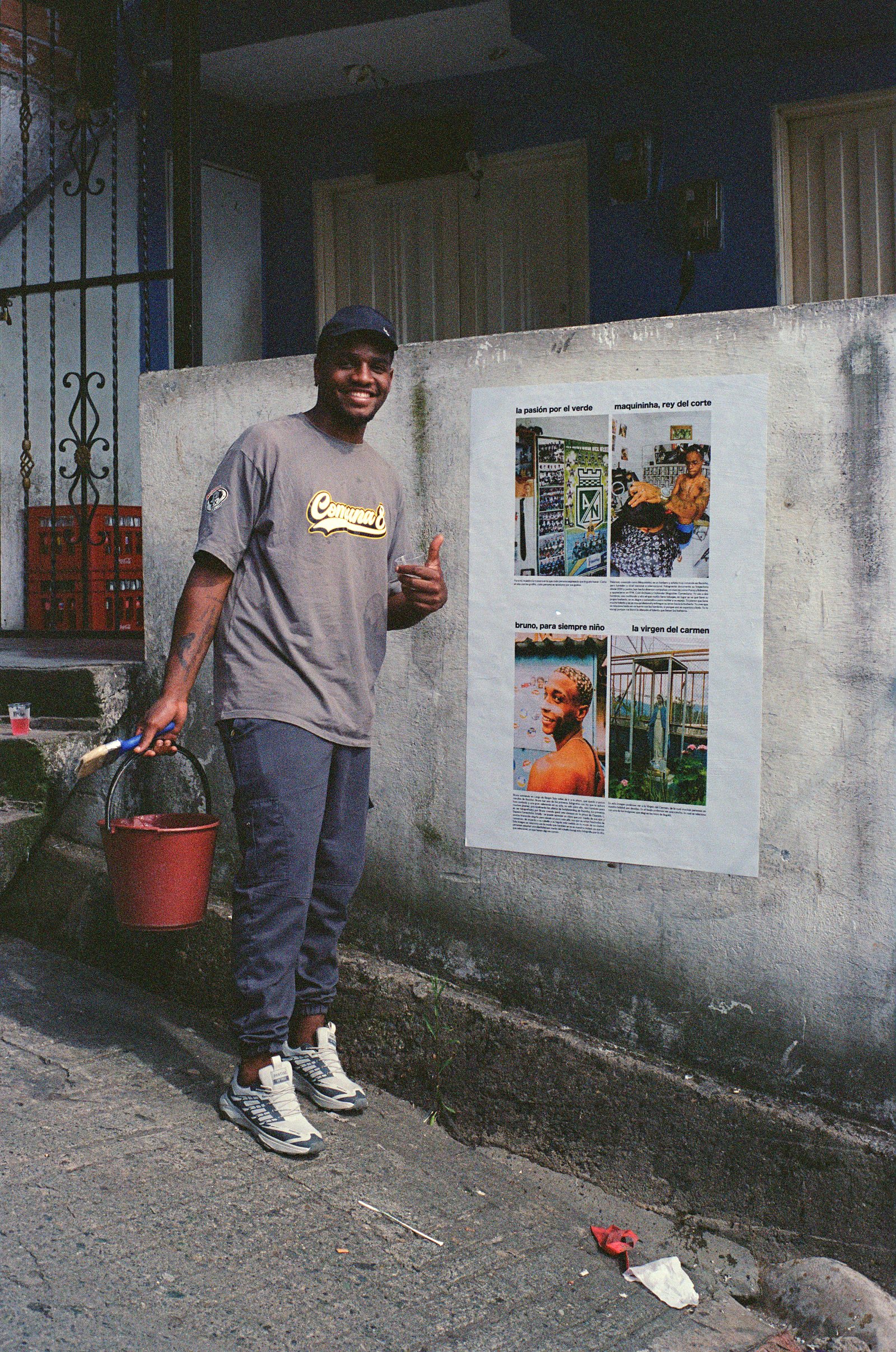
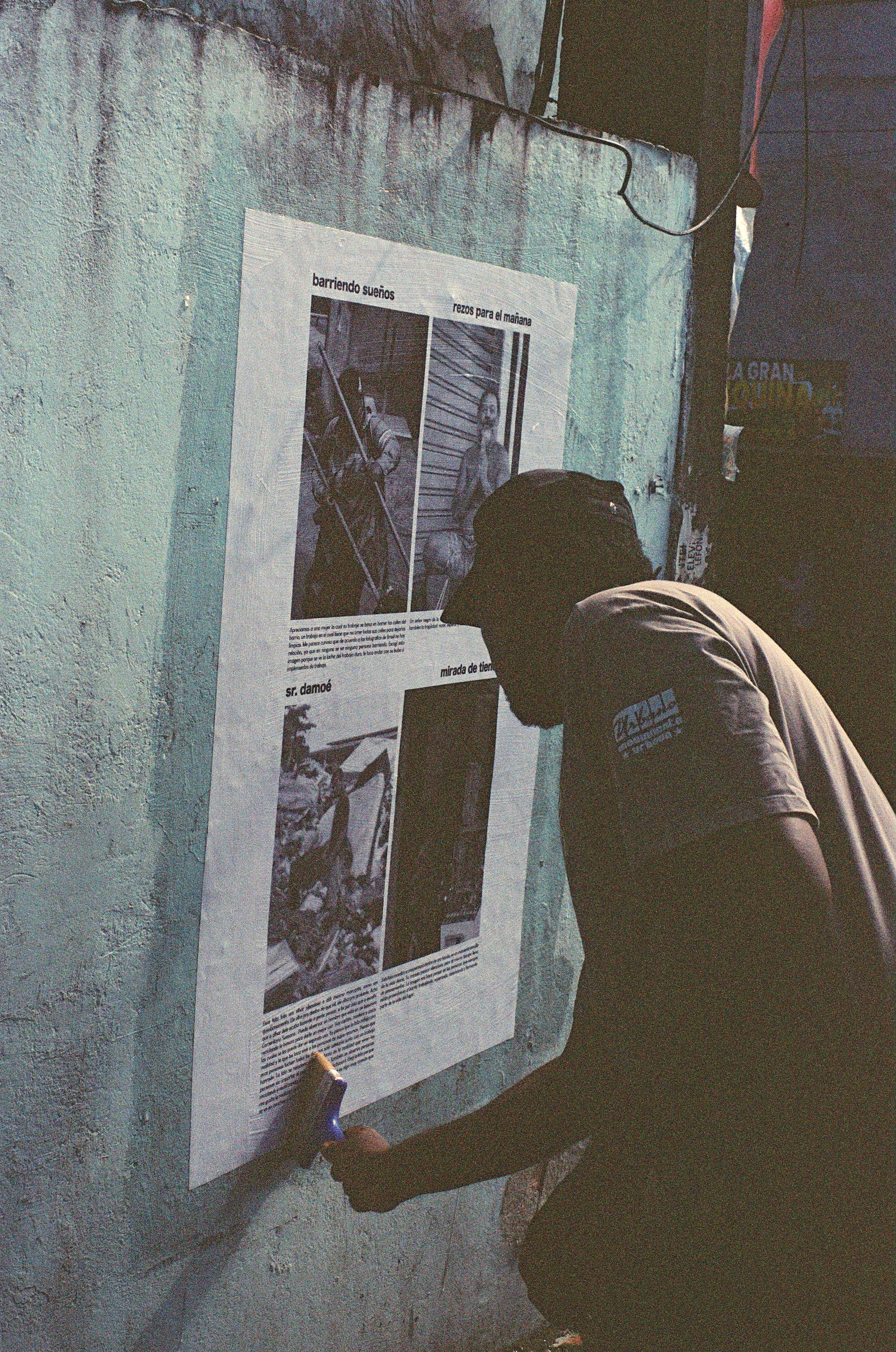
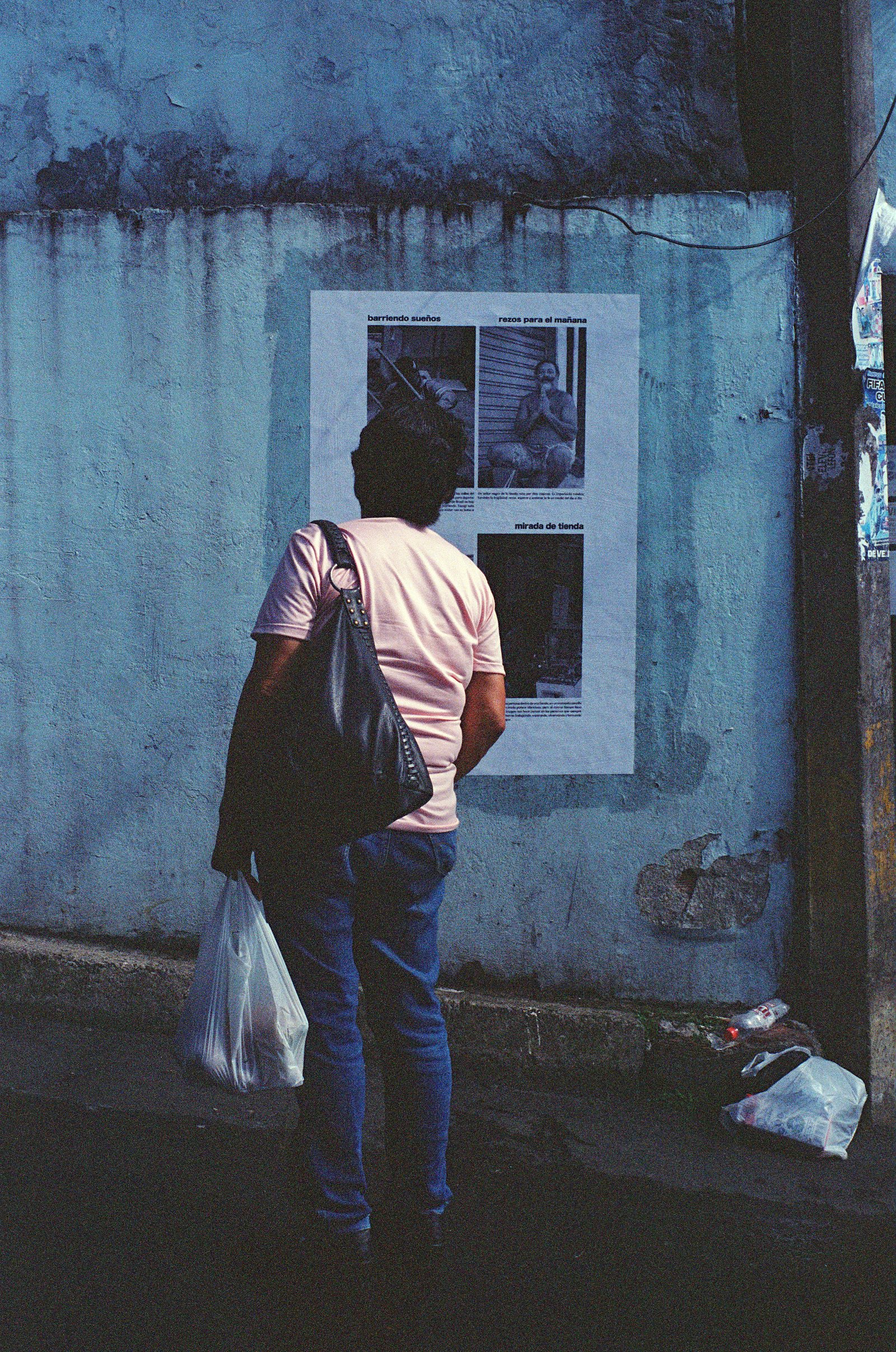
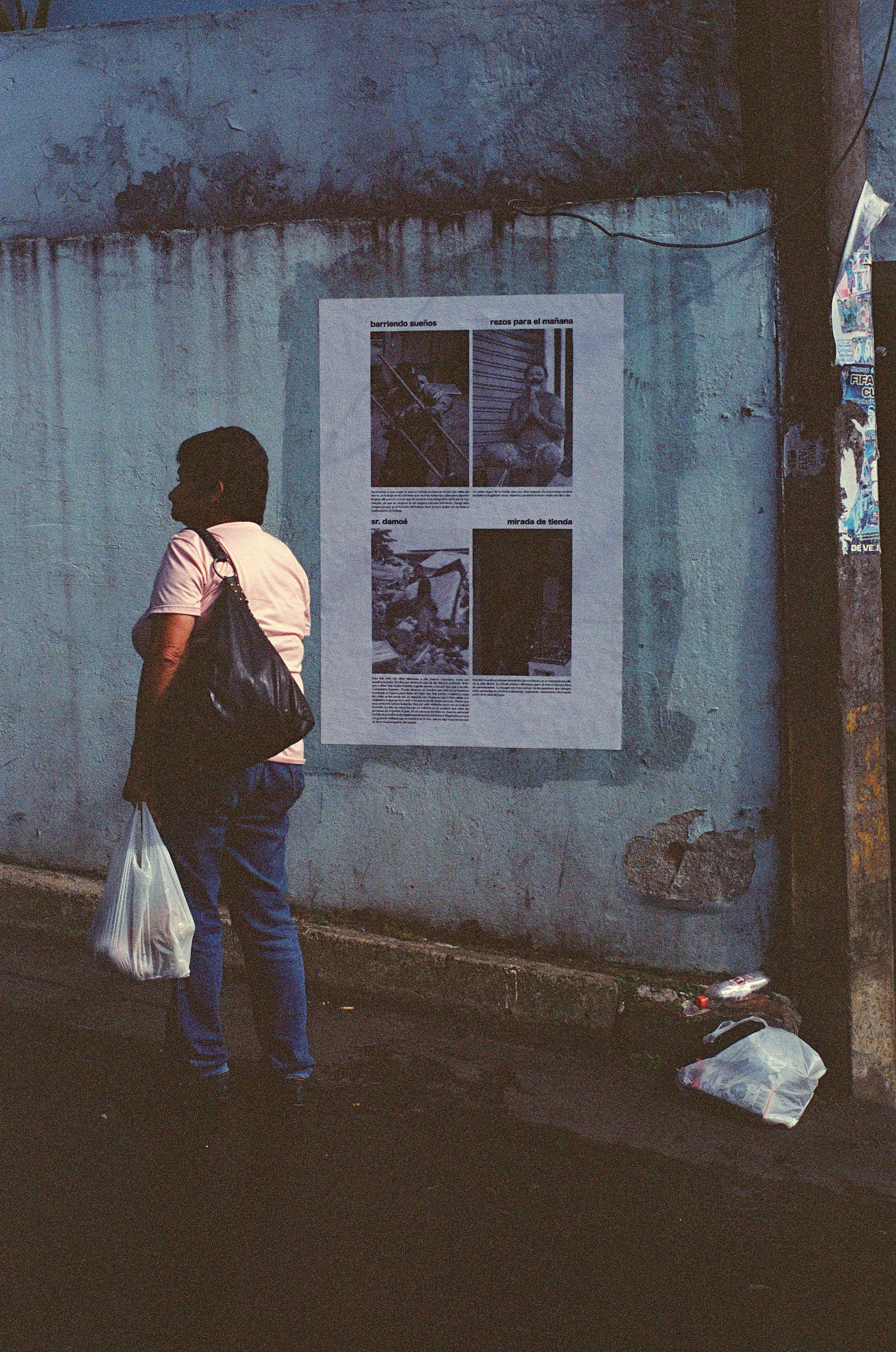
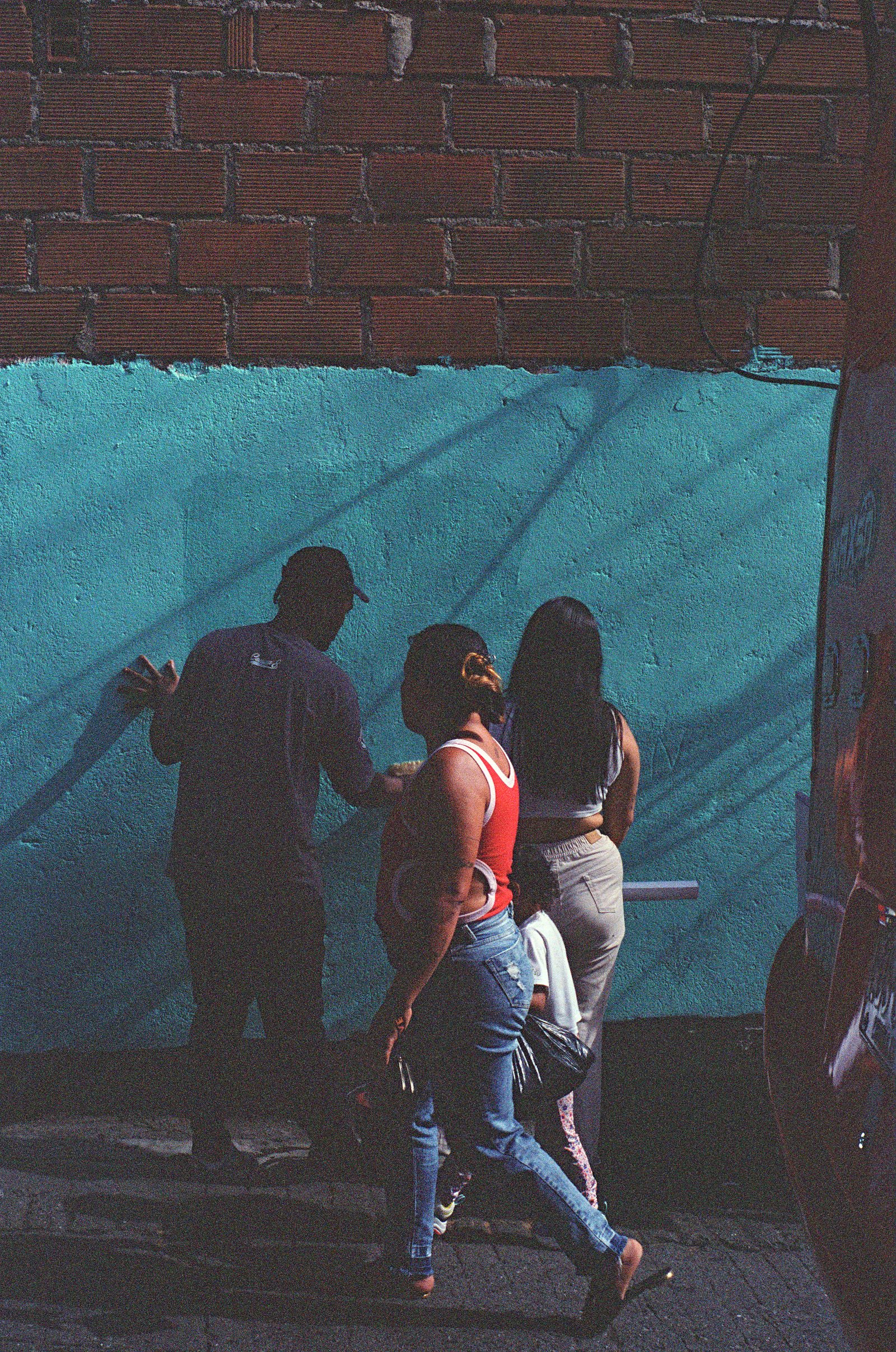
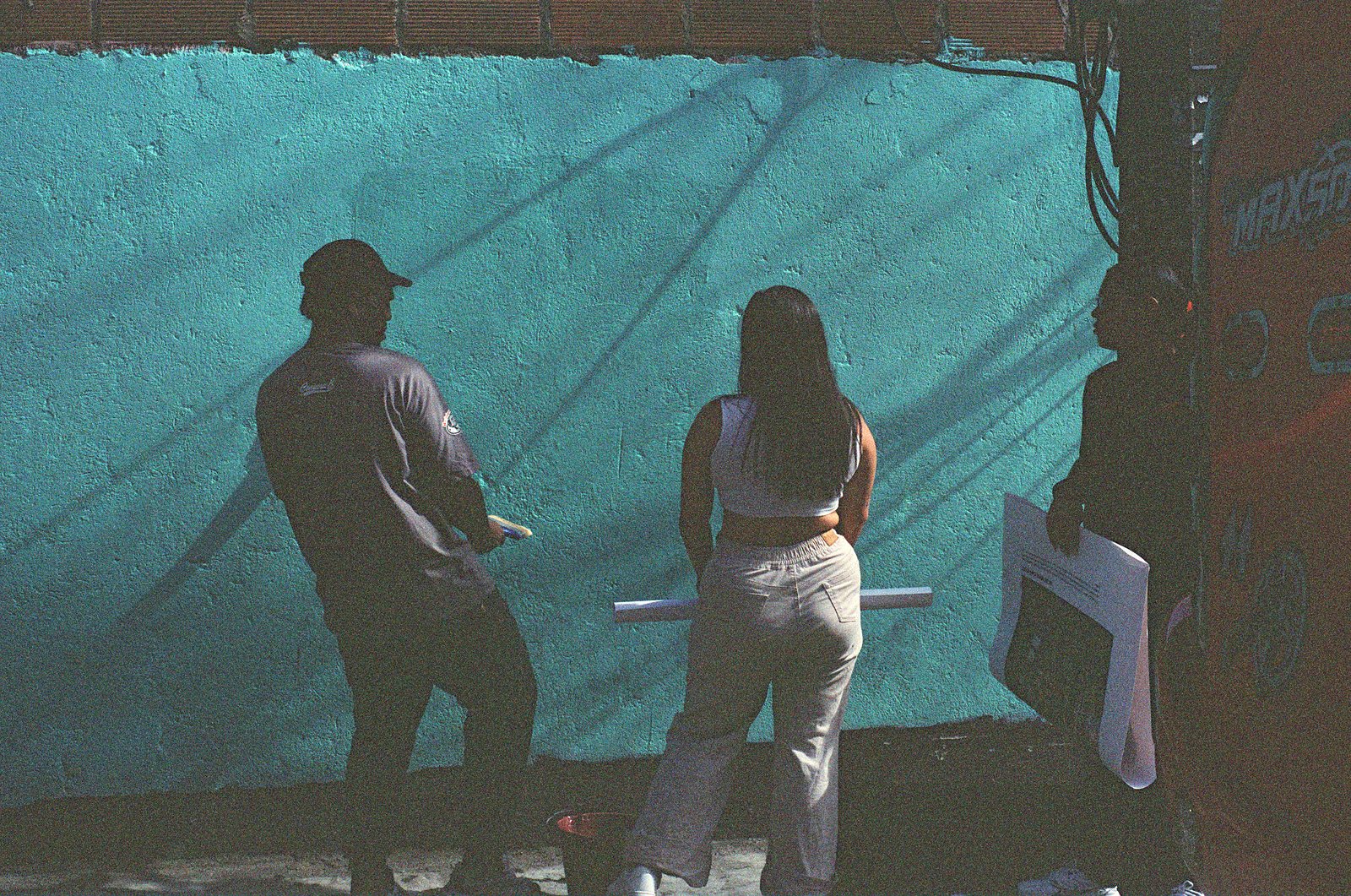
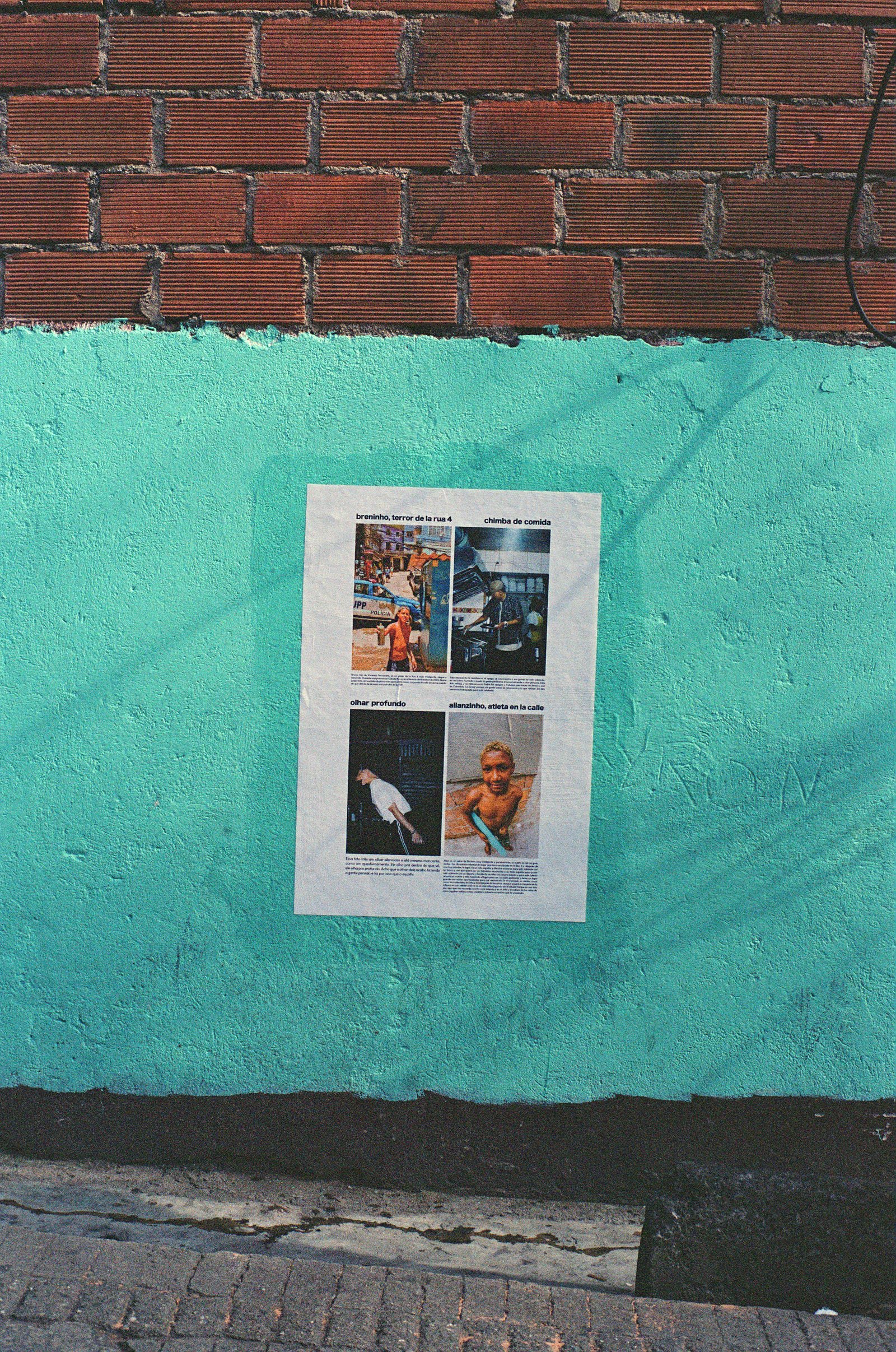
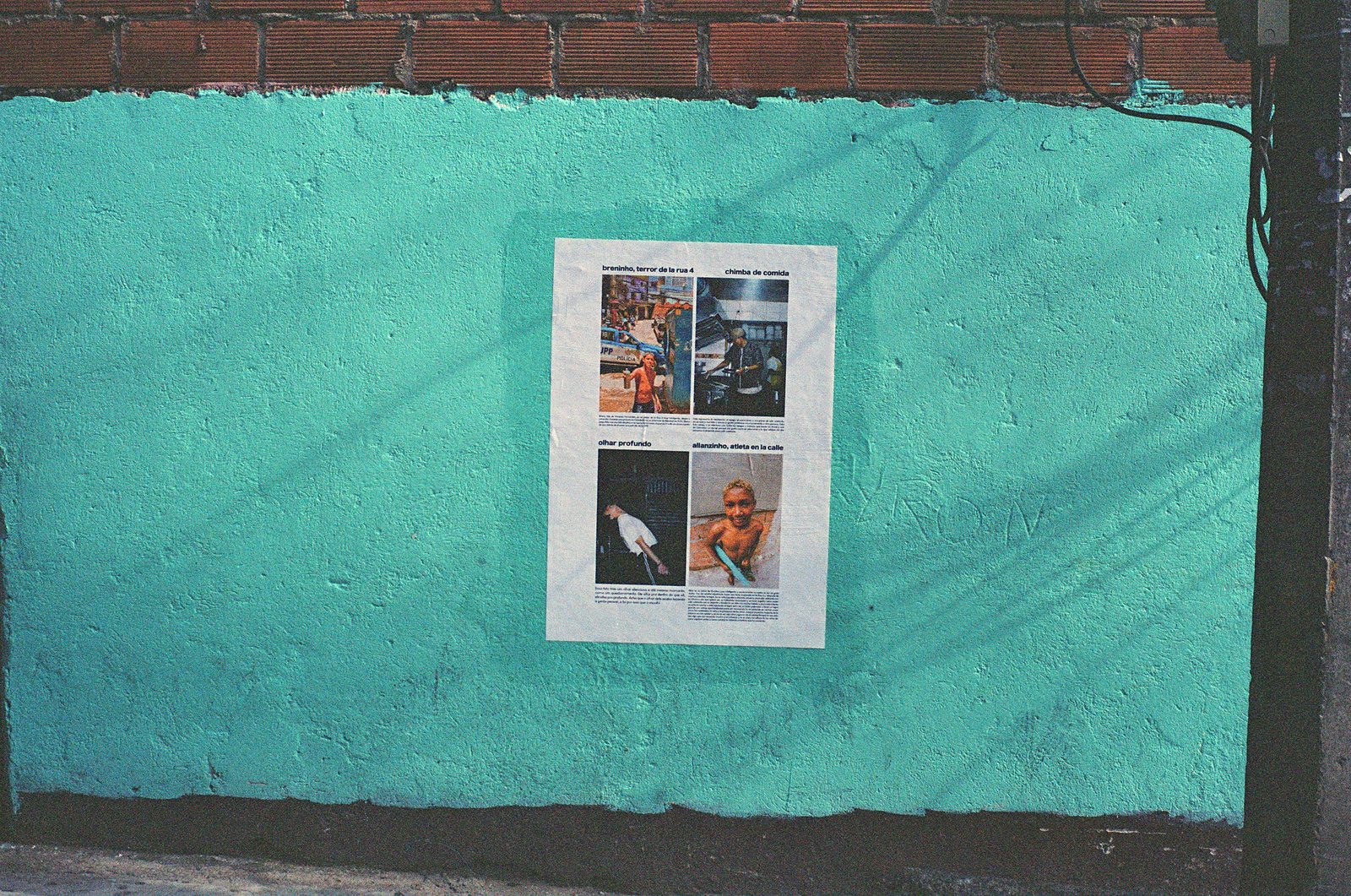
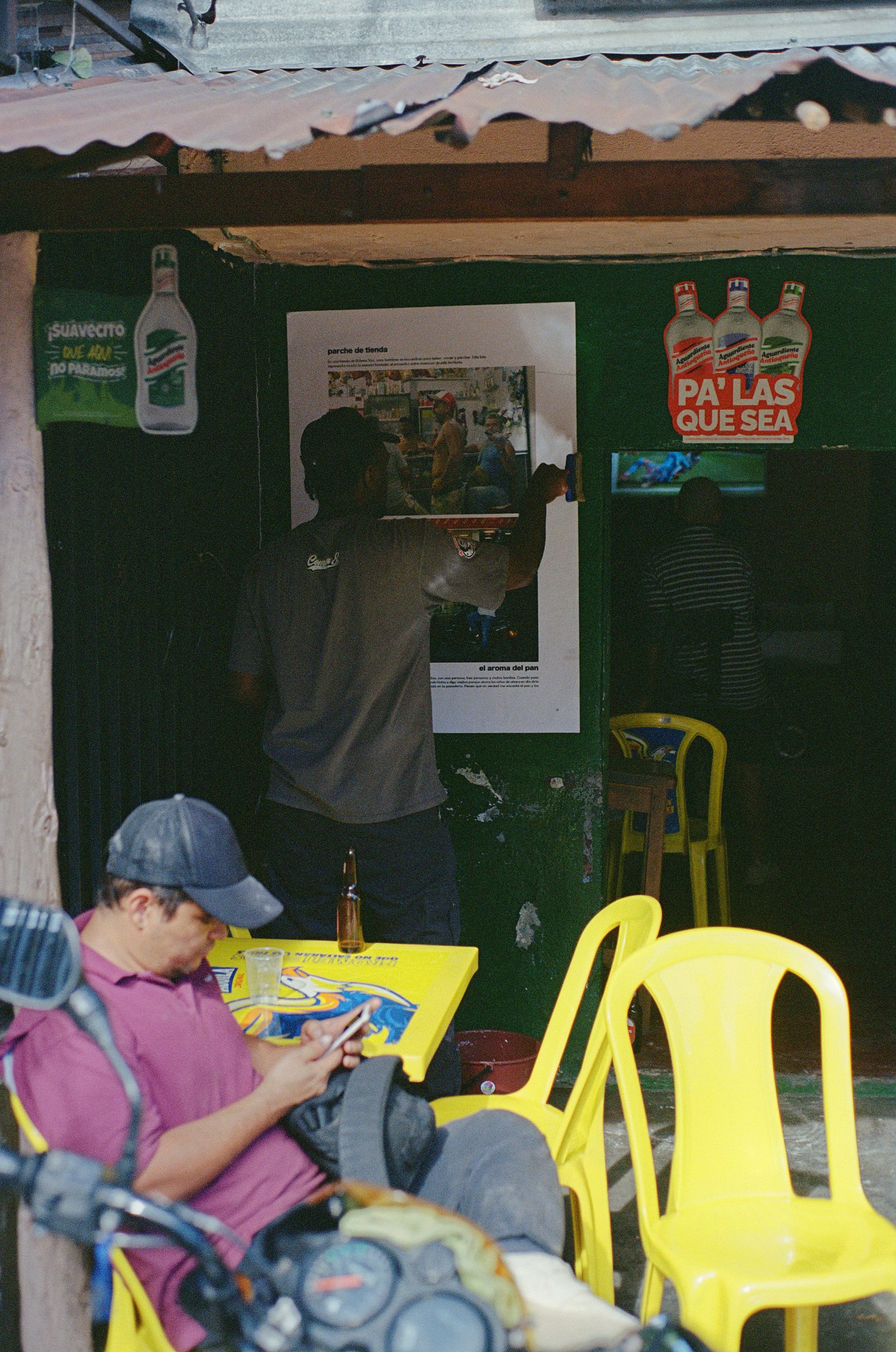
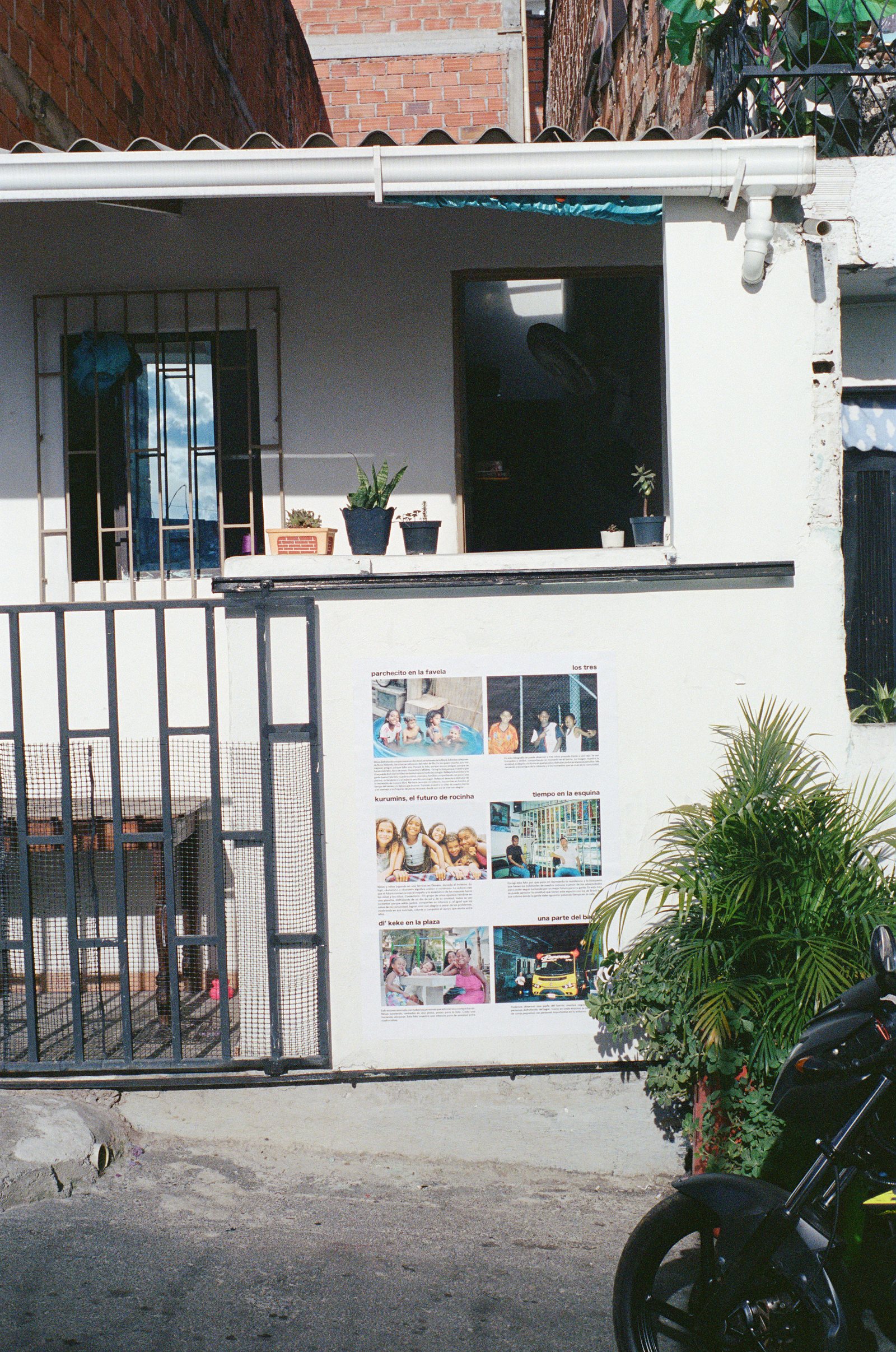
Ten A0 posters were pasted up in the streets of Llanaditas: on red, green and turquoise walls, outside the shops, along the uphill streets. A guided walk with a megaphone took residents from poster to poster.
on an orange wall at the top of some steps, read out through a megaphone during the walk
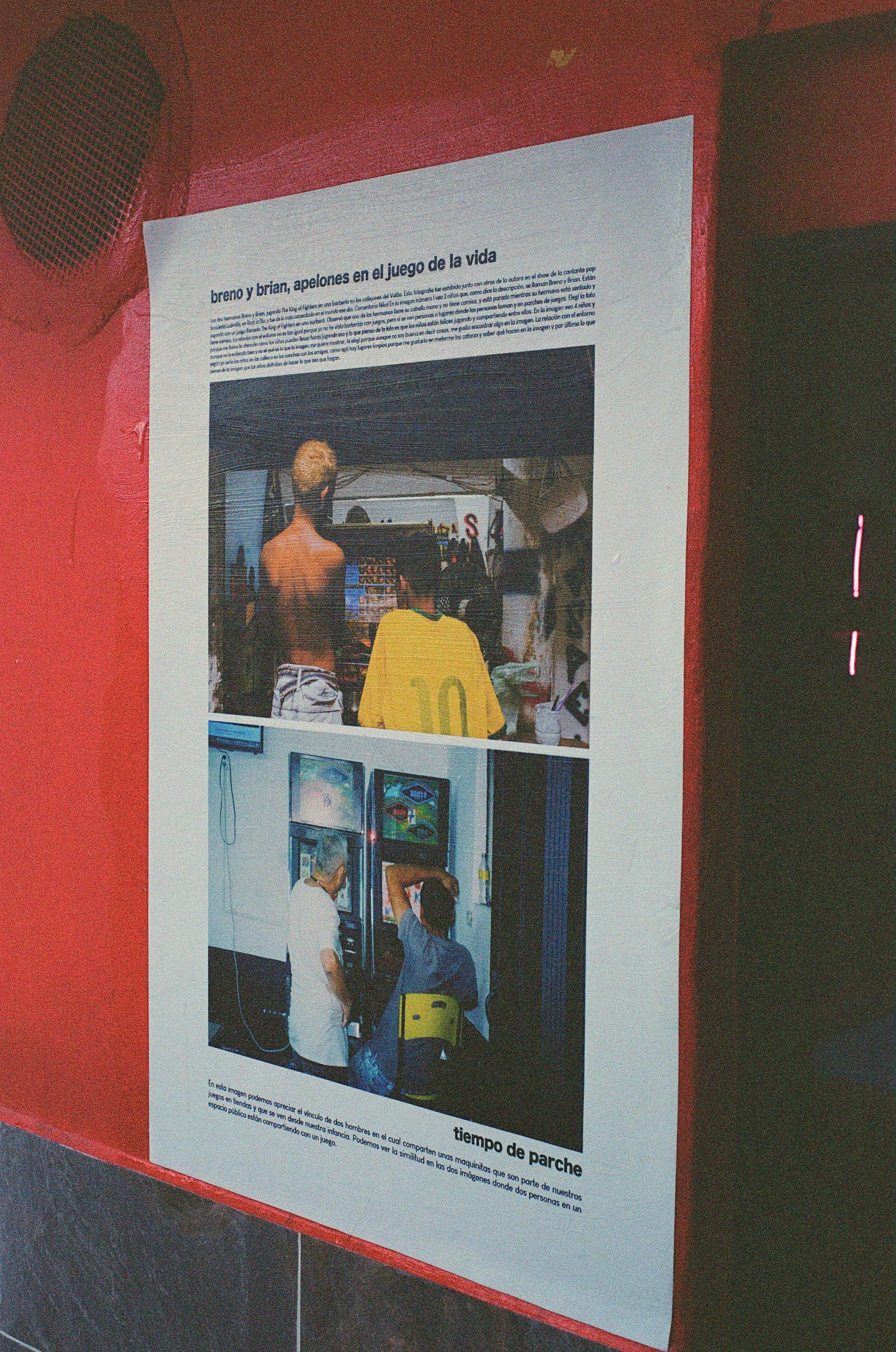
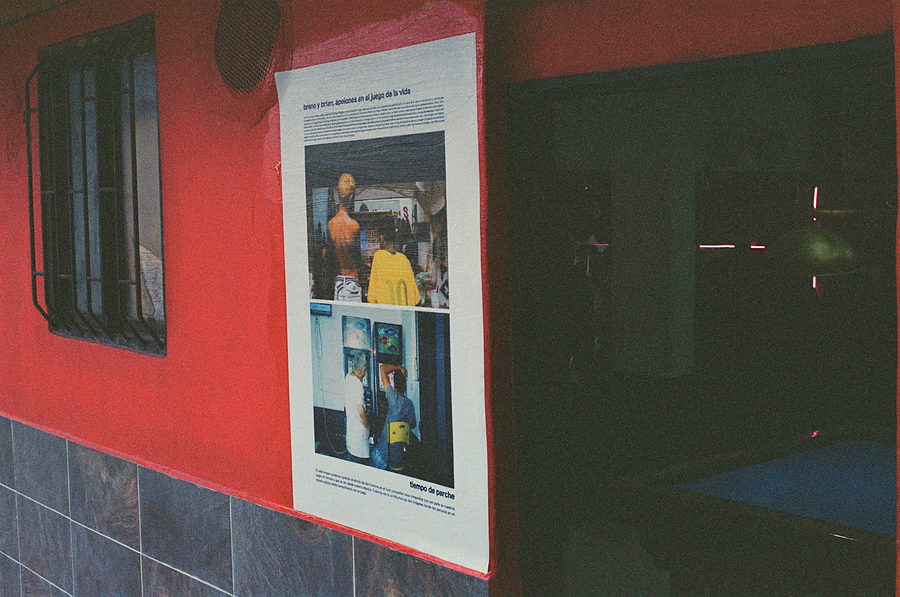
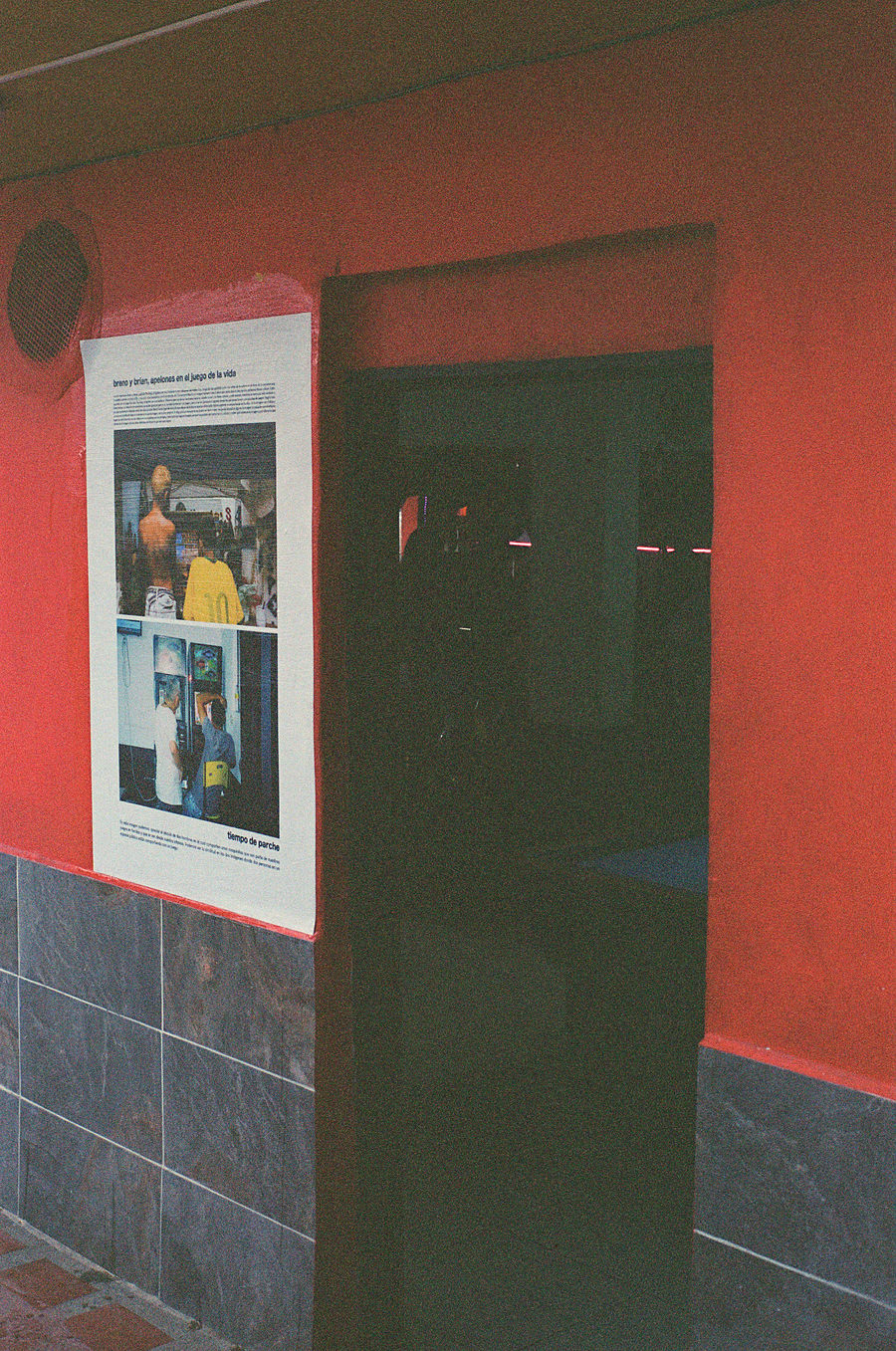
on the red front of a house, right beside a door
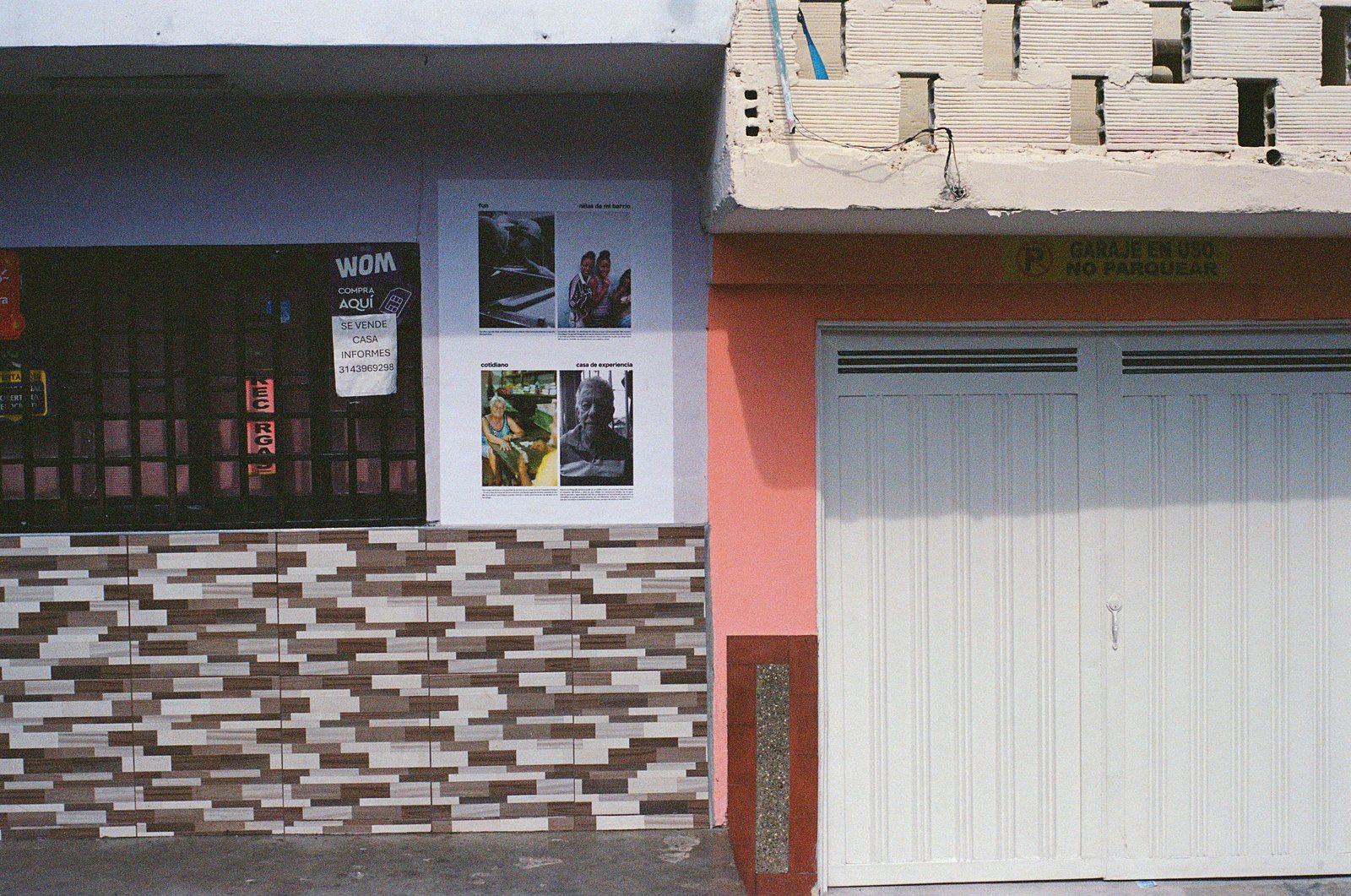
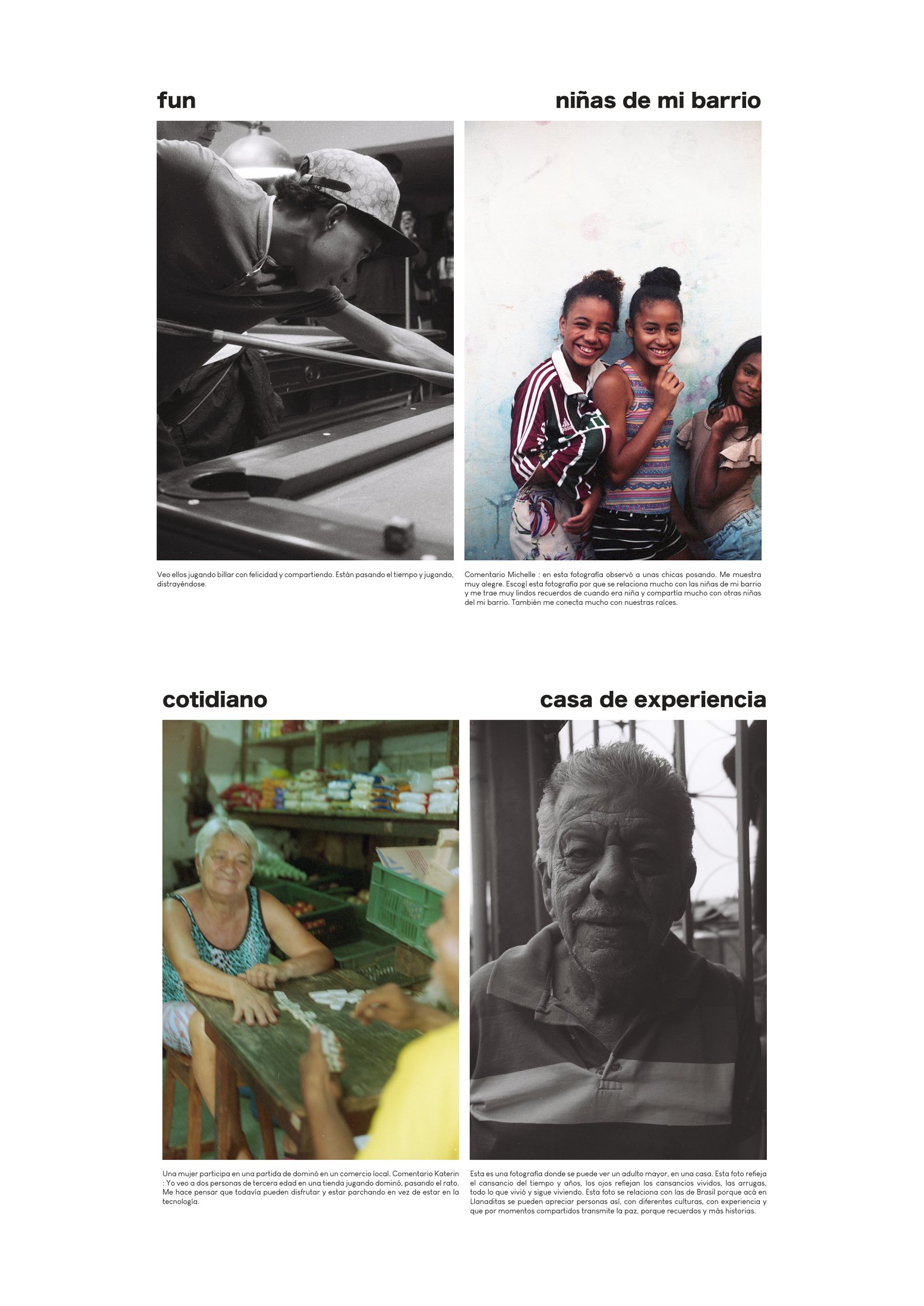
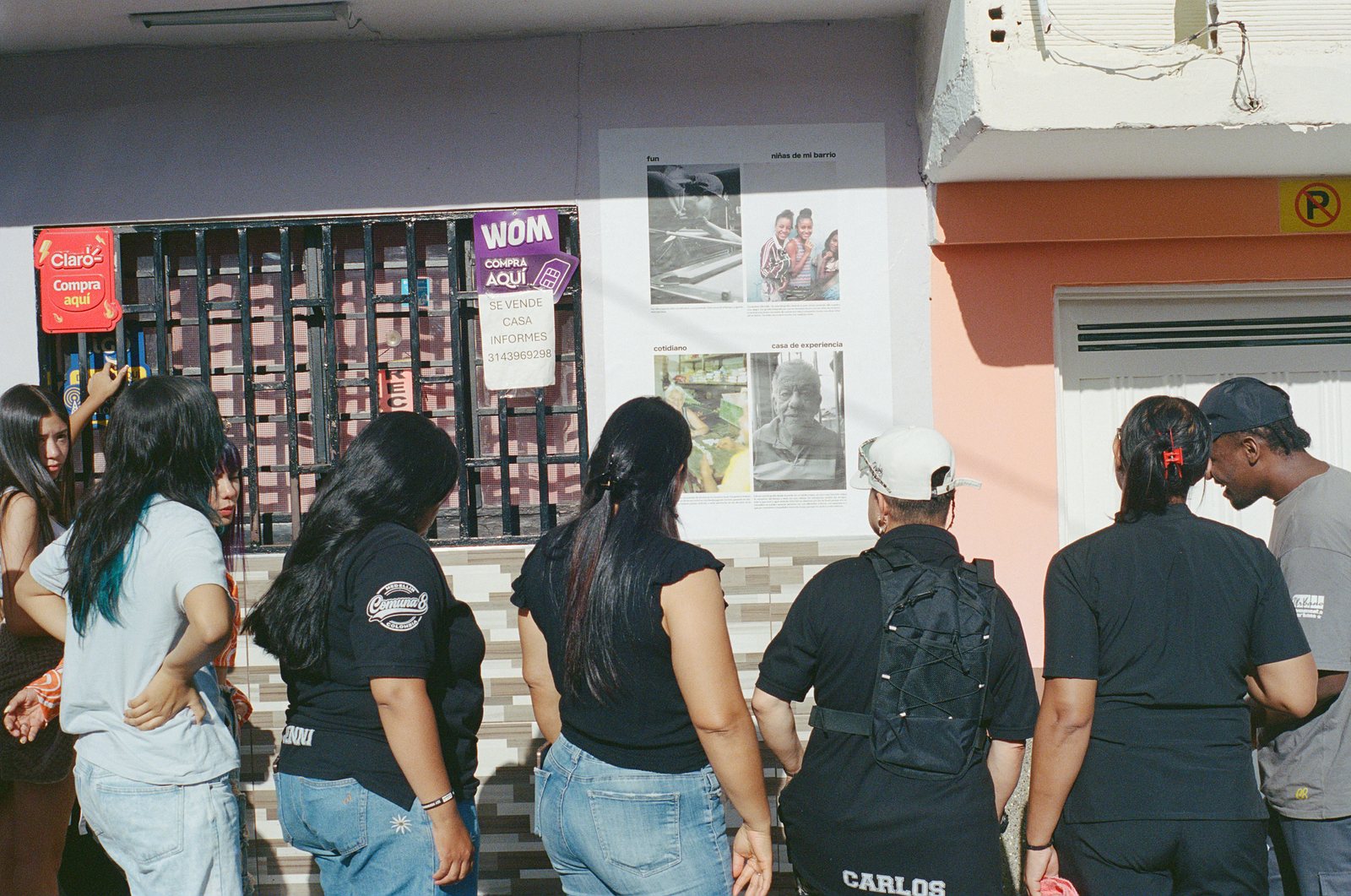
on a pink and lilac house, beneath a ‘se vende casa’ sign
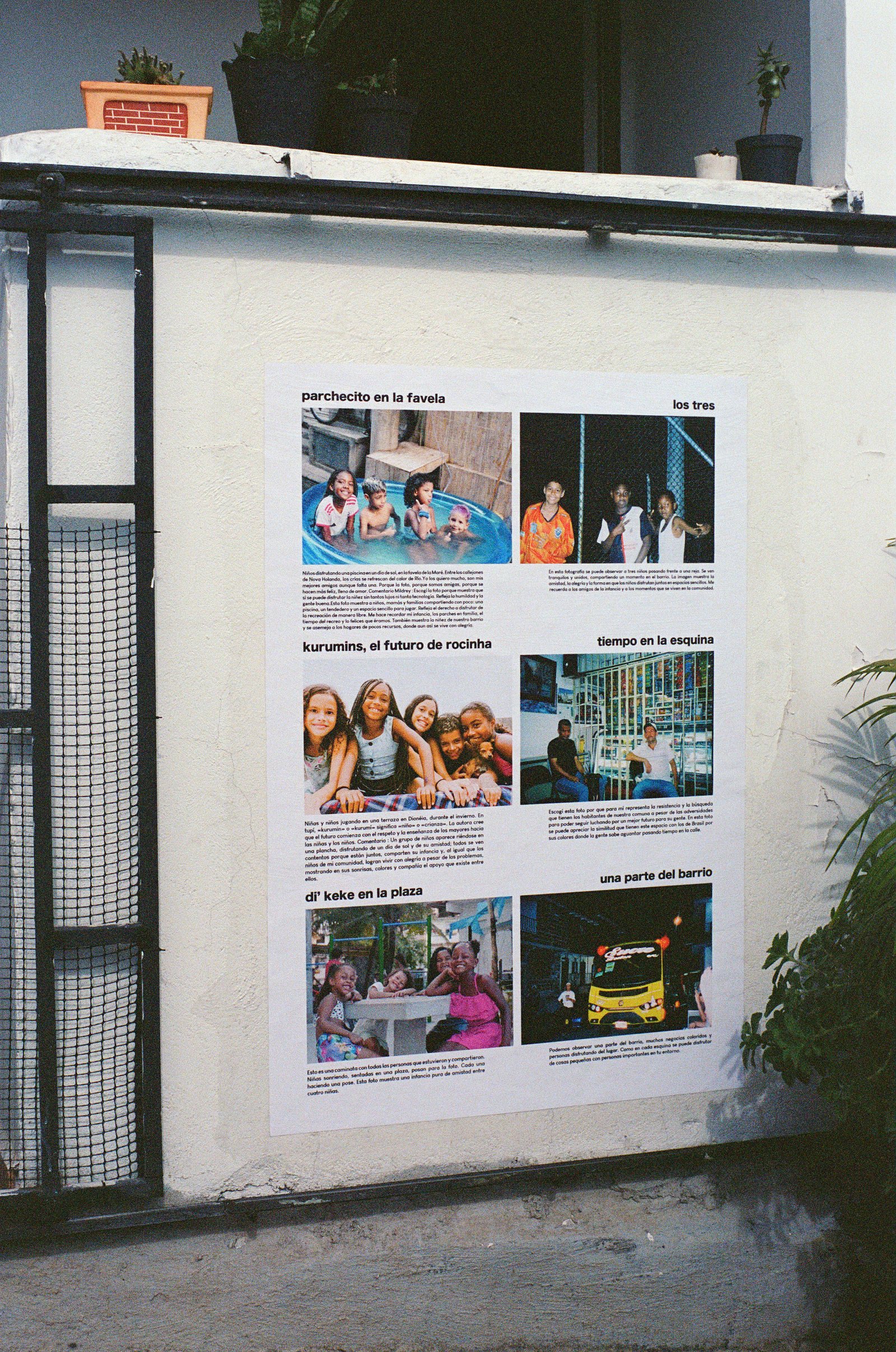
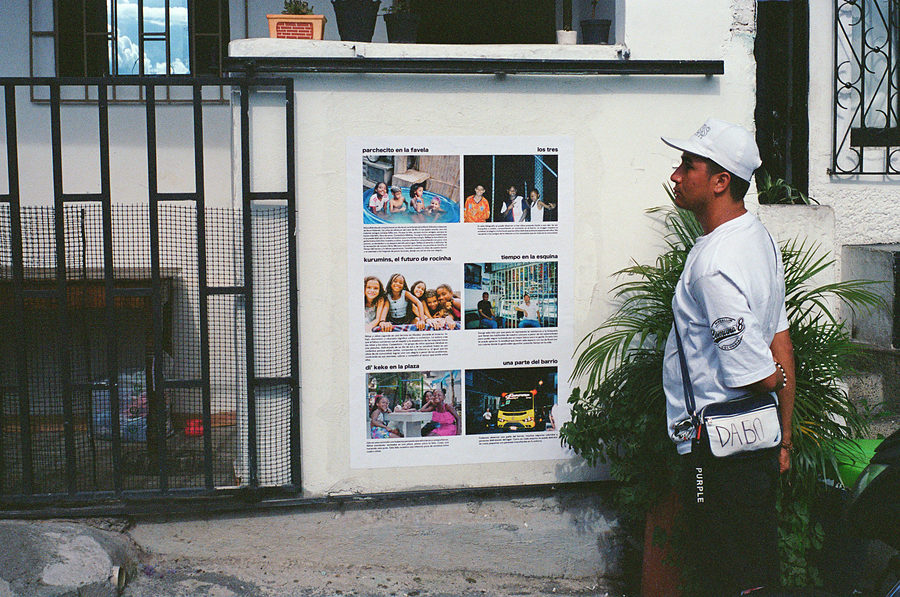
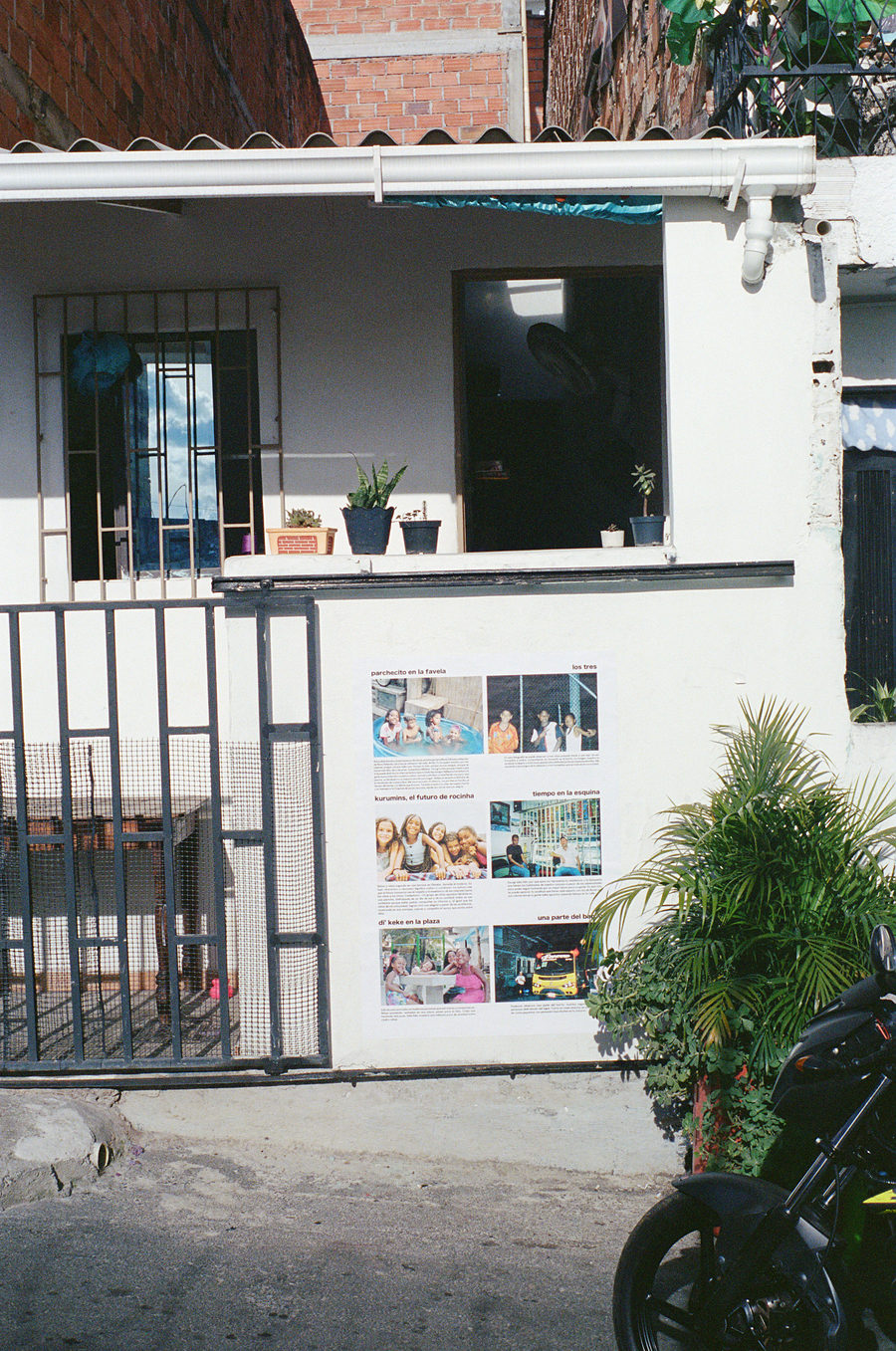
on a white wall behind railings, among the plants
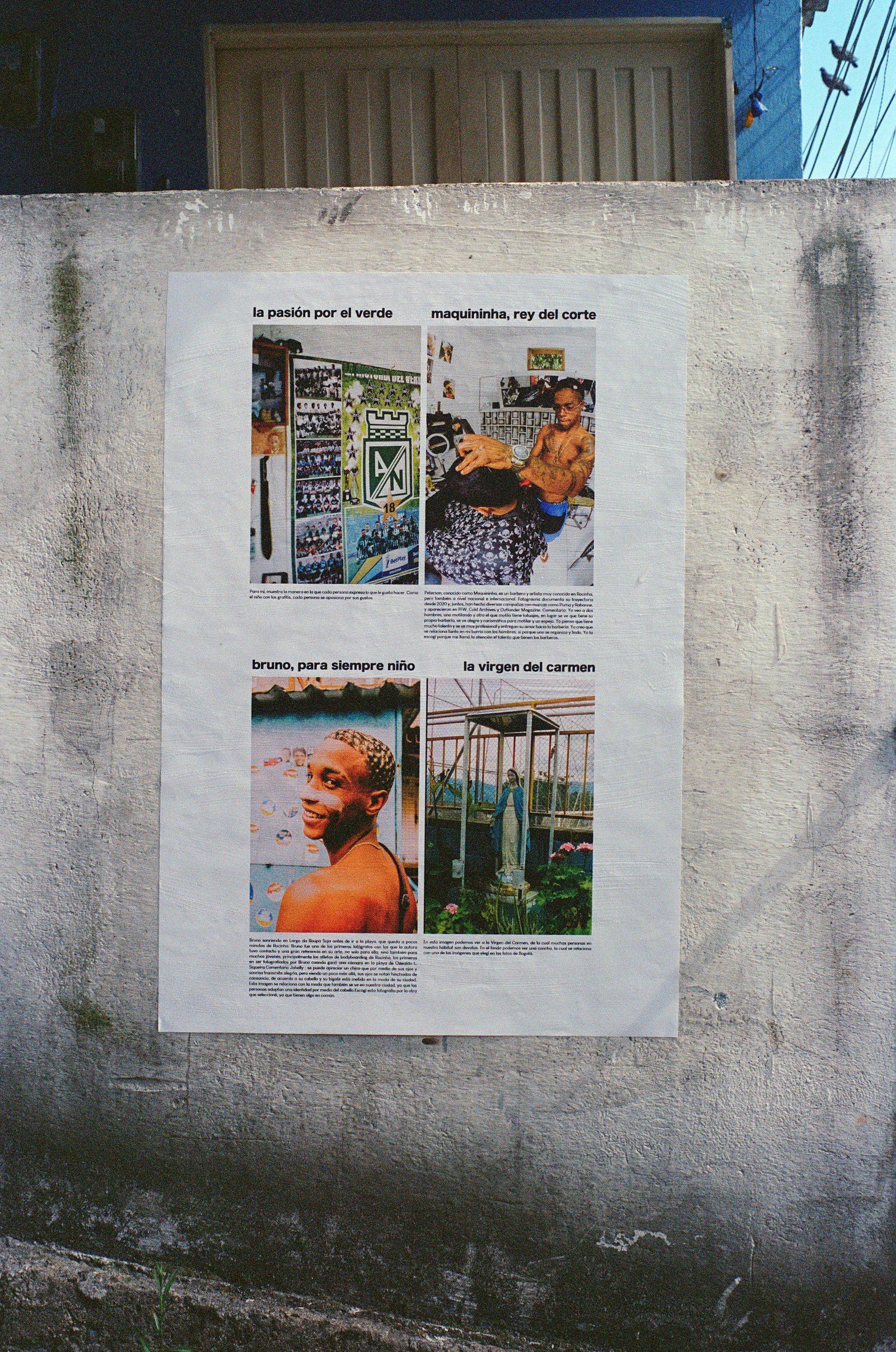
on a concrete wall at the edge of the slope
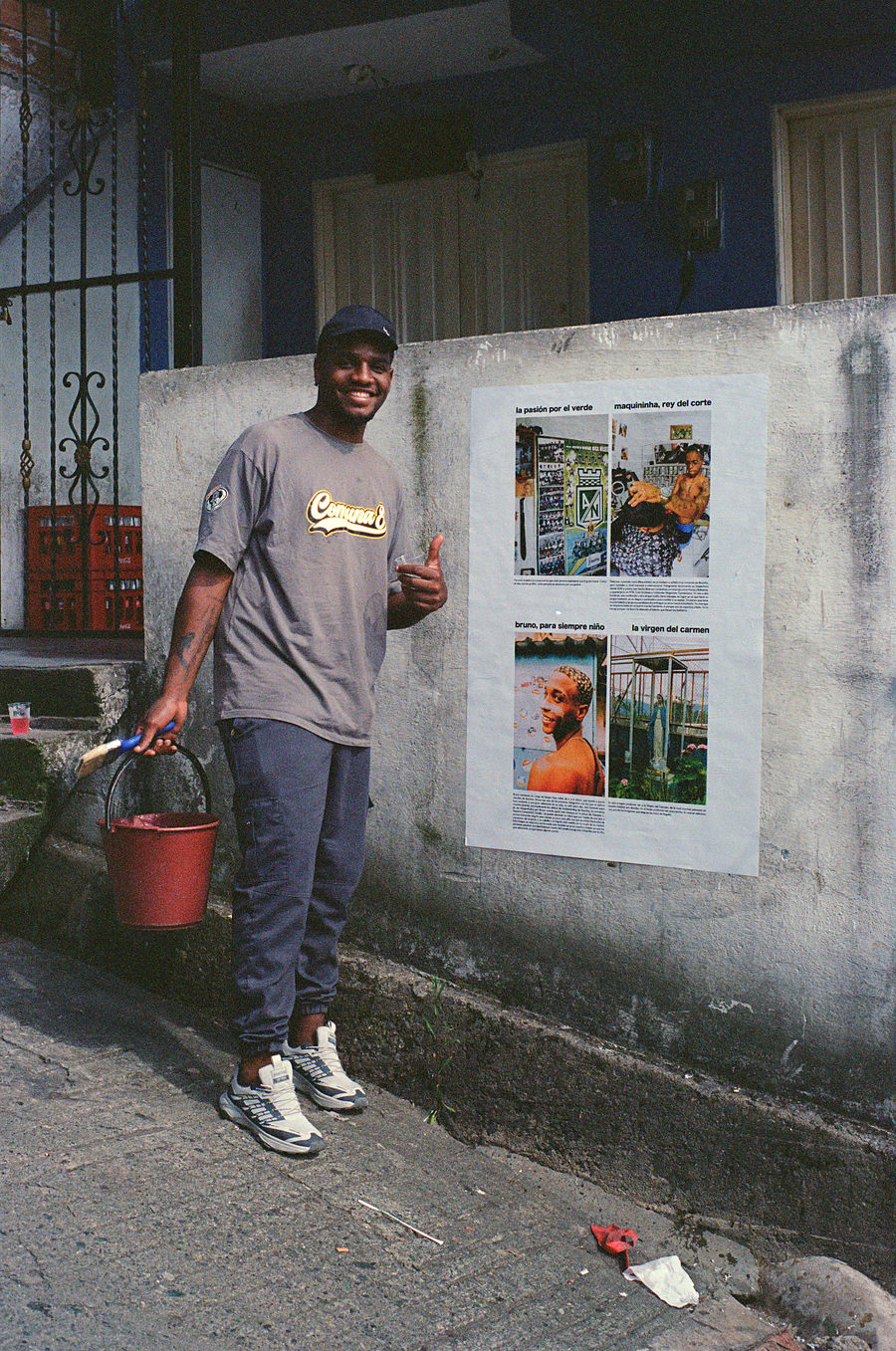
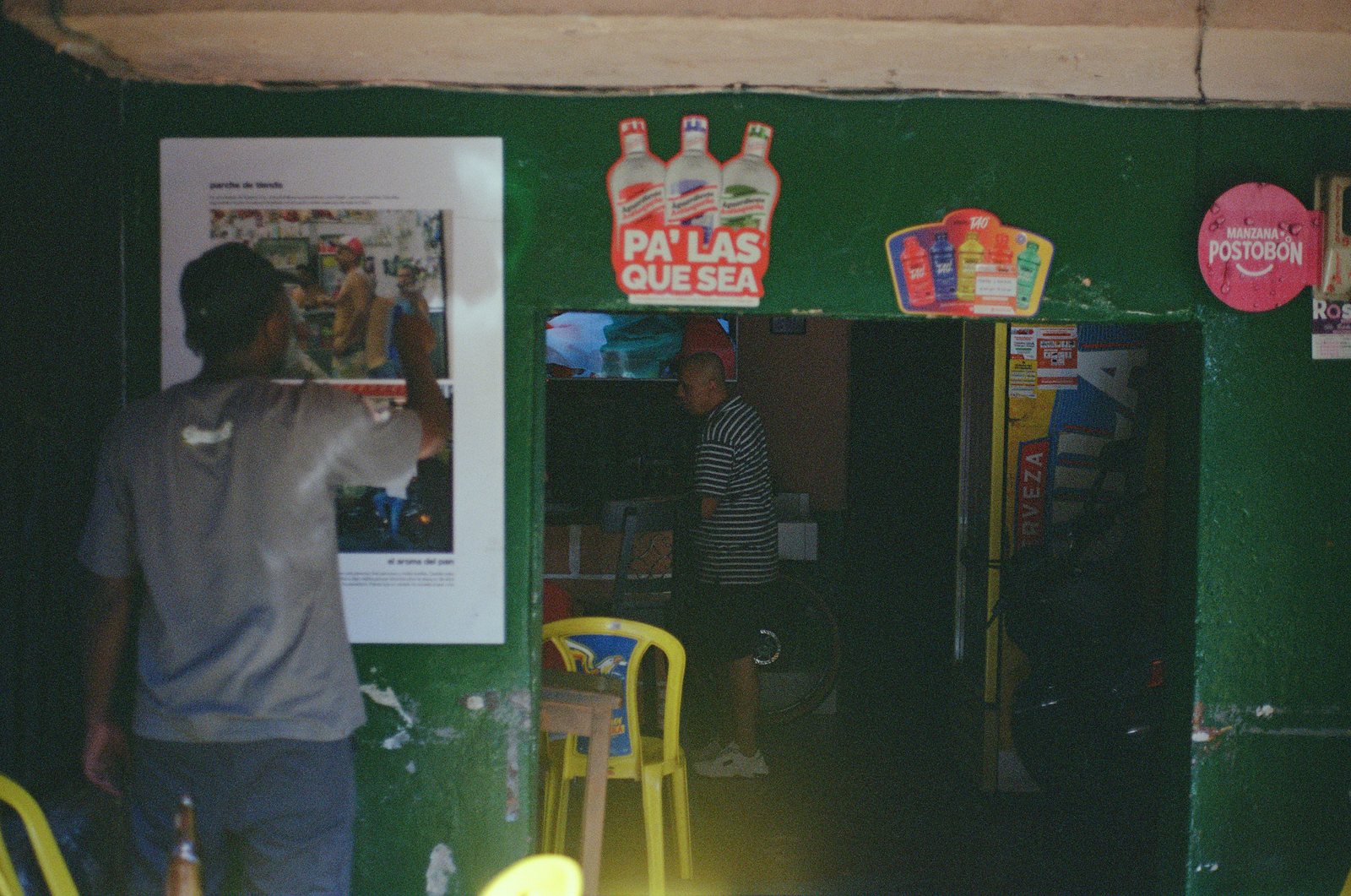
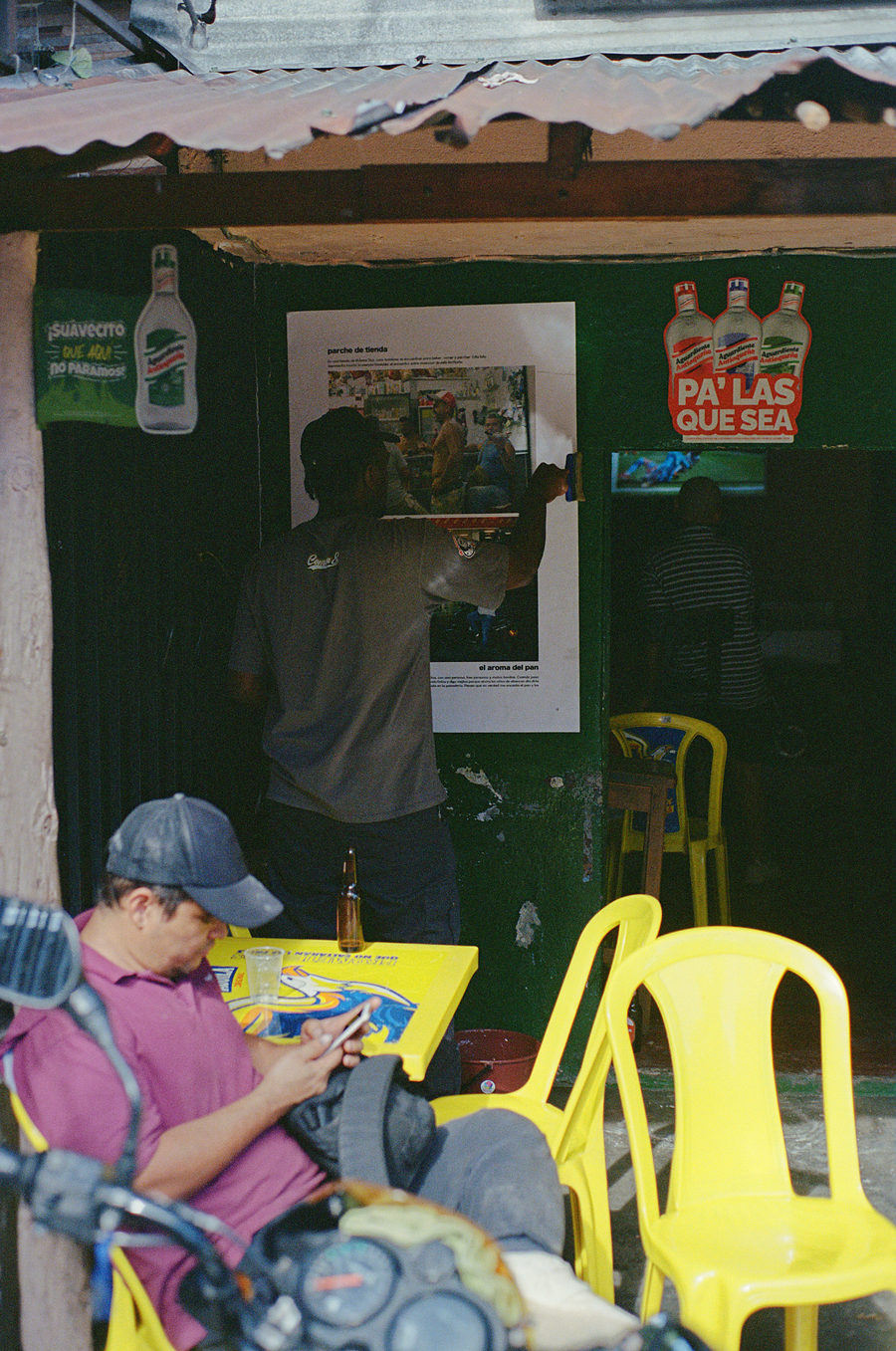
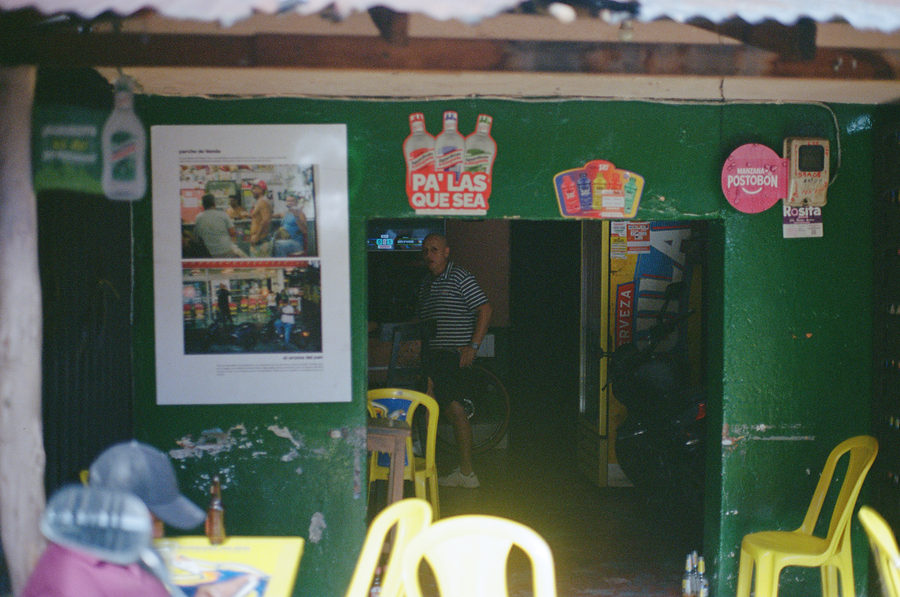
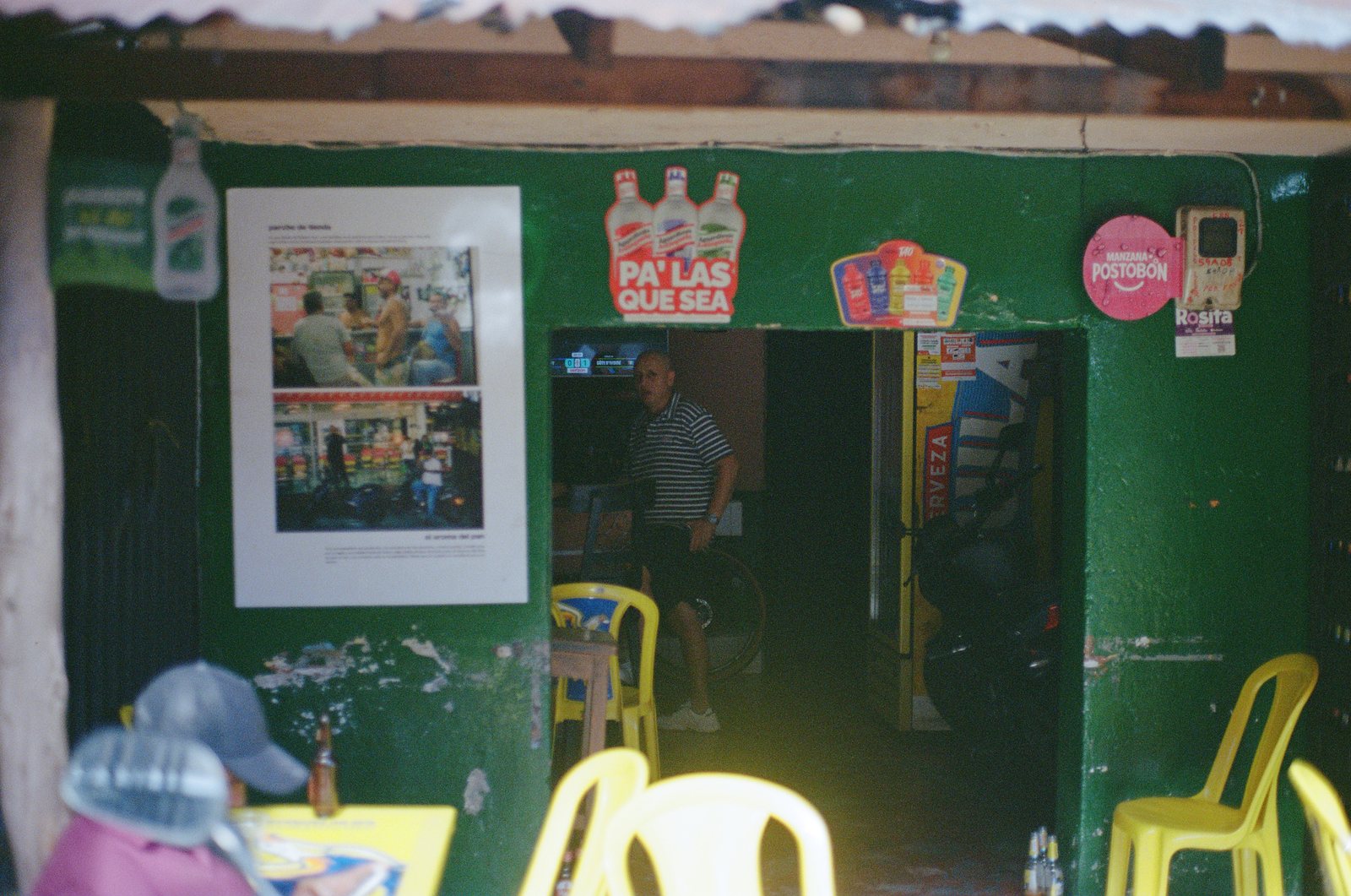
at the entrance to a green tienda, among the yellow chairs and drinks adverts
on a pale wall
pasted up twice: on the orange frame of a doorway, then on a pale blue wall
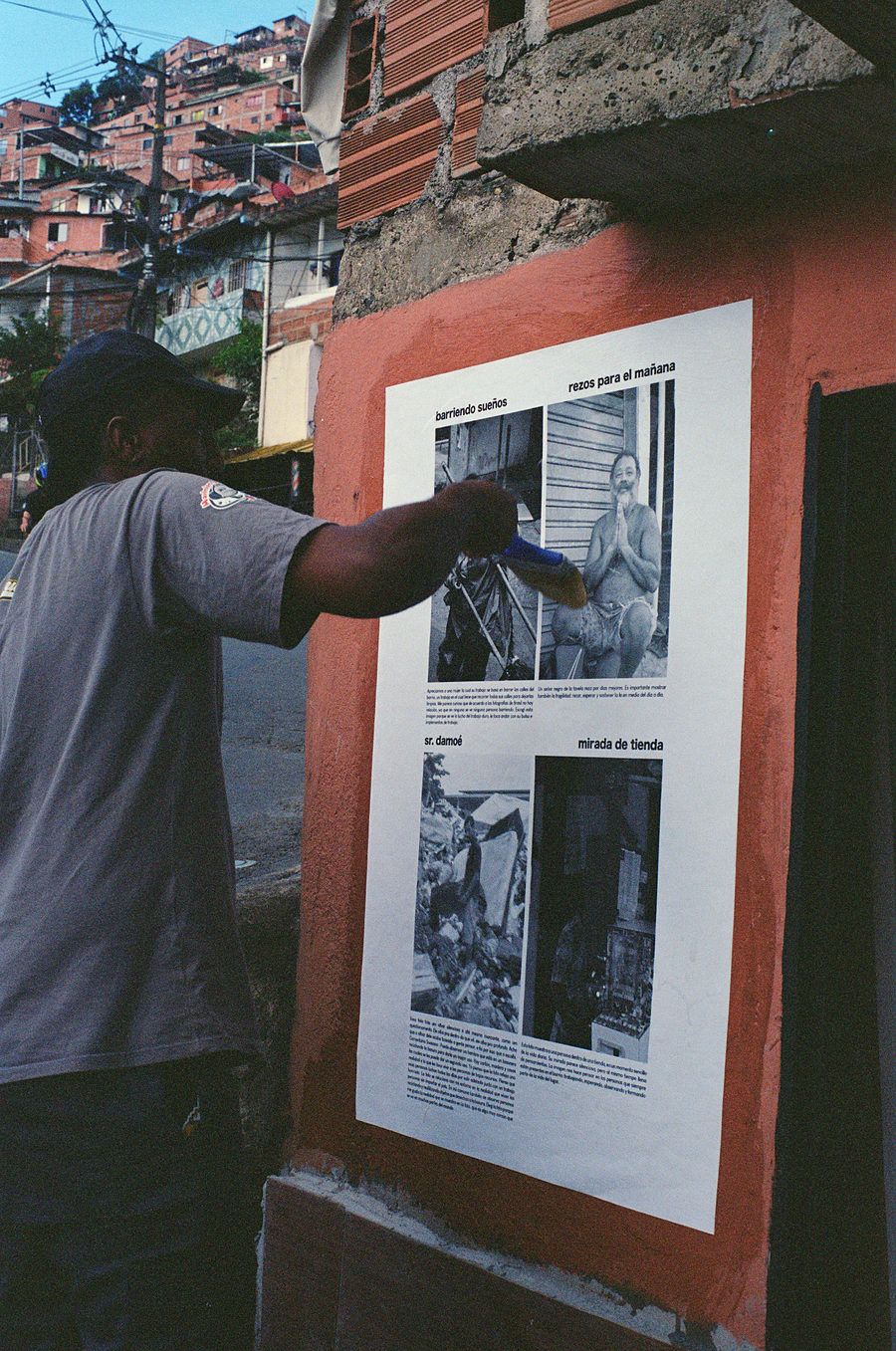
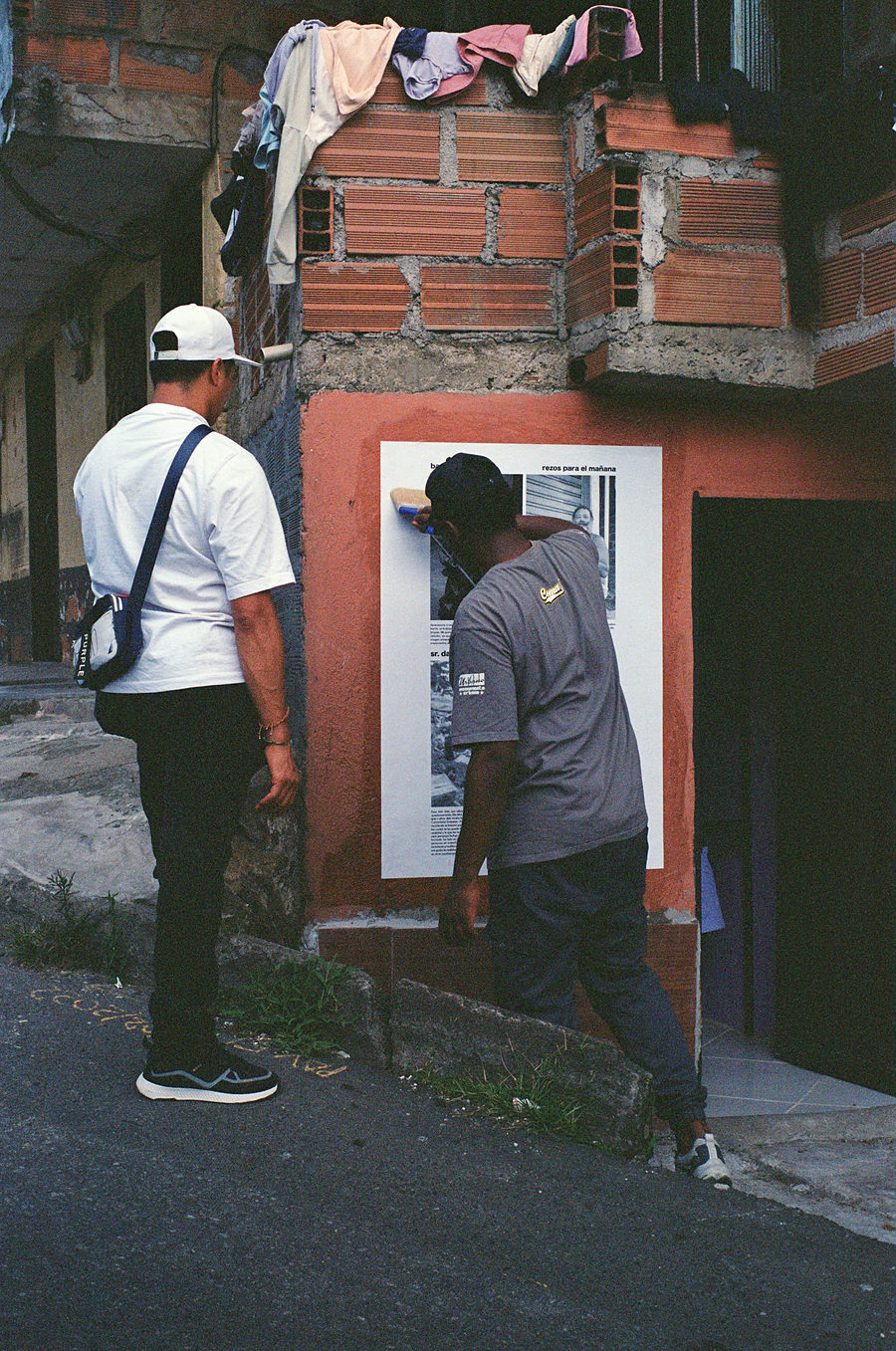
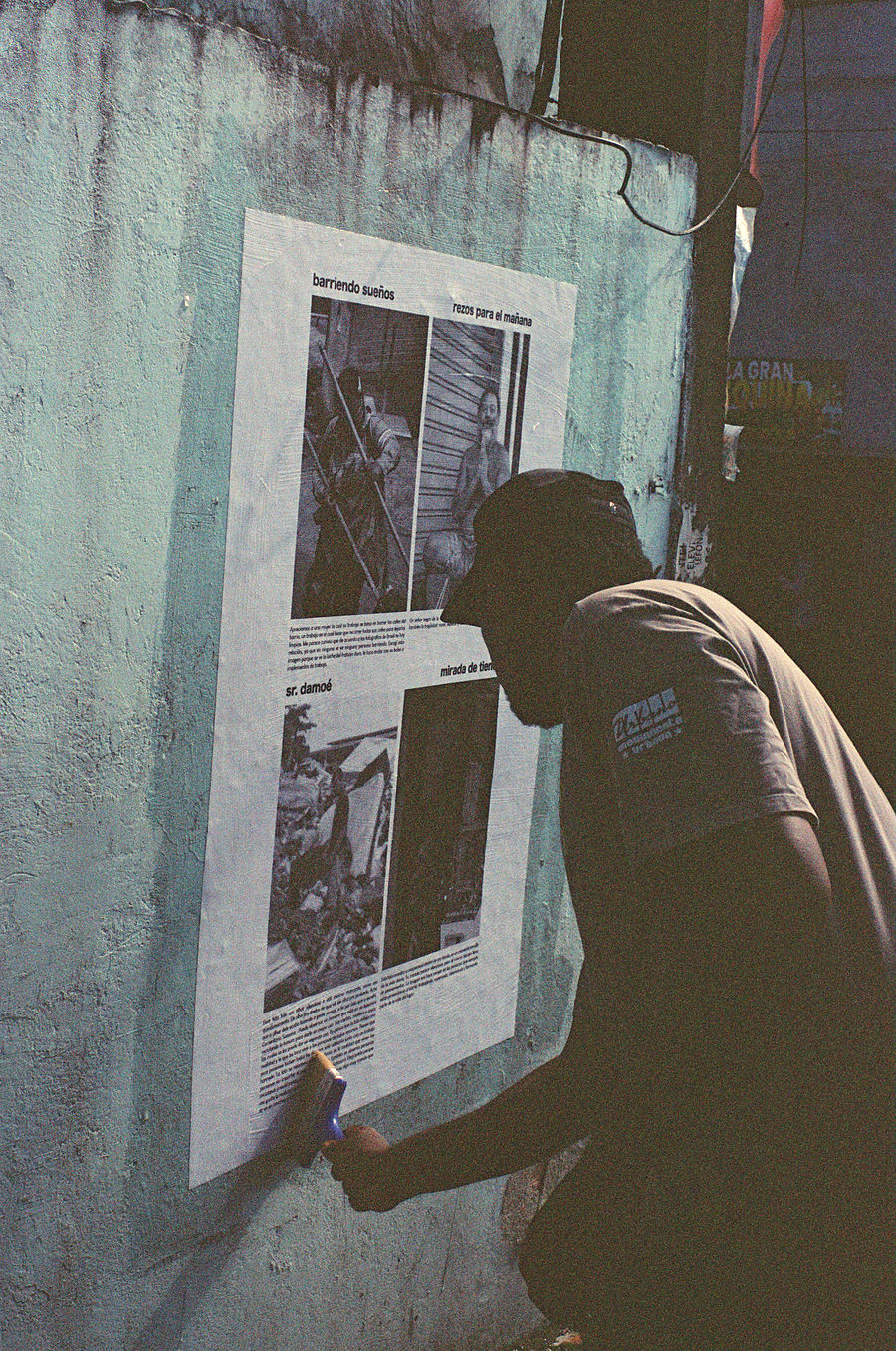
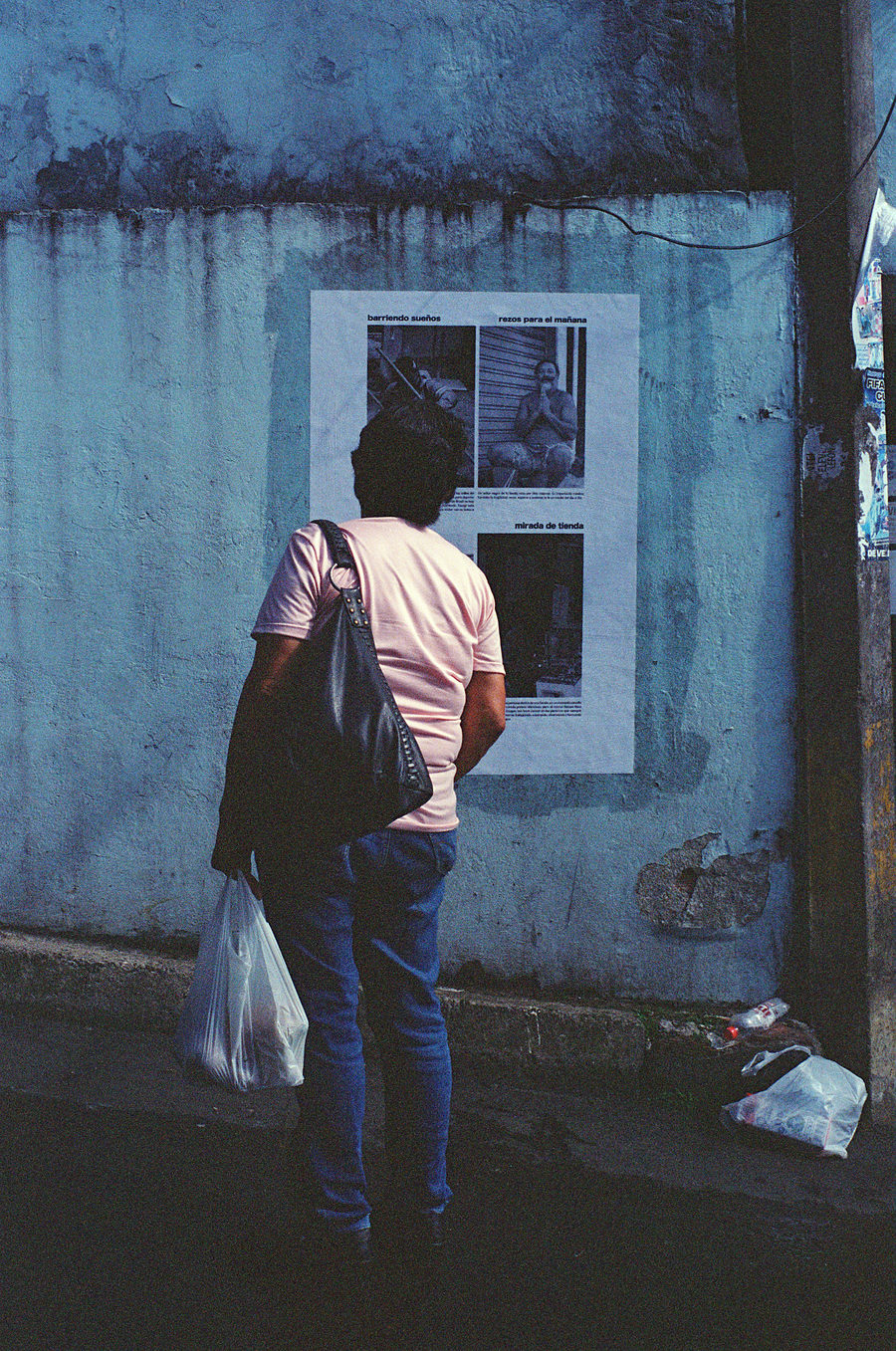
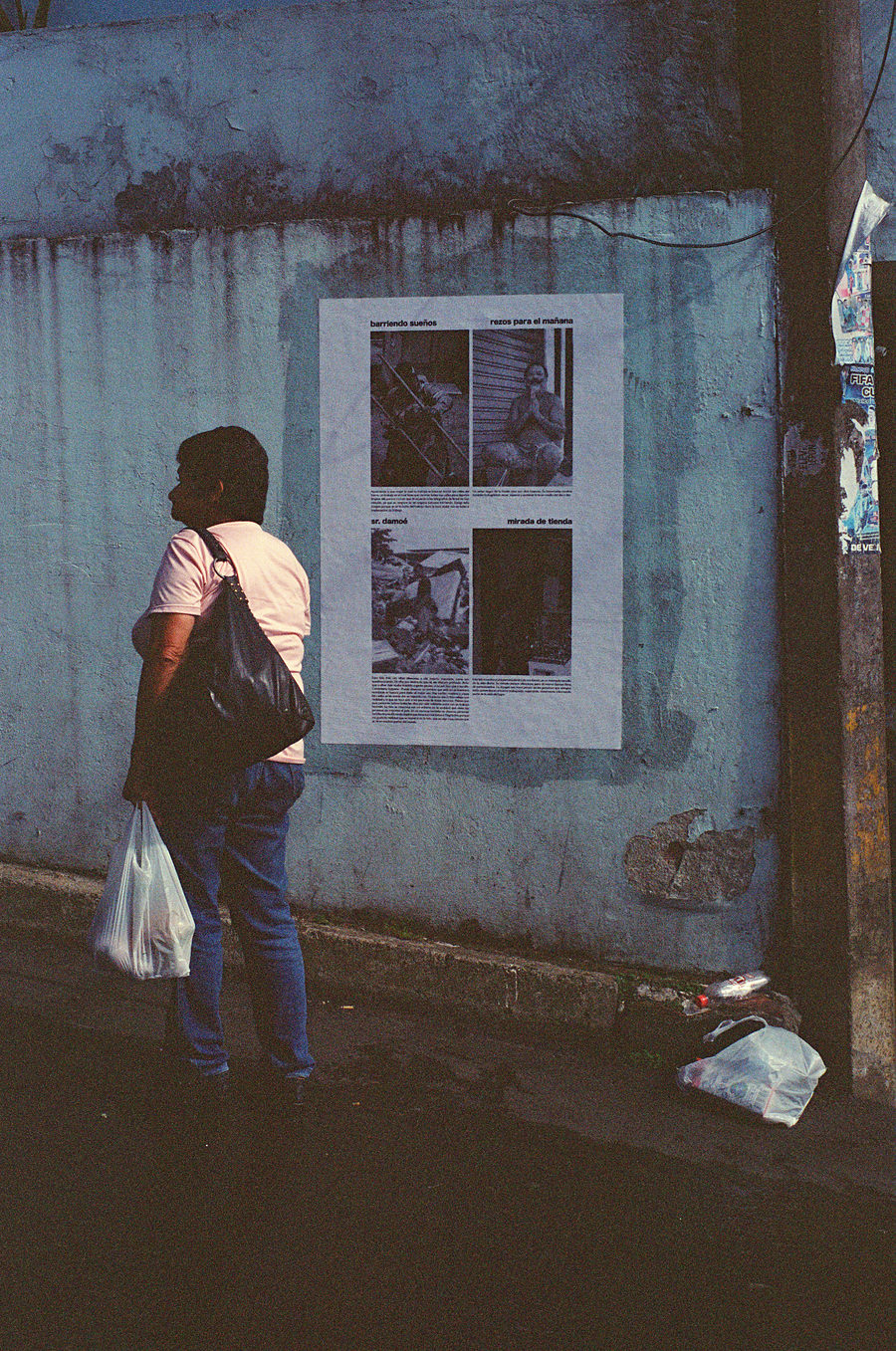
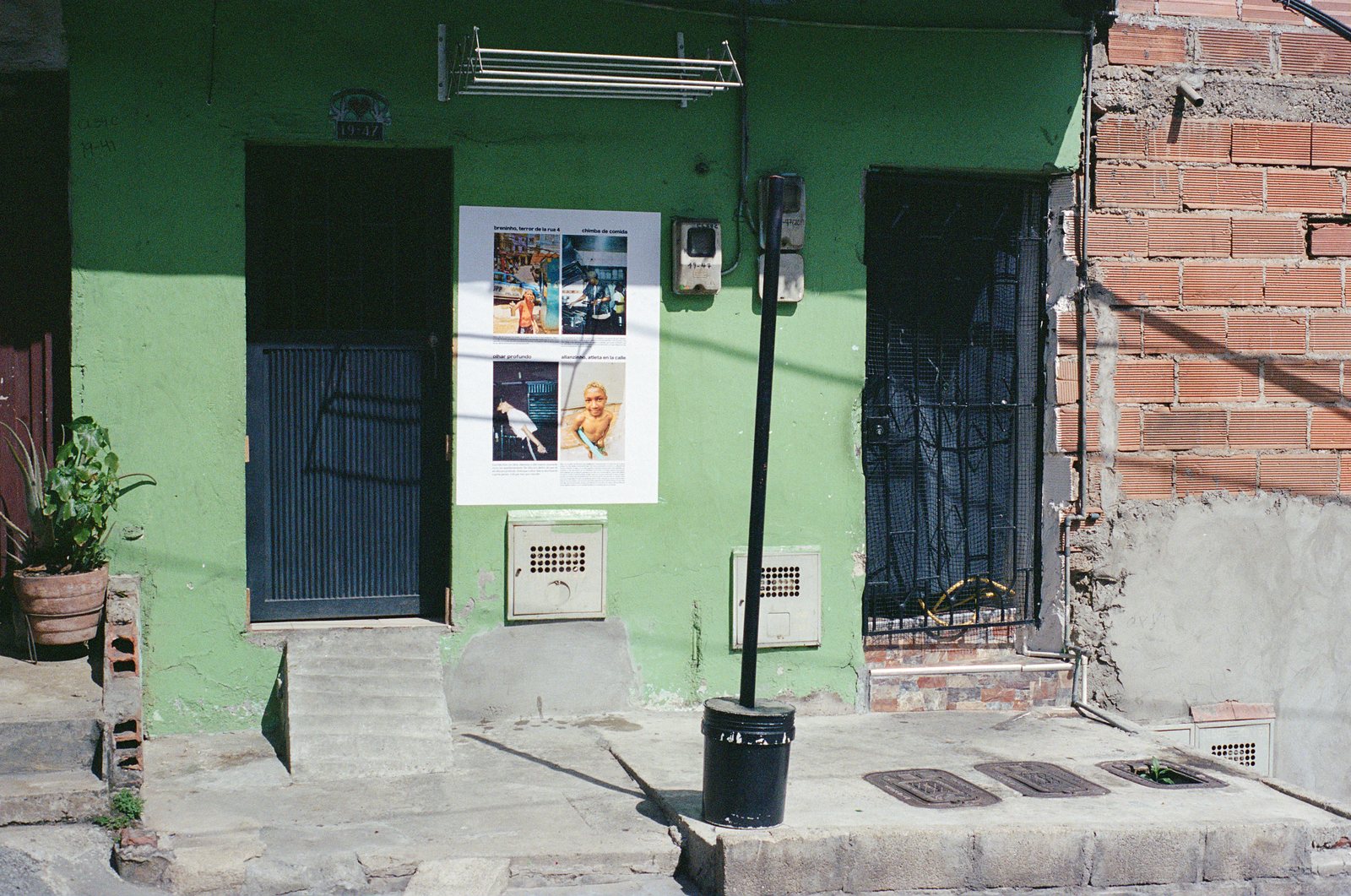
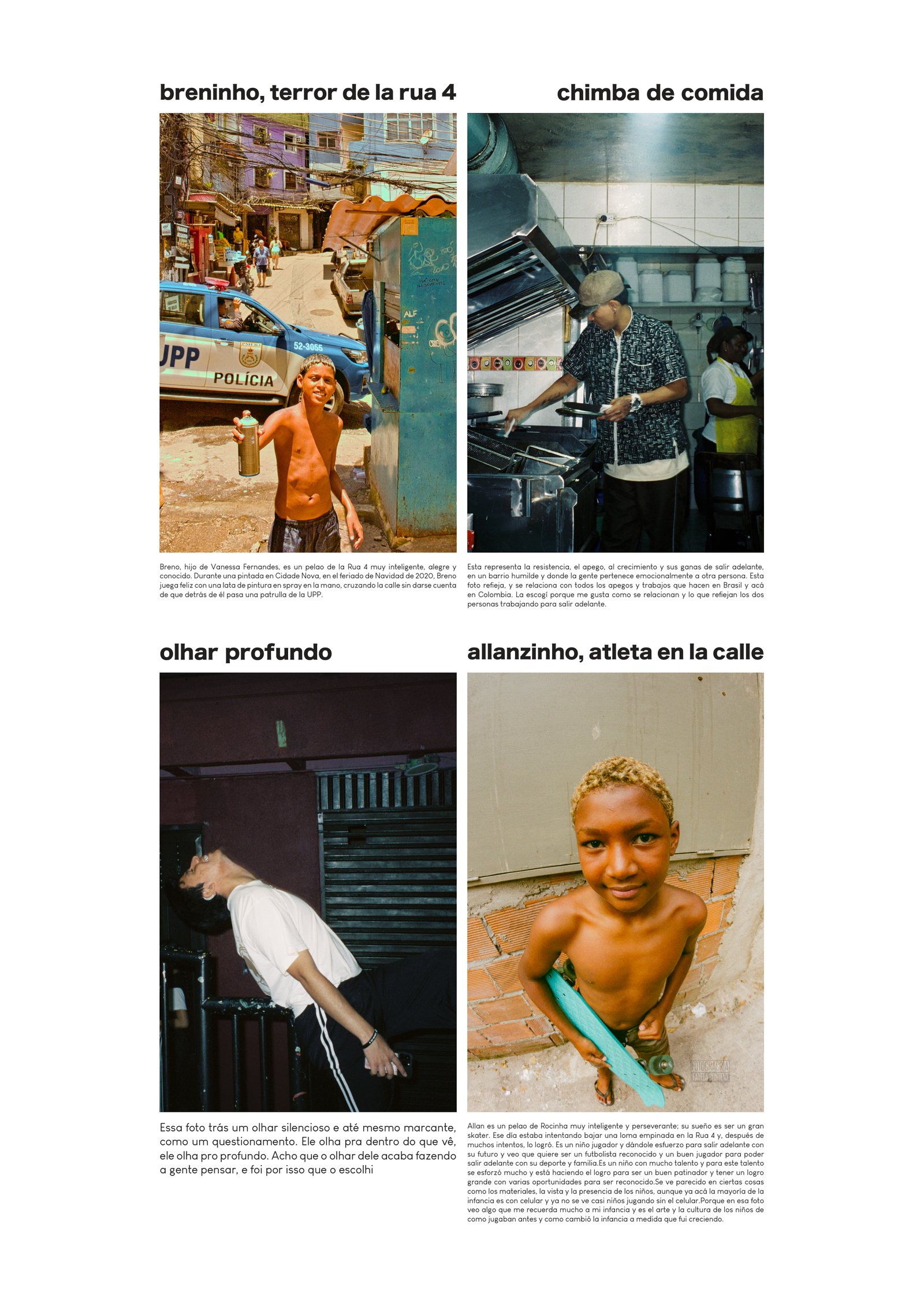
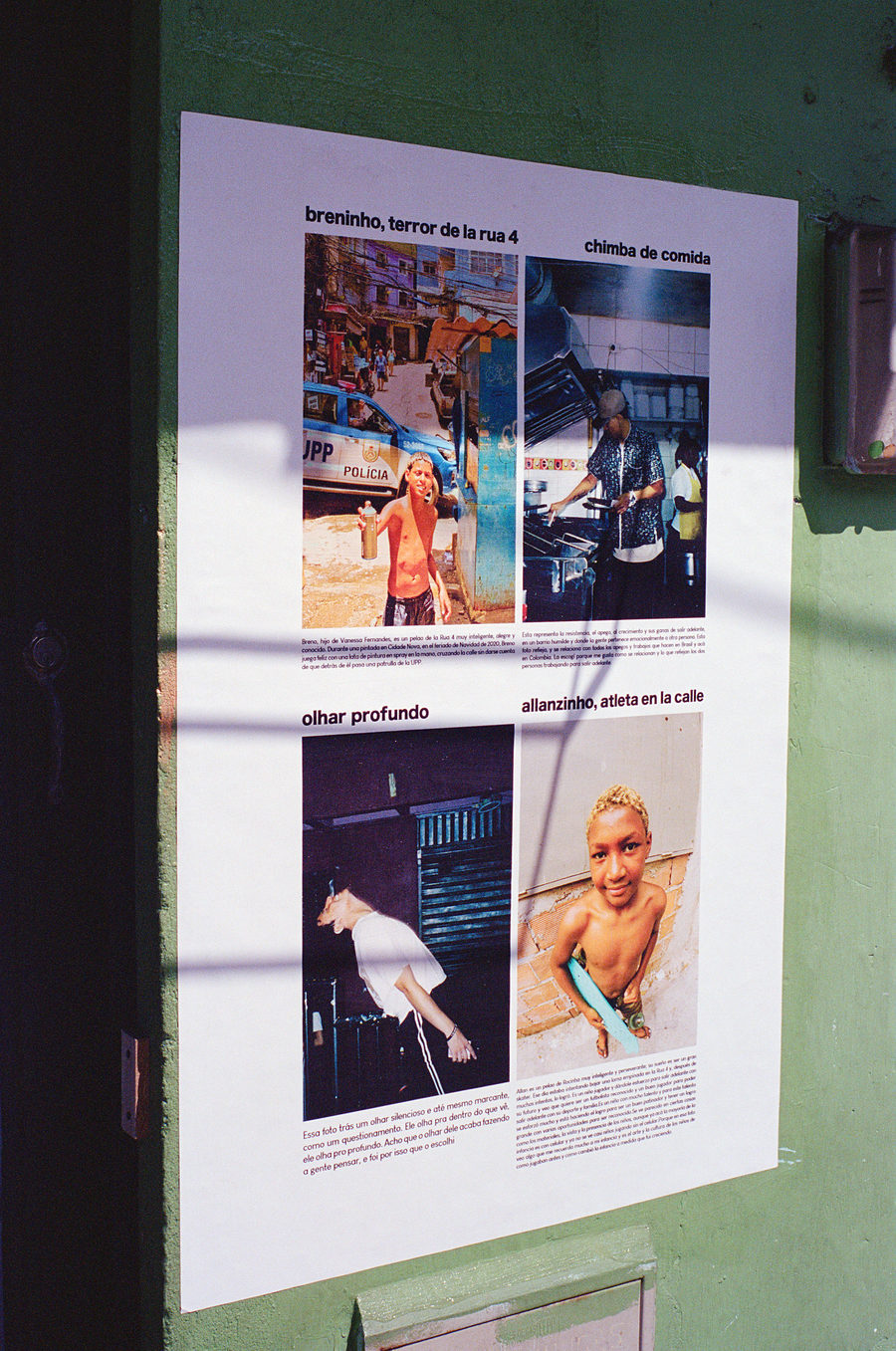
pasted up twice: on a green wall between two doors, then on a turquoise wall
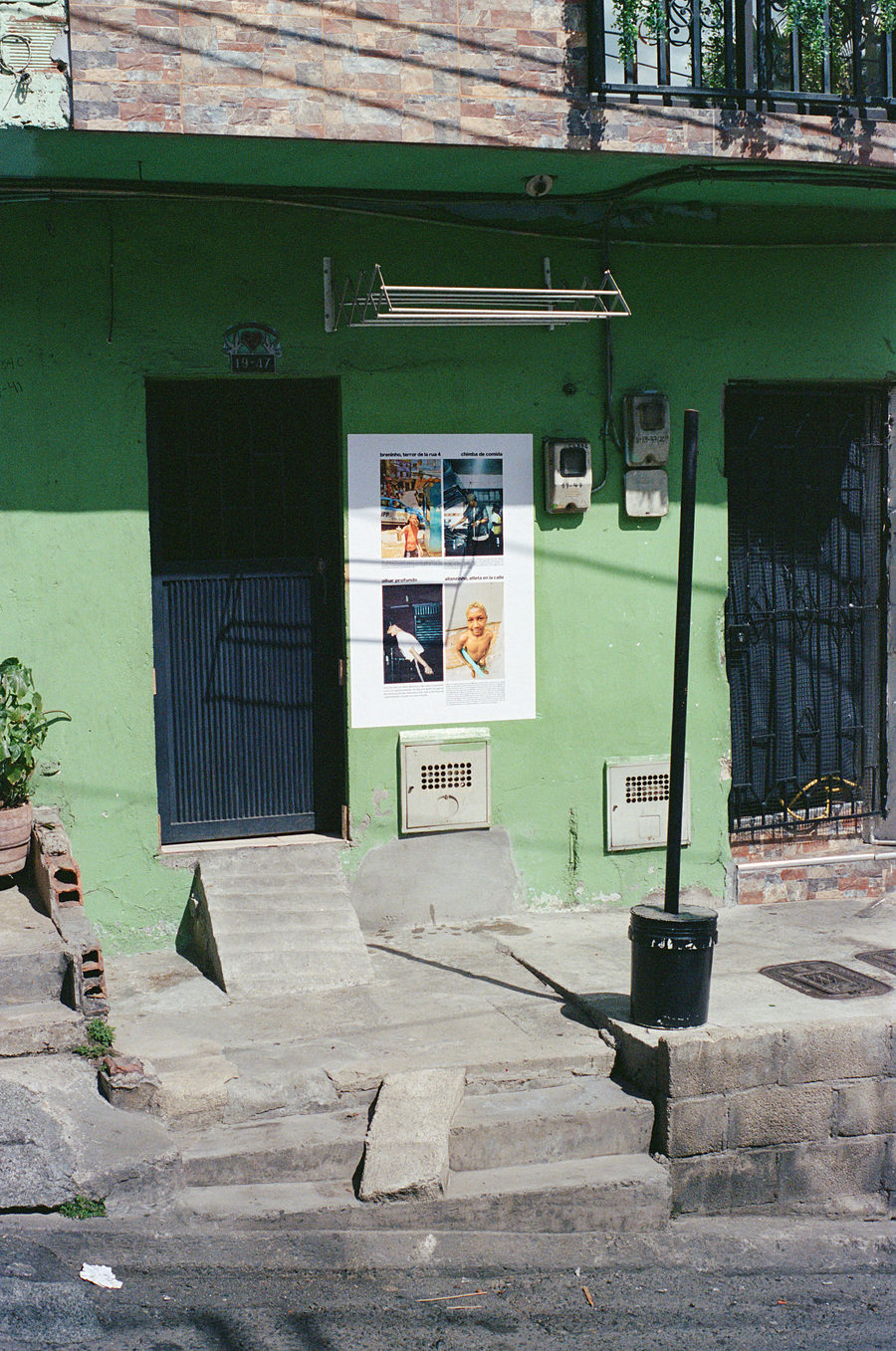
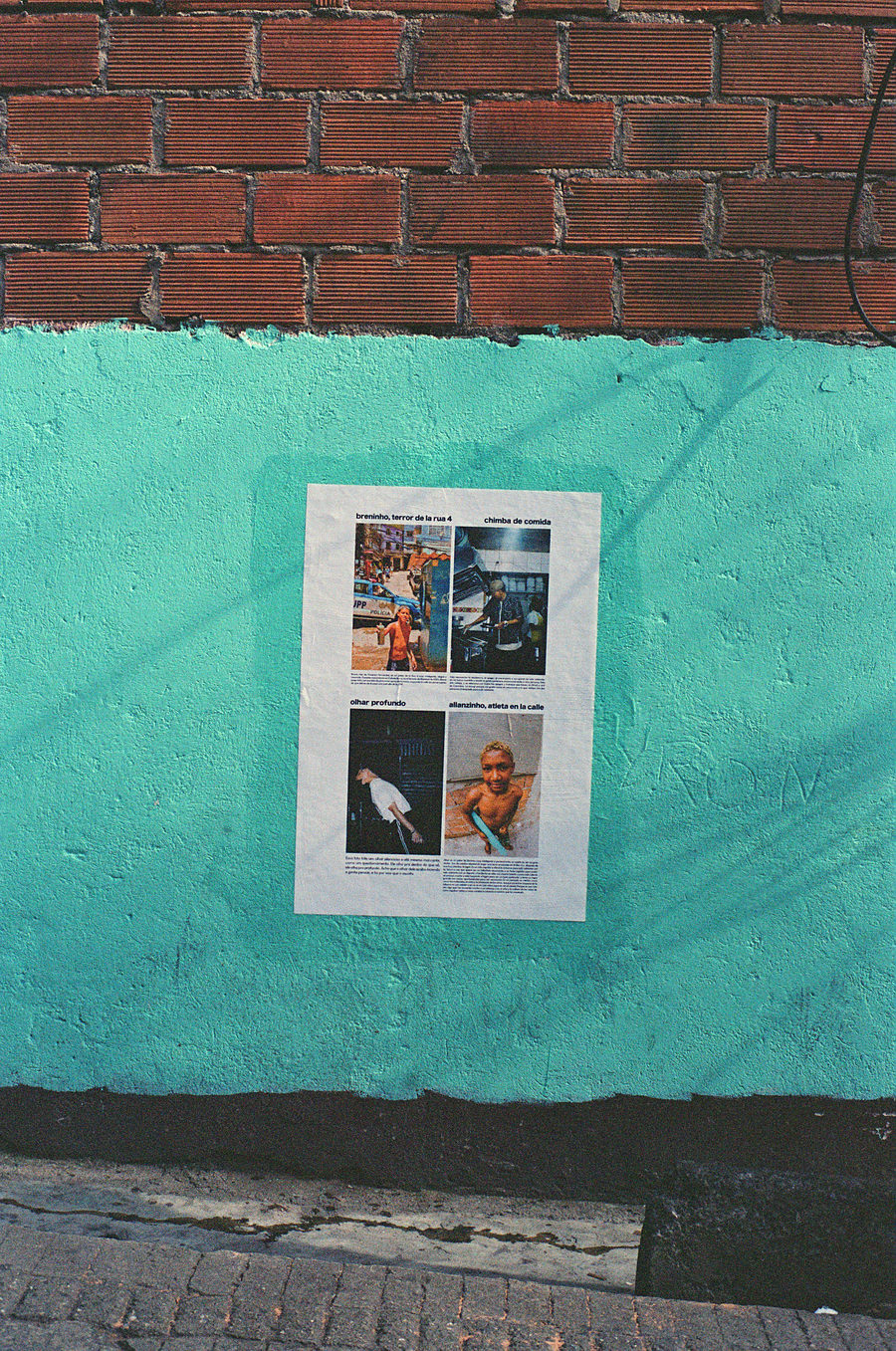
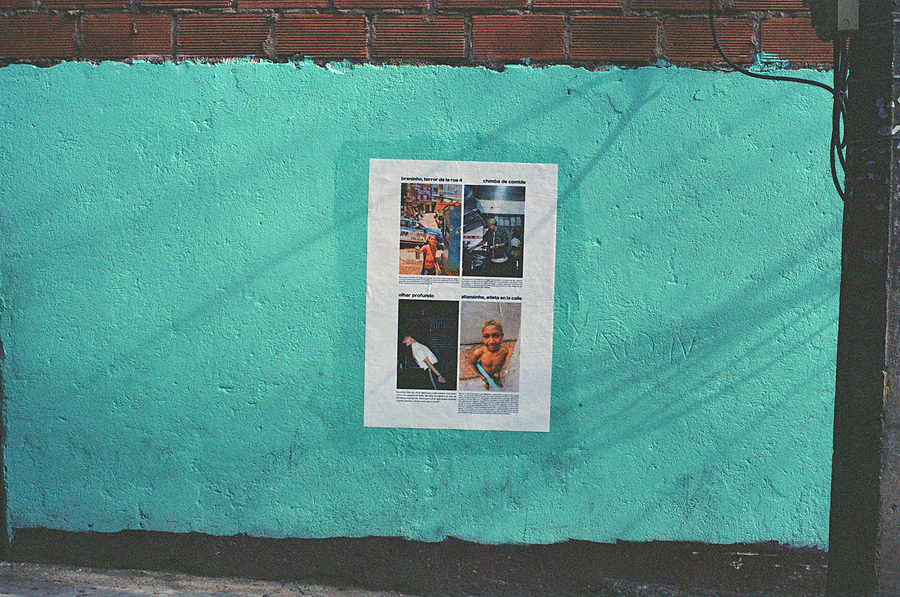
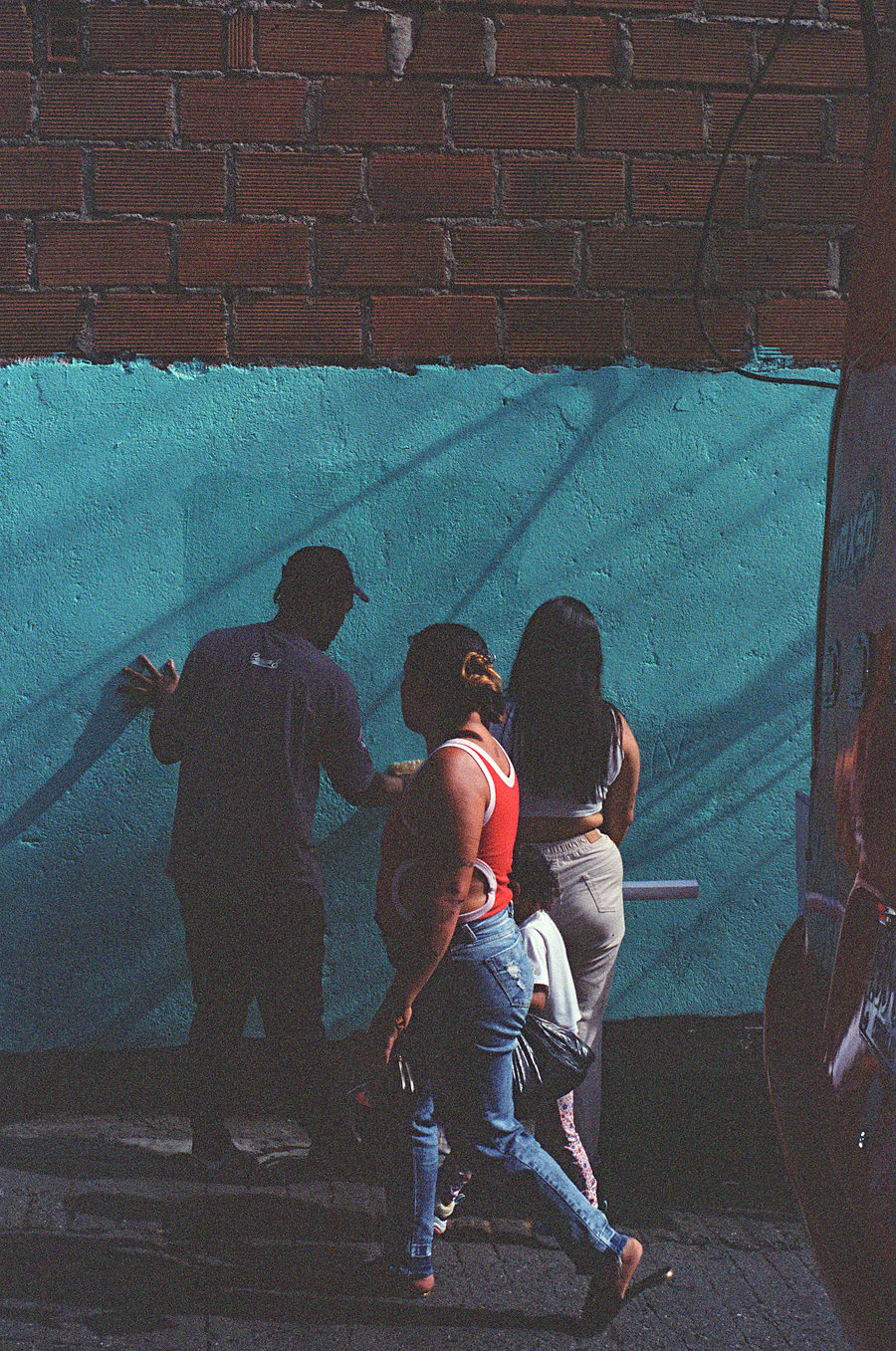
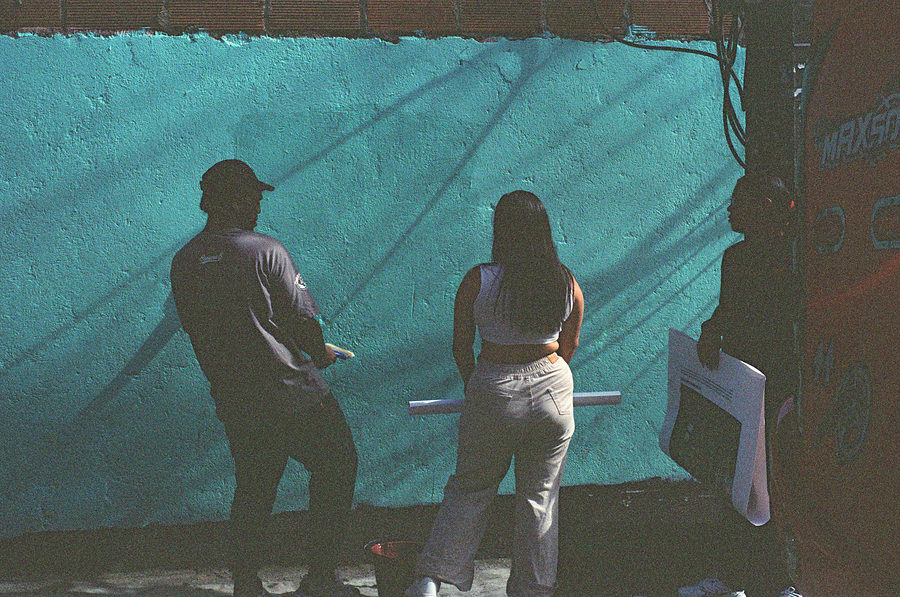
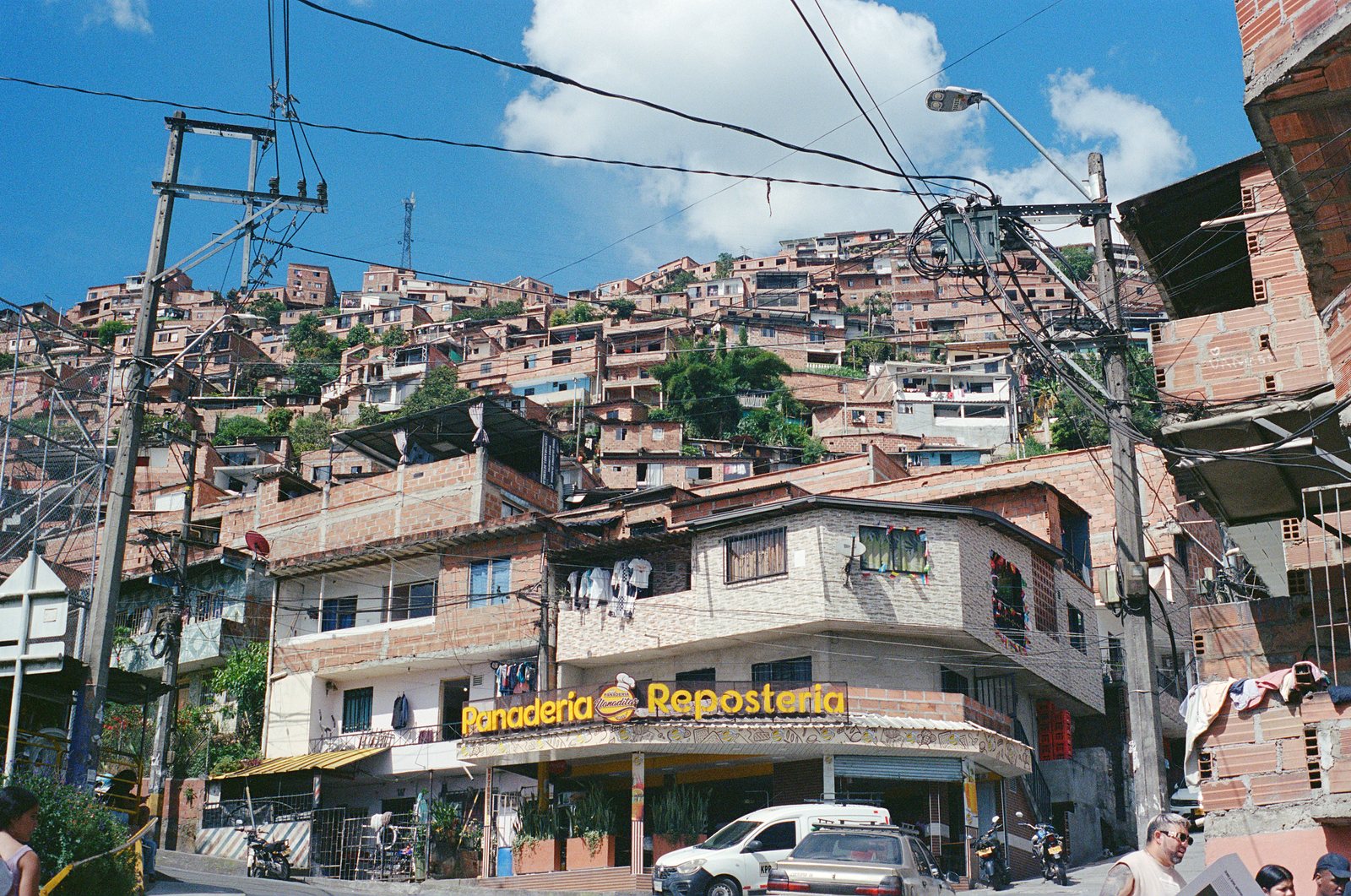
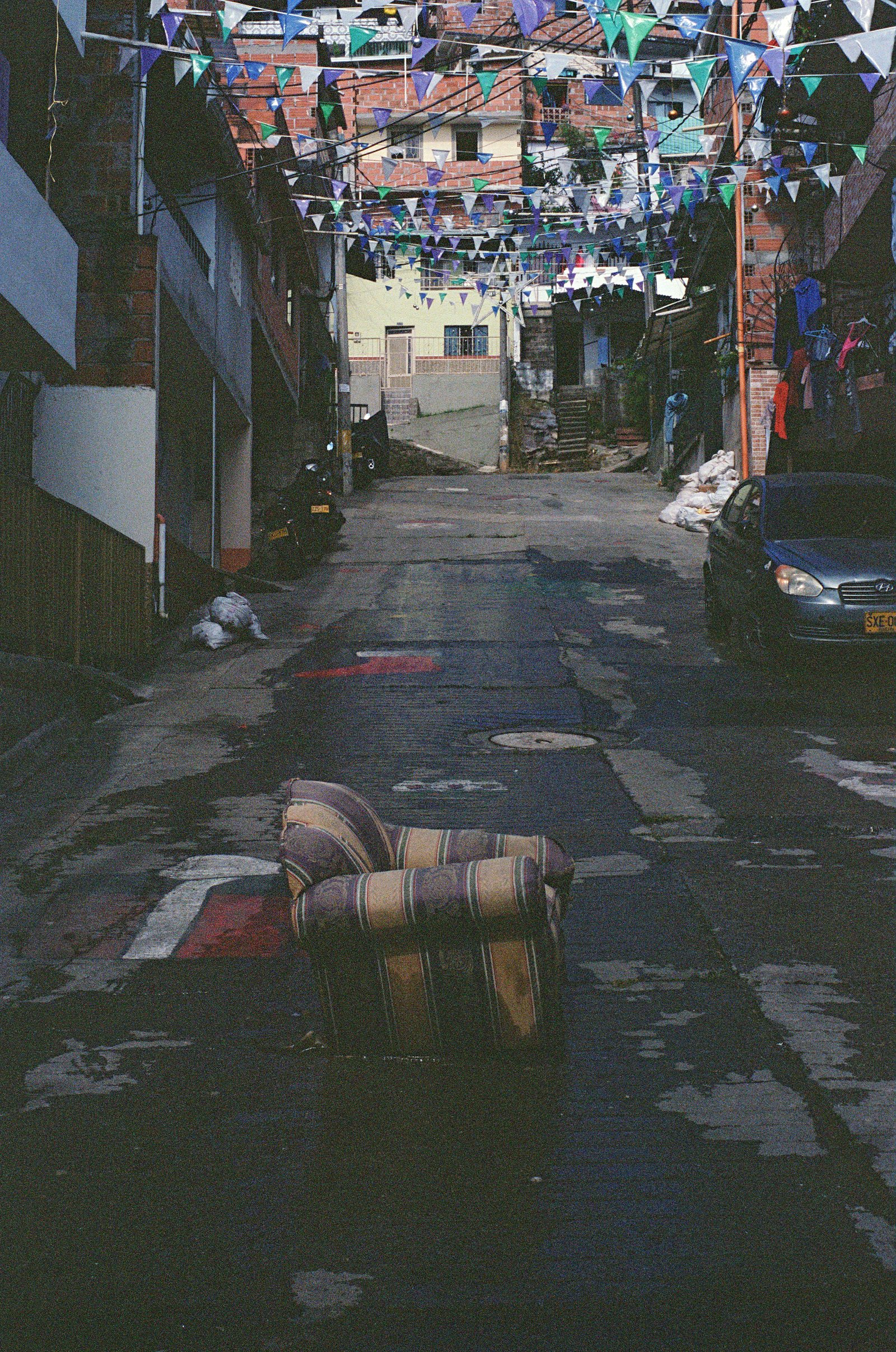
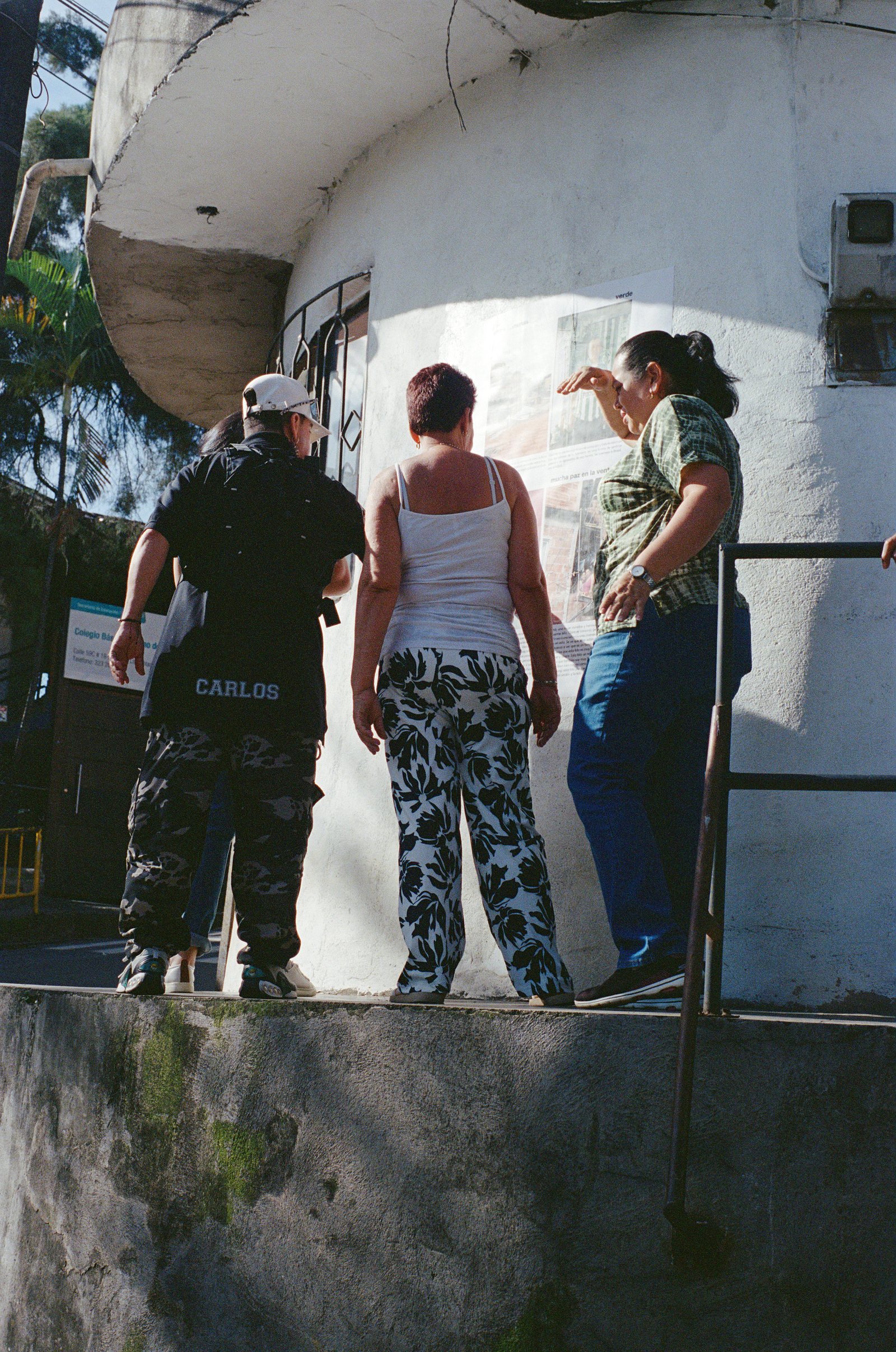
The day of the walk through Llanaditas: the corner bakery, the street under the bunting, the visit.
Thirty-seven frames shot on 35 mm during the pasting and the walk, in the order of the roll.
with Movimiento Urbano, in dialogue with Fotogracria (Rocinha) and Arteviana (Maré)


Photographs and videos: the children and young people of the four neighbourhoods and the mOst team.