 medellín
how we work
co-creating
mOst does not come to tell a neighbourhood’s story from the outside. Together with our partners, we create the conditions in which children and young people produce their own stories: they choose what they photograph, what they keep, what title they give it and what they write about it. Residents are not an audience: they are the authors, the guides, the researchers and the first viewers of what is being made. This is what cultural rights mean to us: the right to produce the images of your own life, and to decide how they circulate.
reading and making images
In a world saturated with images, learning to make one is also learning to read one: what it shows, what it leaves out of frame, what it says about the person who takes it. The workshops strengthen attention, confidence and the ability to choose, to make a case and to tell a story. Photography becomes a way of talking about yourself, about others and about the place where you live; writing turns the photo into a story; walking ties creative work to the lived experience of the neighbourhood.
the neighbourhood as gallery
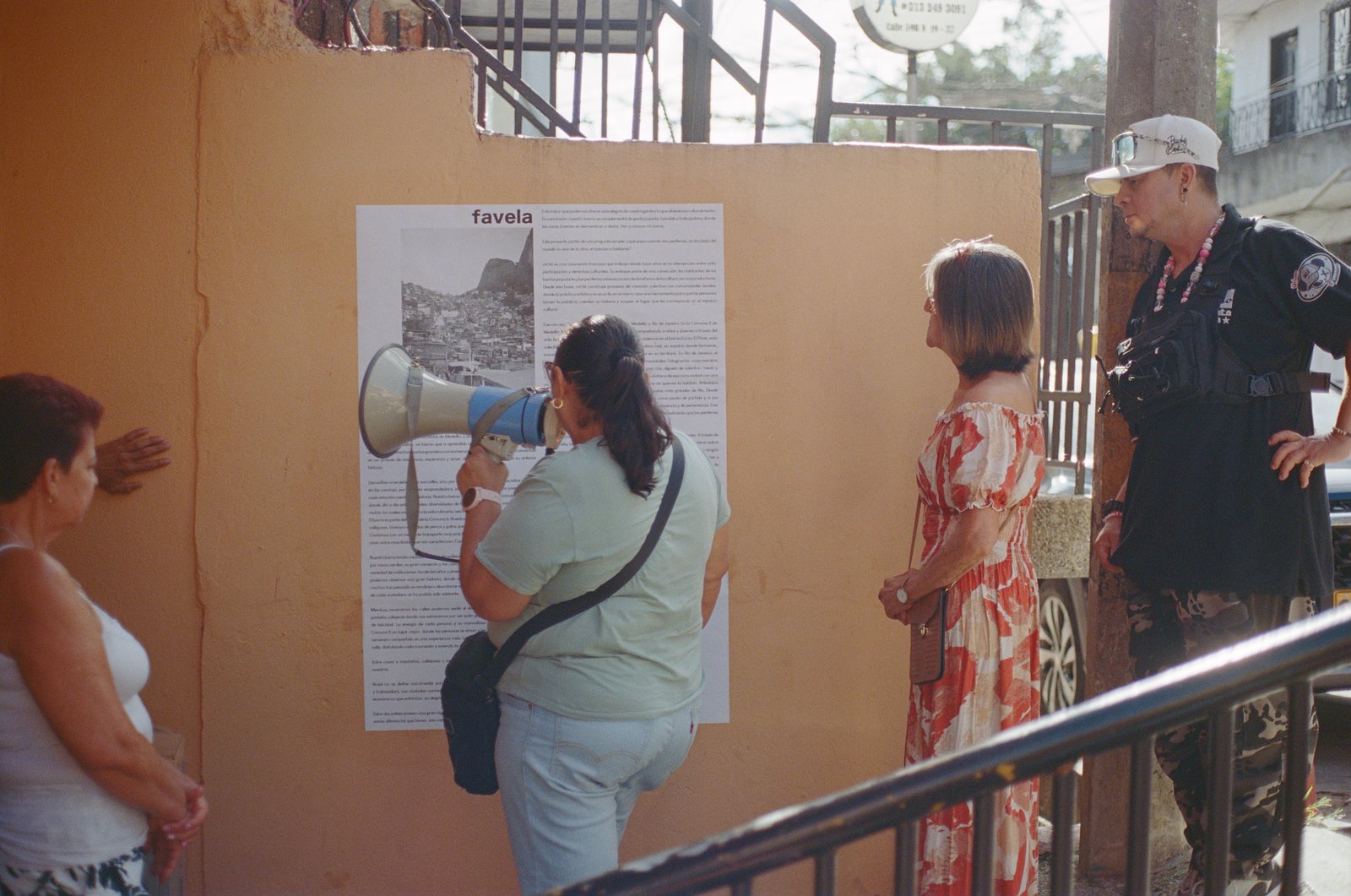
Every project ends with a public presentation in the neighbourhood, not in a gallery in the city centre. The posters are pasted onto house fronts, onto the walls around the pitches, at street corners and outside the shops. On opening day, the authors lead the tour. Neighbours recognise themselves, and recognise a door, a grandmother, a flight of steps. Exhibiting where people live makes working-class neighbourhoods places of culture, rather than just subject matter.
the living archive
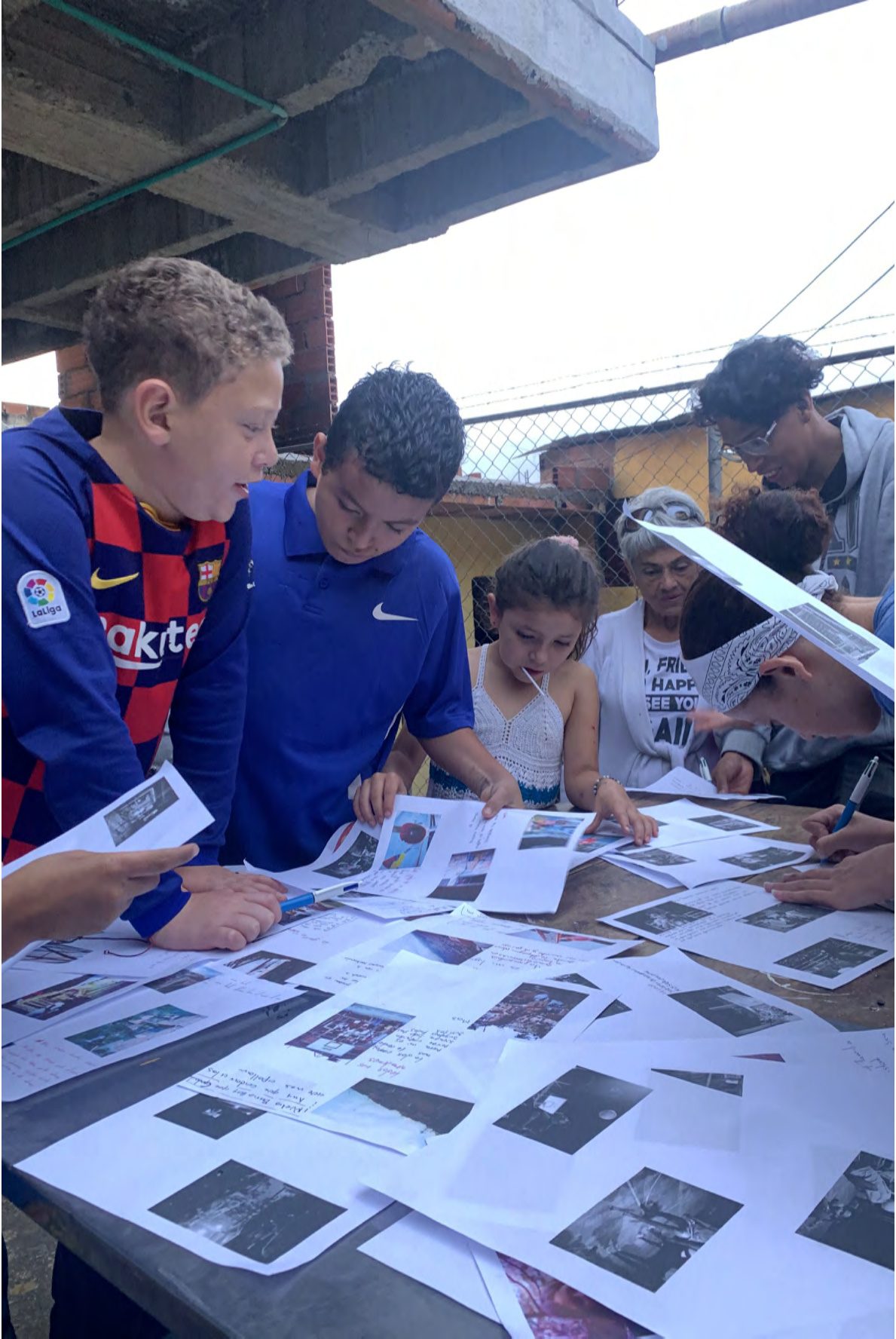
A child’s photograph from 2024 already has value as an archive: it holds on to a street before it changes, a face before it grows older, a shop that will one day close. Every project leaves behind photos, sounds, texts, maps and films. We document them, sort them and give them back to families and to the neighbourhood’s organisations. This memory is alive because people keep looking at it, commenting on it and adding to it.
the golondrinas museum-archive
In Golondrinas, the JAC and residents want to go further: to set up a community museum-archive. Collecting family photos and documents from the people who founded the neighbourhood, recording the elders, bringing together the children’s images since 2024 and the film rushes, digitising them and keeping them on site, showing them at the junta and in the street. A museum that never leaves the neighbourhood: made by it, for it, and open to others.
the peripheries talk to each other
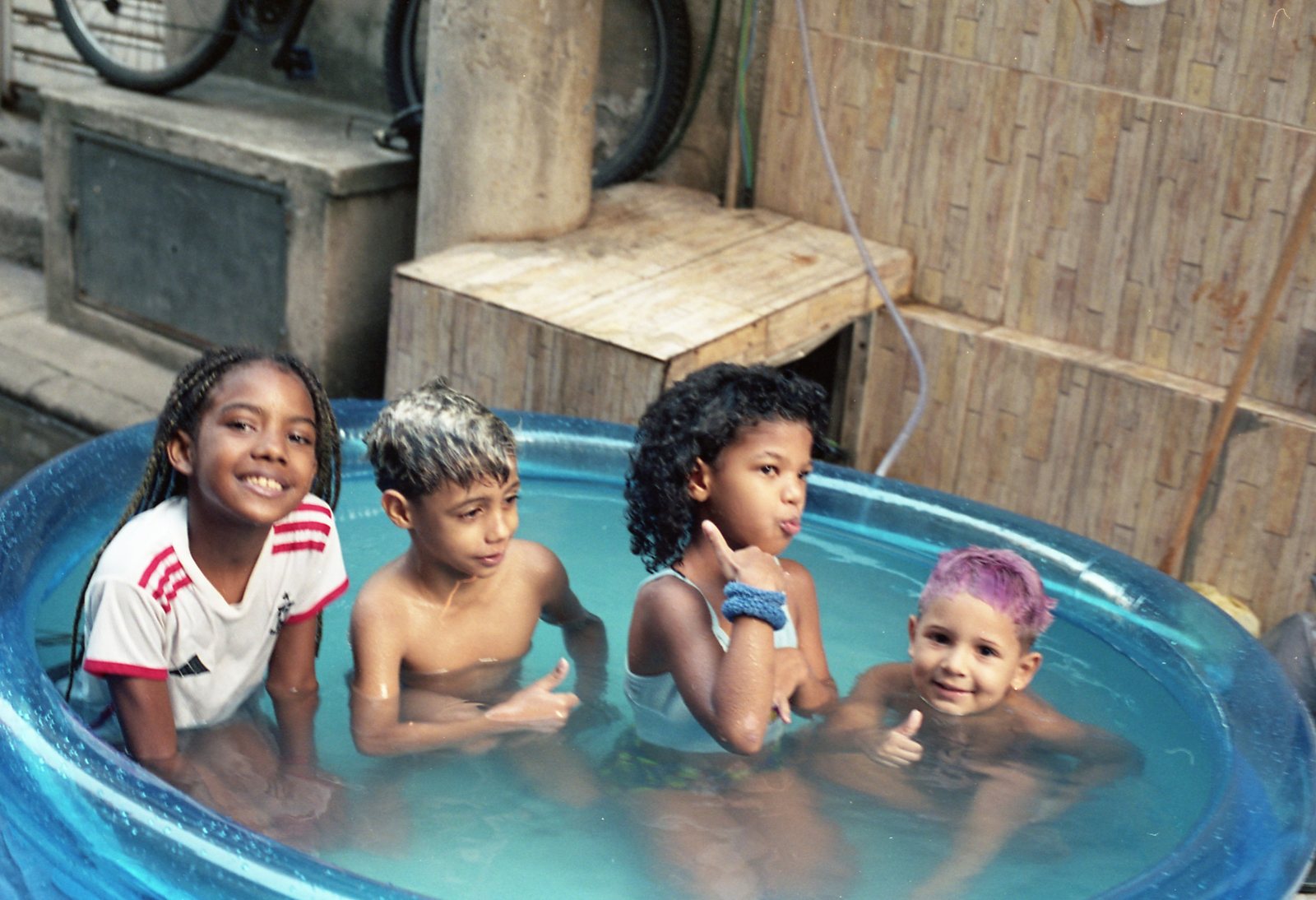
Favela ocho brought Llanaditas, Rocinha and Maré face to face. mOst also works in Montreuil, in Melun, in Valle de Chalco in Mexico, and has worked in Rio for several years. From one neighbourhood to another, young people comment on each other's images and recognise a cancha, a flight of steps, a way of sitting on the kerb. Connecting peripheries to one another, without going through the centre.
the partners and their role
These projects exist only thanks to the organisations that are part of everyday life in these neighbourhoods. Their role goes beyond hosting us: they choose the locations with us, bring families on board and carry the work on after we leave.
JAC Golondrinas
The Junta de Acción Comunal of the Las Golondrinas neighbourhood, elected by residents. It opens up the community hall, acts as the link with families and is taking the film and the neighbourhood’s future museum-archive forward with us.

Movimiento Urbano
Founded in 2005 in Enciso El Pinal, in comuna 8, in the midst of a violent period, this collective supports children and young people through music, dance and the arts. A partner on donde el arte une and favela ocho.
Centro de Desarrollo Social Los Mangos
A public community centre in comuna 8, and a partner on the first parchecito in Golondrinas.
Señales de Humo
An audiovisual collective from comuna 3, and a partner on la comunidad preciosa in Bello Oriente.
Fotogracria · Arteviana
Two artists from Rio de Janeiro, one from Rocinha and the other from the Maré, whose photographs opened the dialogue of favela ocho.

Seine-Saint-Denis Department (France)
With the support of the Seine-Saint-Denis Department.
a short glossary
A few words from the neighbourhoods, as they appear in the texts by the children and young people.
parche
The spot where you meet up, the gang, the time spent together. Parchar: to hang out together. Parchecito: a little parche.
comuna
One of Medellín’s large administrative districts (sixteen urban comunas and five rural corregimientos). Comuna 8 is Villa Hermosa; comuna 3 is Manrique.
jac
Junta de Acción Comunal: the neighbourhood council elected by residents, with its own community hall, ‘la junta’.
metrocable
Medellín’s urban cable car, which links the hillside neighbourhoods to the metro. Line M goes up to 13 de Noviembre.
cancha
The neighbourhood sports pitch, often fenced in with wire mesh and often lit up at night.
tienda
The little local shop, where people do their shopping, play on the slot machines and chat.
loma
A slope, a hill. The hillside neighbourhoods are made of lomas and steps.
plancha
The concrete slab: the flat roof where people play and hang out the washing. In Rio, it is called a laje.
chimba
‘¡Qué chimba!’: brilliant, great, in Medellín slang.
pelao
A kid, boy or girl: a young person from the neighbourhood.
cria
In Rio, a child of the favela, someone born there. Fotogracria is photography by a cria.
echado pa'lante
Echado pa’lante: someone who keeps pushing forward and won’t be beaten down.
mandados
Errands: the bits of shopping you do for your family.
chucha cogida
Chucha cogida: Medellín’s name for tag, the playground chasing game.
tinto
Black coffee, served in bakeries and corner shops.